HOW-TO GUIDE
Why Does My EV Charger Keep Tripping the Breaker?
By the OhmSavvy Research Team ·
Stop and call an electrician if you notice any of these
- A burning or hot-plastic smell, discolored or melted plastic on the plug or receptacle, or a plug too hot to hold after charging.
- Crackling or buzzing from the receptacle, charger or panel. If it is safe to reach, switch off the main breaker. For smoke or fire, get out and call 911.
- Never open the charger, the panel or its cover. Charger internals, breaker terminations and the feeder wiring are work for a licensed electrician.
Did the breaker trip, or did charging stop?
Three separate things can end a charging session, and each leaves a different trace. If the panel breaker opened, the charger loses power completely: its lights go out, its app reports it offline, and the breaker handle sits in the tripped (middle) or OFF position. If the charger's own ground-fault monitor or self-test acted, the unit stays powered but shows a fault light or error code, and many units retry after a delay. If the car ended the session, the charger looks normal and the vehicle app typically says charging is paused, scheduled or complete.
Write down what you saw before you reset anything. A dark charger, a blinking red status light and a car showing "charge scheduled" are three different problems, and only the first is the breaker. Time-of-use schedules, a lowered charge limit, utility demand-response programs and battery temperature management can all stop a session without any electrical fault at all.
Symptoms and likely causes
| Symptom | Likely cause | What to check | Who should fix it |
|---|---|---|---|
| Breaker trips after 30+ minutes at full rate | Circuit loaded past its continuous rating, or a warm connection | Charger current setting vs breaker size; plug warmth | Electrician |
| Breaker trips within seconds of plugging in | GFCI breaker reacting to the charger, or a cable/charger fault | Breaker type (TEST button?); charger error code | Electrician; charger maker |
| Trips only when dryer, range or AC also runs | Panel or service near its capacity | Which large loads overlap with charging | Electrician (load calculation) |
| Charger shows a fault light, breaker still on | Charger's ground-fault or self-test tripped | Error code in the manual or app | Charger manufacturer |
| Charging pauses, charger and breaker normal | Car schedule, charge limit, utility program | Vehicle and charger app settings | Owner settings |
| Plug or receptacle discolored or hot | Loose or worn receptacle terminal | Look only; do not keep charging | Electrician |
The timing is the most useful clue you have. An instant trip suggests something that sees a fault immediately, such as a ground-fault device or a damaged cable. A trip that builds up over time points to heat, which means either too much current for too long or resistance at a connection.
The 80% continuous-load rule
EV charging is treated as a continuous load because it can run at full output for three hours or more. Under the US National Electrical Code, branch circuits for continuous loads are generally sized so the load is no more than 80% of the breaker rating, which is the same as sizing the circuit at 125% of the load. In practice that is why a charger delivering 48 A sits on a 60 A circuit, and why a charger set to 40 A on a 40 A breaker is a mismatch even if it works for a while. Exact requirements depend on the code edition your area has adopted and on the charger's installation manual, so treat the figures below as typical examples rather than a design table.
Many wall chargers can be configured for a lower output, through an app, a setup screen or settings inside the unit. Read the configured value in the app if it is shown. If the charger is set higher than 80% of its breaker, or nobody recorded what it was set to, that is the first thing to raise with the electrician. Changing internal switches or wiring is part of the installation, not a homeowner task. Lowering the output in the app, where the maker allows it, is a reasonable stopgap while you wait.
GFCI breakers and built-in charger protection
EV chargers include their own personnel protection: a ground-fault monitor that opens the charger's internal relay if current leaks to ground, plus a check that the ground connection is present. Separately, recent code editions require GFCI protection for many 240 V receptacles in garages and outdoors, so a plug-in charger on a NEMA 14-50 receptacle is often fed through a GFCI breaker. The GFCI breaker typically trips at a much lower leakage level than the charger's own monitor, and the charger's filtering and self-test can register as leakage to it. The result is a breaker that trips right as charging begins, with no damage anywhere.
This combination is common enough that several charger makers address it in their installation guides. Possible fixes, such as a different receptacle setup or a hardwired installation where your code allows it, are design decisions for a licensed electrician and the local inspector. Never swap a GFCI breaker for a standard one yourself to stop the tripping. For how the leakage sensing works, see why a GFCI outlet keeps tripping.
1Safe checks you can make
- Read the breaker face. Through the panel door, without removing anything, note the breaker's amp rating and whether it has a TEST button (GFCI or dual-function) or a trip indicator window.
- Read the charger. Record any status light pattern or error code and look it up in the manual or the maker's app before power-cycling it.
- Look at the plug and receptacle. After a session, with the charger switched off at the breaker, check for browning, warping or a loose fit. Don't keep unplugging and replugging a 50 A plug as a test; receptacle contacts wear.
- Note overlapping loads. If trips line up with the dryer, oven, water heater or air conditioner, the panel may be near its limit. Scheduling charging overnight, when those loads are idle, is a sensible interim step.
- Inspect the cable. A crushed, cut or kinked charging cable or connector is a reason to stop using the charger and contact the manufacturer.
2Meter checks at a plug-in charger
With a plug-in charger, you can confirm the receptacle has a healthy supply. Use a meter rated CAT III for the voltage, intact test leads with finger guards, safety glasses, and keep one hand away from the box. Switch the breaker off, unplug the charger, switch the breaker back on, and place the probes in the receptacle slots. On a NEMA 14-50, expect roughly 240 V between the two hot slots, roughly 120 V from each hot to the neutral (the slot diagram in the charger manual shows which is which), and close to 0 V from neutral to the ground pin. US nominal service is 120/240 V, and readings within about 5% are normal under ANSI C84.1.
A missing hot, a neutral-to-ground voltage of more than a few volts, or a big imbalance between the two hot-to-neutral readings is a wiring problem for the electrician. Note that many chargers do not use the neutral at all, so a fault there may not explain the trip, but it is still worth reporting.
What you shouldn't do is measure current on a Level 2 charger yourself. The individual conductors are only reachable inside the panel or the charger, and clamping a whole cable reads zero because the currents cancel, as explained in how to measure AC current with a clamp meter. The charger or car app usually reports the actual charging current, which is enough to compare against the breaker. A Level 1 cord set is different: plugged through a line splitter, it can be clamped safely at the 120 V outlet, and that reading tells you how much of a 15 A or 20 A circuit it takes.
When an electrician should investigate
Meters for checking a charger circuit

True RMS, CAT IV 600V / CAT III 1000V, with LoZ mode. Enough rating margin for 240 V receptacle checks.
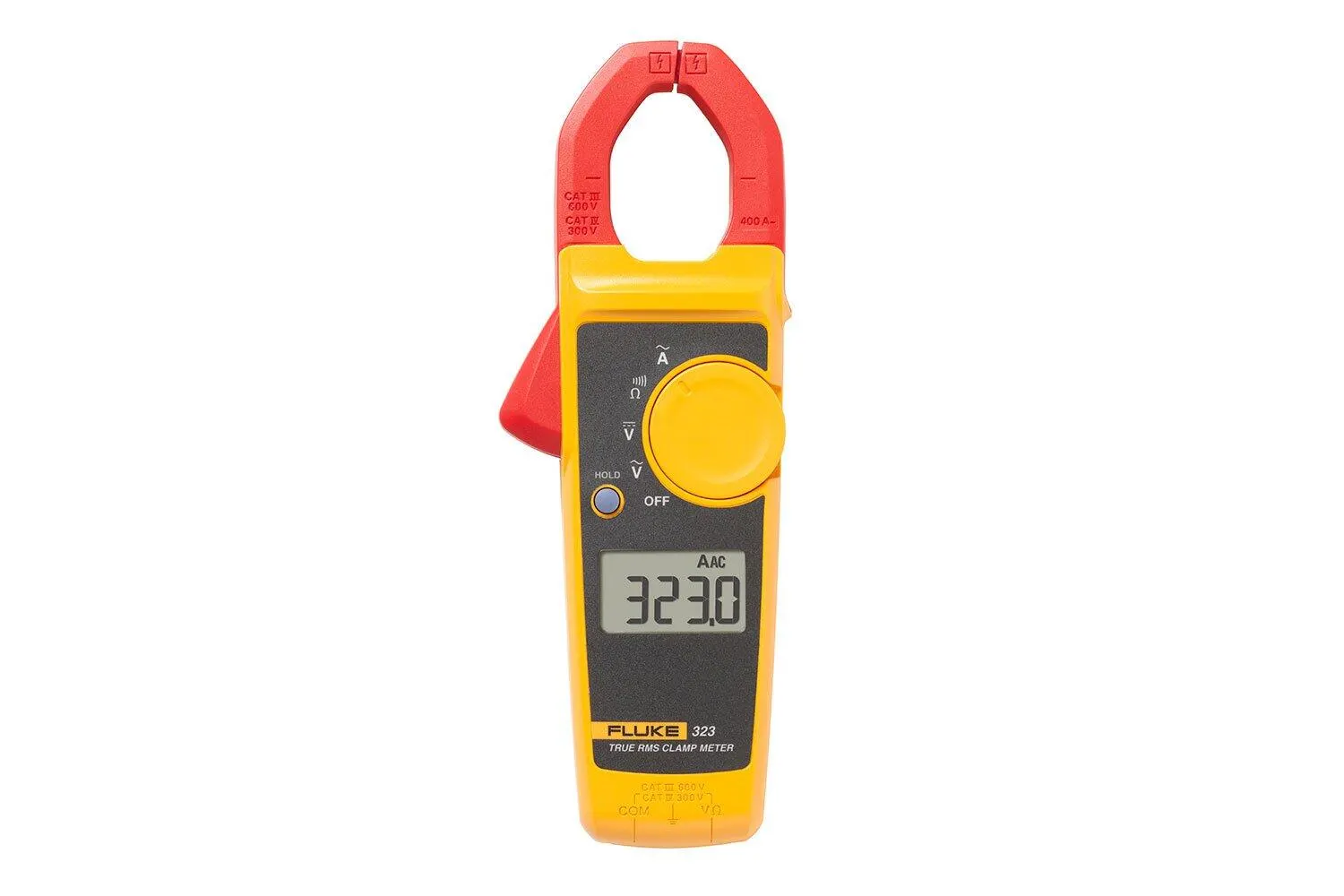
True RMS AC clamp to 400A, CAT III 600V / CAT IV 300V. For Level 1 cord sets on a line splitter.

Budget AC/DC clamp with inrush, LoZ and NCV, rated CAT IV 600V / CAT III 1000V.
As an Amazon Associate I earn from qualifying purchases. Prices and availability are shown on Amazon.
Frequently asked questions
Can I just put a bigger breaker on my EV charger circuit?
No. The breaker protects the wire, so its size is set by the conductor gauge, the receptacle rating and the charger's instructions. A larger breaker on the same wire lets that wire overheat before anything trips. If the charger needs more capacity, an electrician has to check the wiring and the panel's spare capacity first.
Why does my charger trip only on hot days or late in a long session?
Heat builds at any weak connection the longer full current flows, and a breaker's thermal element reacts to its own temperature too. A trip that arrives an hour or more into charging points to sustained loading or a warm termination rather than a sudden fault. Have the receptacle, plug and breaker connections checked.
My Level 1 charger trips the garage outlet. Is that normal?
A Level 1 cord set commonly draws around 12 A, which leaves little room on a 15 A circuit already feeding a freezer, lights or a garage door opener. Try it on a circuit with nothing else running, and read the cord set's manual for its current setting. If it still trips with the circuit to itself, have the outlet and circuit inspected.
Should I reset the breaker and try again tonight?
One reset to see whether the trip repeats is reasonable if there is no heat, smell or damage at the plug, receptacle or charger. If it trips again, or anything looks or smells scorched, leave it off and book an electrician.
Can a breaker get weaker after tripping many times?
It can. Repeated trips under heavy load stress the contacts and thermal element, and a breaker that has run hot for years beside a loose terminal may end up tripping below its rating. You cannot judge this by eye or from a receptacle reading. An electrician can check terminal torque, clamp the actual current during a charging session and replace the breaker if it turns out to be the weak link.



