HOW-TO GUIDE
Why Does My Trailer Keep Blowing Fuses?
By the OhmSavvy Research Team ·
Test with the circuit dead and the connector unplugged
- Disconnect the trailer and, where possible, the tow vehicle's battery or the relevant fuse before doing resistance testing.
- Inspect connector pins before plugging anything back in — a bent pin can short two circuits the instant it's connected.
- Keep connections dry while testing; moisture can mask or mimic the exact fault you're chasing.
1Unplug and separate the two sides
Unplug the trailer connector completely. Replace the fuse once and see whether it blows with nothing connected at all — if it does, the fault is entirely on the tow vehicle's side, upstream of the connector. If it holds with the trailer unplugged, the fault is in the trailer or the connector itself.
2Test the trailer's own wiring
With the trailer's wiring disconnected from the tow vehicle, set the meter to resistance and measure from each trailer circuit (running lights, brake lights, turn signals) to the trailer's chassis or ground wire. Pull the bulbs or unplug the lamps first: a working incandescent bulb is itself a low-resistance path to ground and would read like a short. With the lamps out, a healthy circuit reads open (OL); a low reading confirms a short somewhere in the trailer's own harness.
| Where tested | Finding and meaning |
|---|---|
| Trailer side, specific circuit shorted | Inspect that circuit's wiring for chafing near axles, hitch pivot points, or fender wells |
| Trailer side, all circuits read open | Trailer wiring is clear — look at the connector or tow vehicle side |
| Tow vehicle side, fuse blows with trailer unplugged | Fault is in the tow vehicle's own wiring or connector |
3Test the tow vehicle's side
If the trailer side tests clean, check the tow vehicle's wiring from the fuse box to the connector the same way, with the circuit dead. This section is often shorter and easier to inspect visually for chafing near the frame rail or bumper mount than the trailer's own harness.
4Check the connector itself
Inspect the connector's pins on both halves for corrosion, bending, or a cracked housing letting moisture in. A single bent pin touching an adjacent one is a common, easily missed cause that can short two circuits together the instant the connector is plugged in.
Chafe points near the hitch and axles are common culprits
Which meter to use
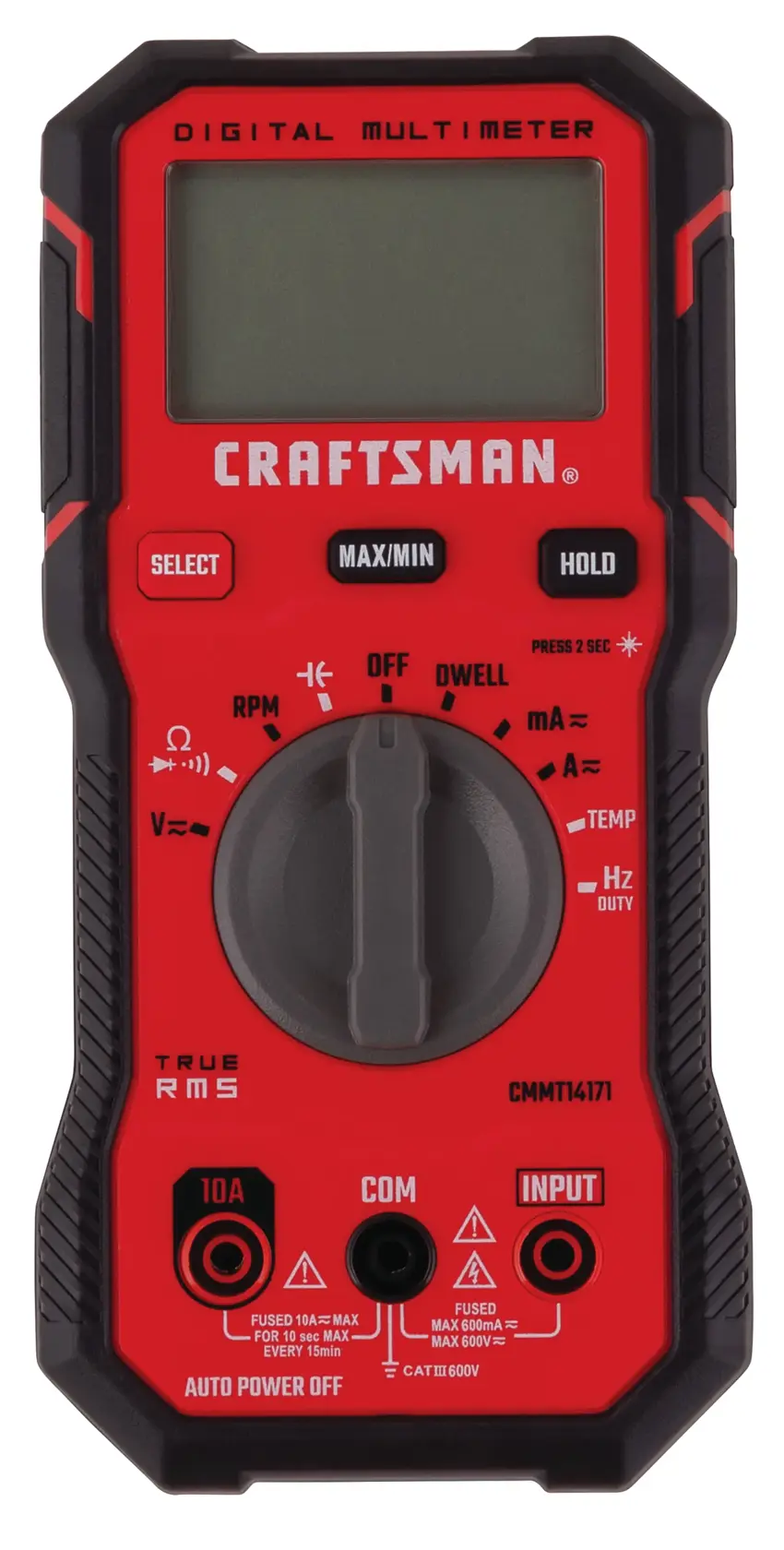
Any meter with resistance and continuity ranges handles this test. See the full best multimeter for automotive picks.
Meters in our reviews
Built for this kind of automotive and trailer wiring diagnosis.

As an Amazon Associate I earn from qualifying purchases. Prices and availability are shown on Amazon.
Frequently asked questions
Does it matter which fuse is blowing — the trailer's or the tow vehicle's?
Yes, this tells you a lot. If the tow vehicle's trailer-wiring fuse blows with the trailer unplugged, the short is in the tow vehicle's own wiring or connector, not the trailer. If it only blows with the trailer connected, the fault is somewhere in the trailer's wiring or the connector itself.
Why do trailer light problems seem to get worse in wet weather?
Moisture lowers the resistance needed for a marginal connector or a nick in the insulation to actually short out, so a fault that stays hidden when dry can show up reliably in rain or after driving through puddles. If the symptom is weather-related, focus the inspection on seals, connectors, and any exposed wire runs.
Can a bad ground on the trailer cause blown fuses rather than just dim or no lights?
A poor ground more commonly causes dim or flickering lights and cross-feeding between circuits (one turn signal lighting up a brake light faintly) rather than a blown fuse directly — a true blown fuse points more toward an actual short to ground somewhere in the positive-side wiring instead.
Could corrosion inside the connector itself be the whole problem?
Yes — a corroded or bent pin inside the connector can short two circuits together right at that single point, blowing a fuse the moment the trailer is plugged in even if every other inch of wiring is fine. Inspect the connector pins closely before assuming the fault is further down the harness.
Is it safe to keep replacing the fuse until I find the cause?
Replace it once to confirm the symptom, then stop and test rather than continuing to replace fuses — a persistent short will keep blowing every replacement and wastes time without finding the actual fault.


