HOW-TO GUIDE
How to Find a Short Circuit in a Car With a Multimeter
By the OhmSavvy Research Team ·
Safety first: kill the circuit before measuring resistance
- Disconnect the battery negative terminal, or at minimum pull the blown fuse and leave it out, before switching the meter to resistance or continuity mode. Measuring resistance on a live circuit risks a false reading and can damage the meter.
- Don't just keep replacing the fuse to see if it holds — each blown fuse confirms the short is still there and wastes a fuse for no diagnostic benefit.
- A dead short can draw very high current for the instant before the fuse opens; keep hands clear of the circuit when power is briefly restored to re-test.
01
Confirm
Fuse is actually open
02
Kill power
Battery disconnected or fuse out
03
Resistance test
Circuit to chassis ground
04
Unplug sections
One connector at a time
05
Found
Resistance returns to open (OL)
1Work the circuit dead
Disconnect the battery negative cable, or pull the relevant fuse and leave the connector or switch for that circuit off, before you touch the meter's dial to resistance or continuity. This is the step most people skip because it feels slower, and it is also the step that protects both the meter and whatever else is wired into the circuit.
2Confirm the fuse actually blew
Pull the suspect fuse and look at the element through the clear plastic body, or set the meter to continuity and touch a probe to each blade. An open element, or no beep, confirms the fuse is blown rather than the circuit simply being switched off somewhere else.
If the fuse is intact but the circuit still doesn't work, you're looking for an open, not a short — see how to test electrical wires with a multimeter instead.
3Measure resistance from the circuit to ground
With the fuse out and the circuit otherwise dead, set the meter to ohms (or continuity for a quick first pass) and measure between the load side of the fuse socket and a solid chassis ground point. A healthy circuit disconnected from its load reads open (OL). A low reading, down toward 0 Ω, means something in that circuit is touching metal.
4Narrow it down by unplugging connectors
Watch the resistance reading while you unplug connectors along the circuit one at a time, working from one end toward the other. When the short disappears — the reading jumps back to open — the short is between the connector you just unplugged and the previous one you tested.
| Observation | What it tells you |
|---|---|
| Short present at both ends of the harness | Fault is in the wiring itself, not the load |
| Short disappears once the load is unplugged | Fault is inside the component, not the harness |
| Short only shows when the harness is flexed | Chafed insulation at a bend, grommet, or pinch point |
| Short appears only when warm | Heat-expanding wire touching a ground point intermittently |
Where shorts usually hide
Most chassis shorts happen where a harness rubs against sharp sheet metal, passes through a grommet that has worked loose, or gets pinched by a refitted panel. Door jambs, trunk hinges, and anywhere a harness crosses a moving part are the usual suspects, along with aftermarket wiring (stereos, lights, dash cams) run without proper grommets or loom.
Wiggle test while reading ohms
Which meter to use
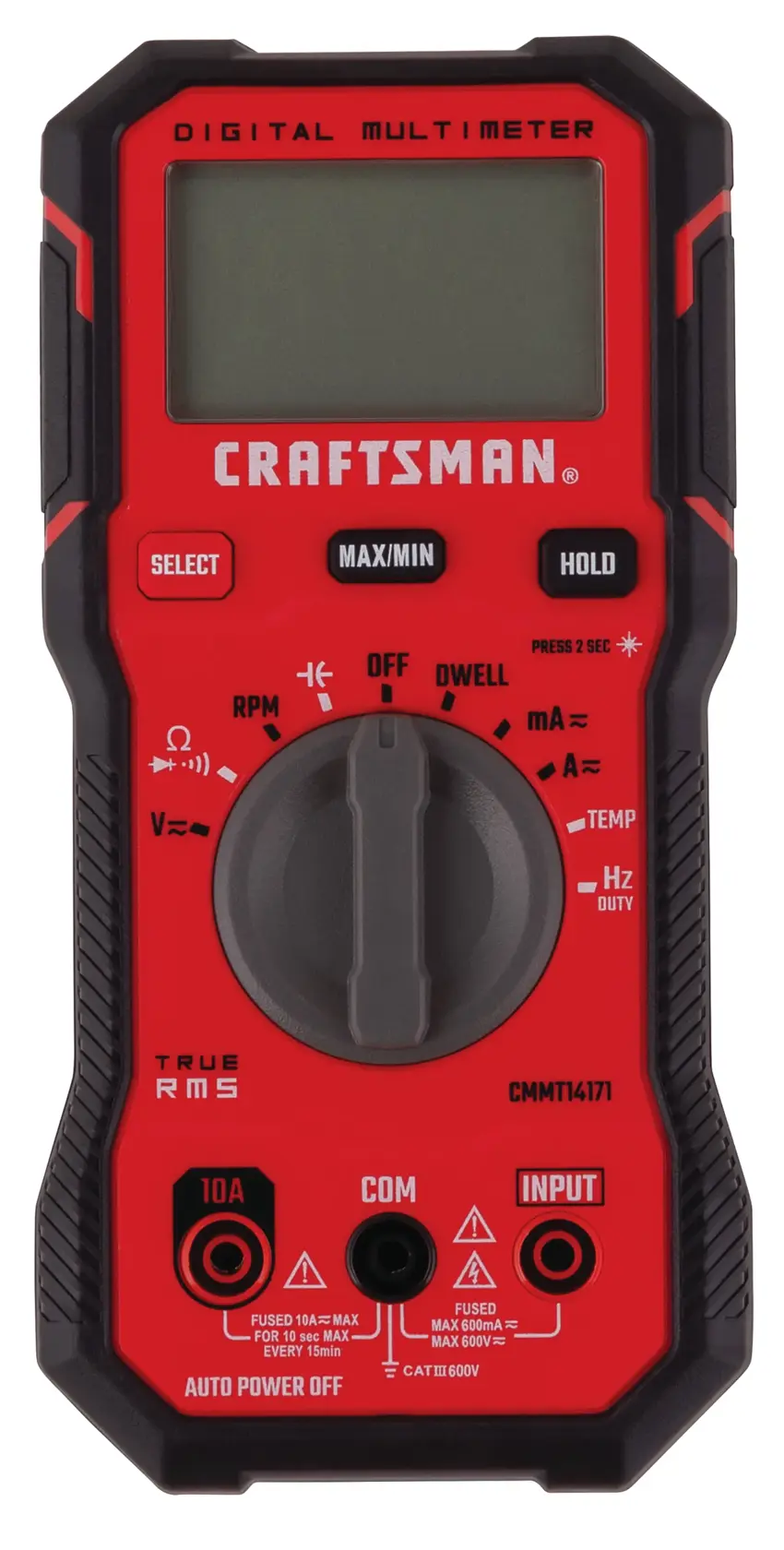
Any meter with continuity beep and a resistance range handles this test; auto-ranging saves time switching scales while you move along the harness. See the full best multimeter for automotive picks, or the best multimeters roundup.
Meters in our reviews
Built specifically for diagnosing cars, with a continuity beep fast enough to use while wiggling a harness.

True RMS with a low-impedance mode, for tracking down stubborn intermittent shorts.
As an Amazon Associate I earn from qualifying purchases. Prices and availability are shown on Amazon.
Frequently asked questions
Can I find a short to ground with the circuit powered up?
Not safely with a resistance test — a multimeter's ohmmeter function must never be used on a live circuit, since it applies its own small voltage and can give a false or damaging reading. With power on, a short usually shows as 0 V across the load and full battery voltage on both sides of the blown fuse instead; use that symptom to confirm there is a short, then kill power before measuring resistance.
Why does the new fuse blow again right away?
Almost always because the short was never actually isolated before power was restored. A short to ground draws very high current the instant the circuit is energized, so the replacement fuse opens within a fraction of a second. Repeat the resistance test rather than trying another fuse.
Can a self-powered test light replace the multimeter for this?
A self-powered continuity test light (not a 12 V test light) works the same way as a multimeter's continuity beep: it lights when there is a low-resistance path to ground. It is a fast way to scan while wiggling the harness, but a multimeter gives you an actual ohms reading, which matters when a short is intermittent or has some resistance rather than a dead 0 Ω.
What if the resistance to ground is high but not infinite?
A healthy circuit disconnected from its load should read open (OL) to ground. Anything from a few ohms up to a few hundred kilohms suggests chafed or pinched insulation that is partially shorting, often worse when the harness is flexed or warm. It is worth fixing even if it has not yet blown a fuse.
Is a short to ground the same as a short to power?
No. A short to ground connects the circuit to the chassis and blows that circuit's own fuse. A short to power (two wires touching, one hot) can energize a circuit that should be off, and sometimes feeds backward through other components — it will not always blow the fuse you expect, so trace it by checking which other circuits unexpectedly show voltage.


