HOW-TO GUIDE
Why Do Car Headlights Keep Burning Out?
By the OhmSavvy Research Team ·
Let bulbs cool, and never touch halogen glass bare-handed
- Let headlight bulbs cool fully before handling them.
- Handle halogen bulbs by the base only, using a clean cloth or gloves — never touch the glass with bare skin.
- Keep hands and tools clear of the fan and belts when testing with the engine running.
1Check for overcharging
With the engine running, measure voltage across the battery terminals. Voltage noticeably above your vehicle's specified charging range feeds every bulb more than it was designed for and will shorten the life of headlights specifically, since they're among the highest-current, most heat-stressed bulbs on the car. See how to test an alternator for the full procedure.
2Inspect the connector for moisture and corrosion
With power off, unplug the headlight connector and look for corrosion, discoloration from heat, or signs of moisture intrusion. A connector with slightly loose or corroded pins concentrates resistance at that point, heating up and sometimes damaging the bulb's base or socket over repeated cycles.
| Observation | Likely cause |
|---|---|
| Connector pins discolored or melted-looking | Resistance heating from a poor connection — repair the connector |
| Moisture visible inside the housing | Failed seal or gasket letting water in — repair the seal |
| Connector looks clean and tight | Check charging voltage and ground instead |
3Check the headlight's ground connection
With the headlight on, measure voltage drop between the bulb's ground connection and a known-good chassis ground (battery negative). A meaningful drop here means the ground path is adding resistance, which can cause both dimming and premature failure — the same technique covered in testing a car ground wire.
Compare both sides when only one fails repeatedly
Where the headlight circuit goes wrong
A headlight circuit is a single loop: battery positive, fuse, relay or switch, the connector at the bulb, the filament, then the ground wire back to the body and battery negative. Every joint in that loop is a place where resistance can build. Resistance on the feed side starves the bulb and cooks the connector; resistance on the ground side does the same from the other end. Measuring the two halves separately, with the lamp switched on, tells you which half is at fault.
Why does a few percent of extra voltage matter so much? A widely quoted lamp-engineering rule of thumb says incandescent and halogen filament life varies roughly with the inverse twelfth power of the applied voltage, so treat the figures here as approximate. A bulb run 5% above its design voltage lasts about 1 ÷ 1.05¹² ≈ 0.56 of its rated life, a little over half. At 10% over, 1 ÷ 1.10¹² ≈ 0.32, roughly a third. That is why a regulator that lets the system climb well past its normal charging range kills headlights long before it harms anything else, and why a measurement on the battery with the engine running is the first check worth making.
Bulb handling matters too
Beyond electrical causes, skin oil on a halogen bulb's quartz glass creates a hot spot that can shorten its life or cause early failure, independent of any wiring issue. Rule this out by confirming whoever last replaced the bulb handled it correctly.
Which meter to use
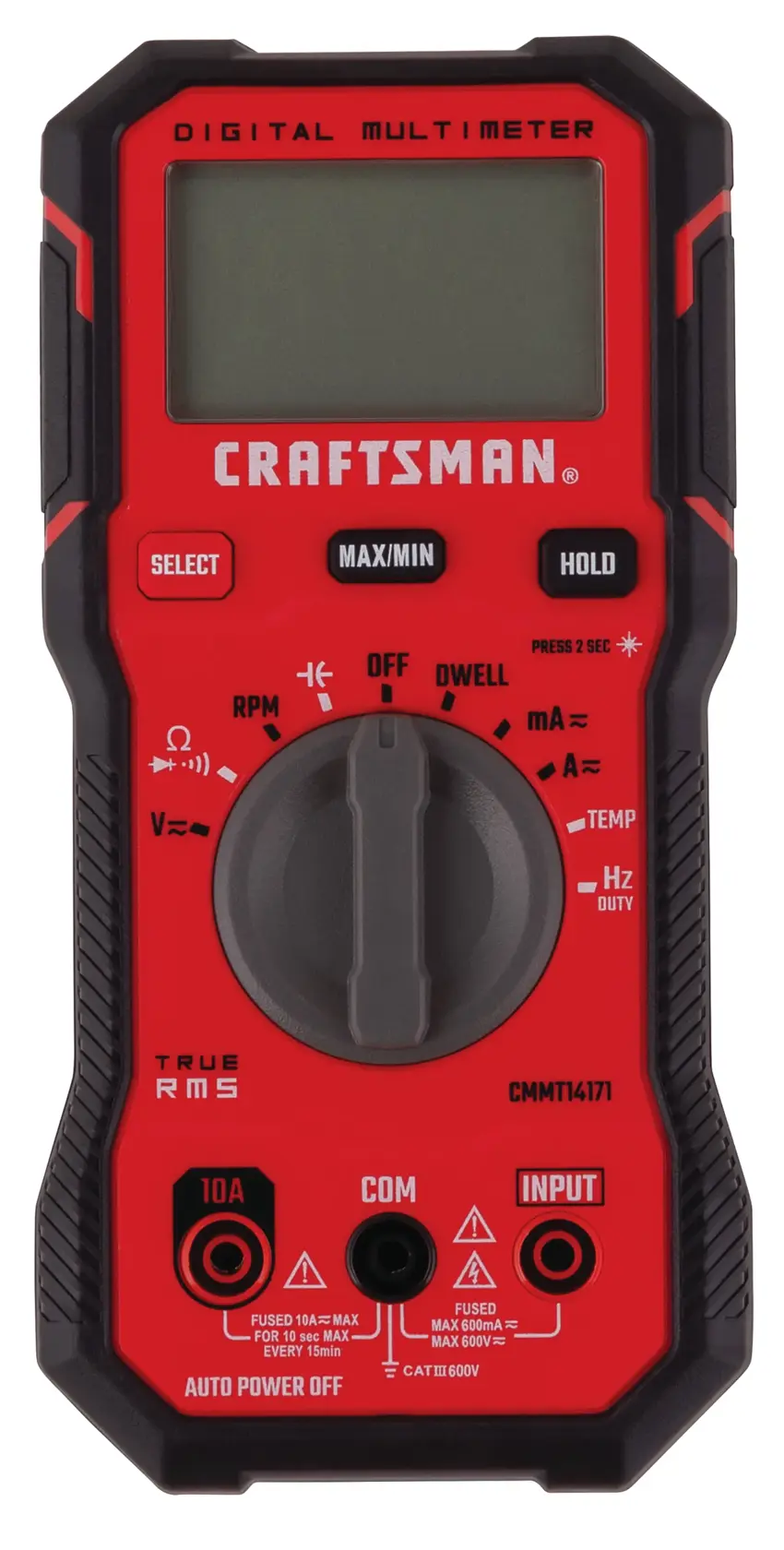
A meter with DC volts and a fine millivolt range for ground-drop checks covers this test. See the full best multimeter for automotive picks.
Meters in our reviews
Built for automotive charging and ground diagnosis.

Auto-ranging DC volts resolves small ground-drop readings cleanly.
As an Amazon Associate I earn from qualifying purchases. Prices and availability are shown on Amazon.
Frequently asked questions
What charging voltage would cause headlights to burn out repeatedly?
A charging system significantly above the normal range (often cited around 13.8-14.4 V for many 12V systems, check your service manual) feeds every bulb more voltage and current than it was designed for, measurably shortening filament life. If you measure charging voltage noticeably high, have the voltage regulator checked.
Can touching a halogen bulb's glass with bare fingers really cause it to fail early?
Yes — skin oil left on the glass creates a hot spot when the bulb heats up, which can cause the quartz glass to weaken or even shatter, and can shorten the bulb's life substantially. Always handle halogen bulbs with a clean cloth or gloves, holding only the base.
Why would only one headlight keep failing while the other is fine?
That points toward something specific to that one side — a bad connector, a poor ground only on that side, or moisture getting into just that housing — rather than a charging-system issue, which would typically affect both sides more evenly.
Could a bad ground really burn out a bulb instead of just making it dim?
A poor ground raises the resistance in the circuit, and depending on exactly where the resistance is and how the circuit responds, it's possible for the bulb to run dim most of the time but see brief voltage spikes when the connection intermittently improves — which can appear as random early failures rather than a simple dim strip.
Does bulb brand or quality actually matter for longevity?
Yes, to some extent — reputable brands generally have tighter manufacturing tolerances, but a genuinely electrical cause (overcharging, bad ground, moisture) will shorten the life of any brand. If a specific position keeps killing bulbs regardless of brand, the fault is in the vehicle's circuit, not the bulbs.


