HOW-TO GUIDE
Why Is My Breaker Panel Buzzing? Electrical Warning Signs to Check
By the OhmSavvy Research Team ·

Heat, smell, crackling or scorch marks: stop here
- If you see smoke or flames, get everyone out and call 911. Do not try to reach the panel.
- If there is a burning or hot-plastic smell, crackling, a warm door or brown and black marks, and you can reach the main breaker while standing on a dry floor without touching anything hot, switch the main off. Then call a licensed electrician.
- Never remove the panel cover or the inner dead-front, and never push, tighten or pull anything inside. Wires from the utility stay live even with the main off.
Normal hum or warning buzz?
Alternating current reverses direction 60 times a second in a US home, and anything magnetic that carries it can vibrate at twice that rate, which the ear hears as a low hum. A breaker's internal trip mechanism contains a small coil and metal parts that respond to that field, so a panel carrying a heavy evening load can give off a faint, even drone. If you have to stand close to notice it, the pitch is steady, and nothing else seems wrong, that is generally within normal behavior. Note it and listen again the next time the house is busy.
The sounds that matter are different in character. Arcing across a loose or corroded connection makes an irregular crackle or sizzle, sometimes with snapping, because the current is jumping a tiny gap and burning the metal around it. A loud buzz that you can hear from the next room, or one that has grown louder over weeks, suggests parts that are under strain. Any of these together with warmth, a smell, lights dimming or a breaker that feels hot is a fault in progress, not a quirk.
Likely causes by symptom
Several different faults can sound alike from outside the cover. The table lists what a homeowner can observe, what usually produces it, and where the work belongs. Most of the right-hand column says electrician because nearly every cause sits behind the dead-front.
| Symptom | Likely cause | What to check | Who should fix it |
|---|---|---|---|
| Faint even hum, louder with AC or dryer running | Normal magnetic hum under load | Whether it changes when big loads stop | No action unless it grows; mention at next inspection |
| Buzz from one breaker, handle warm | Overloaded, failing or loosely seated breaker | Which circuit it feeds; loads on that circuit | Licensed electrician |
| Crackle or sizzle, maybe with flicker | Arcing at a loose lug, bus stab or wire terminal | Nothing inside; note when it happens | Licensed electrician, urgently |
| Burning smell, warm door, scorch marks | Overheating connection or melting insulation | Do not investigate; main off if safe | Electrician now; 911 for smoke or fire |
| Sound from the meter or outside, whole house dims | Service drop, meter base or utility equipment | Whether neighbors notice dimming too | Electric utility (meter side), electrician (your side) |
| Hum from a box next to the panel | Doorbell or other small transformer, surge device | Which device the sound comes from | Electrician if hot or loud |
1Take the immediate safety actions
Treat smoke, flames or a strong burning odor as a fire, not an electrical question: leave the building and call 911 from outside. Firefighters deal with energized equipment routinely and the utility can cut the supply at the street.
For a crackle, warmth or a faint hot smell without smoke, switch off the large appliances first: the air conditioner at its thermostat, the electric dryer, the oven, any EV charging session. Less current through the panel means less heat at a bad joint. Then decide about the main. Turn it off only if the floor is dry, the panel front is not hot, and you can do it with one hand without touching any exposed metal. Afterward, leave the panel alone, keep children and pets away, and call an electrician, saying that you have a hot or arcing panel so they triage it correctly.
Do not reset breakers repeatedly, spray anything on the panel, or wedge the door open to cool it. Resetting can restart arcing at the same damaged joint.
2Make the checks you can do safely
If the only sign is a hum or a mild buzz with no heat or smell, a few observations from outside the panel will make the electrician's visit faster:
- Pin down the source. Stand back and listen. Is it the panel itself, the meter outside, a small transformer box mounted nearby, or something in the next room, such as an HVAC contactor or a fluorescent ballast?
- Tie it to a load. Turn the AC, water heater, dryer and other big appliances off at their own controls one at a time and note whether the sound fades. Write down which one changes it.
- Feel for heat without touching. Hold the back of your hand an inch from the closed door. Radiant warmth you can feel is a stop sign; go back to step 1.
- Look, do not open. With the door open but the cover in place, look for discoloration around breaker handles, a handle sitting between ON and OFF, or a breaker that looks raised compared with its neighbors.
- Check the rest of the house. Flickering lights, receptacles that feel warm, or appliances running oddly at the same time point to a shared connection problem and raise the urgency.
You can switch off a single breaker to see whether the sound stops, as long as no handle is warm and there is no smell. If the handle you need is the one that seems to be buzzing, skip it and let the electrician handle it.
3What a meter can tell you from the receptacles
A multimeter does not diagnose a panel, but it can show whether a noisy circuit is also delivering poor voltage, which is useful evidence. Use a meter rated at least CAT III 600V with leads in good condition, wear safety glasses, keep fingers behind the probe guards, and measure only at ordinary receptacles with the probes in the slots. Our how to use a multimeter guide covers the AC voltage setup.
On a receptacle fed from the circuit you suspect, read hot to neutral with the circuit lightly loaded, then again while a known load such as a space heater runs on the same circuit. A 120 V nominal supply is generally expected to sit between roughly 114 and 126 V, the ANSI C84.1 Range A band of plus or minus 5 percent. A small dip under load is normal; a reading that falls several volts further than on other circuits, or wanders while you watch, points to resistance somewhere in that circuit, possibly at the breaker terminal you can hear.
A clamp meter tells you how hard a circuit is working. Clamp a single conductor using a plug-in line splitter between an appliance and the receptacle, never around a cord with both wires inside, and compare the reading with the breaker's rating. If the circuit runs close to its limit for long periods, that alone can explain a warm breaker. Our guide to measuring AC current with a clamp meter shows the technique.
Why the cover stays on
The panel cover and the dead-front behind it are what separate you from the bus bars and the service conductors. The conductors that land on the main breaker come straight from the utility transformer, have no breaker of their own ahead of them in the house, and remain energized when the main is off. A fault there can deliver far more energy than a branch circuit. Tightening lugs, reseating breakers and checking torque are jobs for a licensed electrician with insulated tools and the right protective equipment, and in many places they also require a permit. Whatever a video online suggests, removing the cover is not a homeowner troubleshooting step.
Electrician, utility or fire department?
Meters for receptacle checks
True RMS, CAT III 600V, with non-contact voltage detection. Hands-on tested by OhmSavvy.

CAT IV 600V / CAT III 1000V, True RMS, with a LoZ mode for ghost voltages. No NCV.
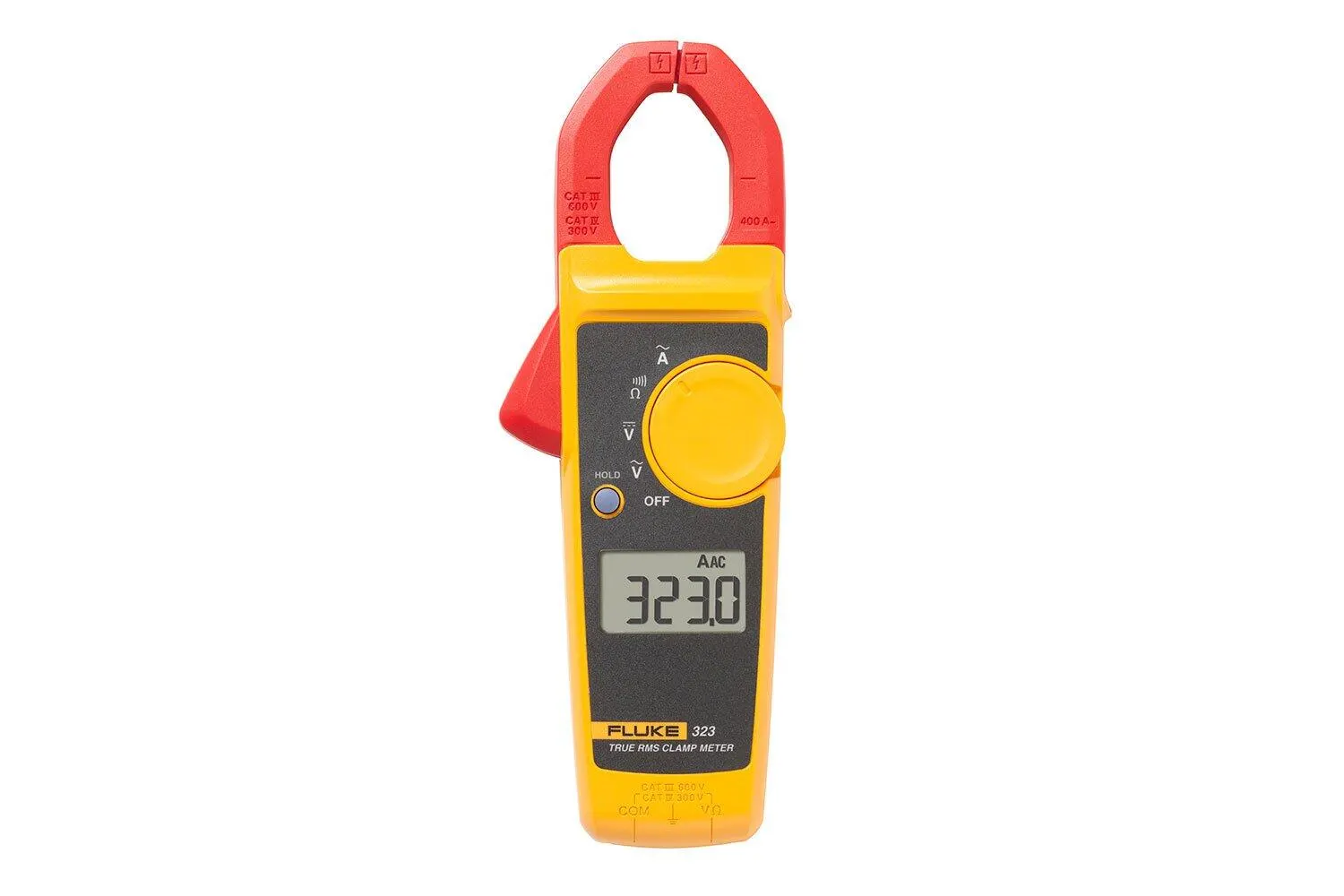
True RMS AC clamp to 400A, CAT III 600V / CAT IV 300V, for circuit load checks. AC current only.
As an Amazon Associate I earn from qualifying purchases. Prices and availability are shown on Amazon.
Frequently asked questions
Is it normal for a breaker panel to hum?
A very faint, steady hum that you have to put your ear close to hear, and that does not change much, is common and usually not a concern. A hum you can hear across the room, one that pulses, or one that has recently got louder deserves an electrician's inspection.
Can a single breaker buzz?
Yes. A breaker that is overloaded, failing internally or loosely seated on the bus can buzz on its own. If the sound clearly comes from one handle, or that handle feels warm, leave it alone and have an electrician replace or reseat it. Do not keep cycling it.
Should I turn off the main breaker if the panel is buzzing?
If there is heat, smoke, a burning smell or crackling, and you can reach the main without touching anything hot or standing in water, switching it off removes power from the branch circuits. It does not de-energize the wires coming in from the utility, so stay clear and call for help. With only a faint hum and no other signs, you do not need to cut power before calling an electrician.
Why does my panel buzz only when the AC or dryer is on?
Large loads put more current through the breakers, bus and lugs. A good connection may hum slightly louder; a loose or corroded one heats up and can buzz. Because the sound tracks the load, an electrician can find the joint under load with a thermal camera.
Is it safe to stay in the house overnight with a buzzing panel?
With only a faint, steady hum and no heat, odor, crackling or flickering lights, most households book an electrician and carry on as normal in the meantime. Make sure the smoke alarms work and keep boxes, laundry and other clutter away from the panel. If the sound grows louder, the cover feels warm or anything smells scorched, treat it as urgent rather than waiting until morning.
Where to go next
Why Does a Circuit Breaker Keep Tripping? →
Overloads, short circuits and ground faults, and how to tell them apart.
Why Does Half My House Have No Power? →
Lost service legs, hidden trips and when the utility has to fix it.
How to Test a Whole-House Surge Protector →
Reading the status lights on a panel-mounted surge device.


