HOW-TO GUIDE
Why Does a Washing Machine Keep Tripping the Breaker? Electrical Fault Diagnosis
By the OhmSavvy Research Team ·

Unplug before every check
- Pull the plug from the wall socket before removing any panel. Switching the dial off is not enough.
- Never run the machine with panels removed to watch for the fault, and never bypass or tape over a GFCI or RCD.
- If the breaker trips with the washer unplugged, or the socket or plug shows scorch marks, stop and call a licensed electrician. If you are not comfortable working inside an appliance, a qualified appliance technician should carry out these tests.
Causes at a glance
Find the row that matches what you see, then follow the numbered steps below for the detail. Every check in the third column is done with the machine unplugged unless it says otherwise.
| Symptom | Likely cause | How to check | Fix or who to call |
|---|---|---|---|
| Trips instantly at plug-in or switch-on | Mains cord, suppressor/EMI filter, wet wiring or door lock | Inspect cord and filter; ohms from each mains pin to earth pin | Replace the cord or filter; technician if the wiring is wet |
| Trips during the fill | Inlet valve coil, or water leaking onto wiring or pump | Look for drips; ohms from valve terminals to chassis | Fix the leak, dry the parts, replace the valve |
| Trips when the water starts to heat | Heating element leaking to earth | Ohms from each element terminal to the earth stud (expect OL) | Replace the element; technician for an insulation test |
| Trips during tumble or spin | Motor windings, brushes, motor wiring or drain pump | Ohms from each motor terminal to the motor frame | Clean carbon dust, replace brushes or motor; technician |
| Plain breaker trips only with other loads running | Overloaded or shared circuit | Run the washer alone; add up the rating plates on the circuit | Move loads; electrician to add a dedicated circuit |
| Trips even with the washer unplugged | Fault in the fixed wiring, outlet or the protective device | Leave it unplugged and reset | Licensed electrician |
1Note when it trips
Run through the timing from memory of the last few failed washes, or watch one cycle from a distance with the panels on. Each stage of a wash switches in a different set of parts, so the moment of the trip is the single most useful clue you have. At plug-in only the mains filter, cord and door lock circuit are live. During the fill the inlet valve solenoids open. Heating brings in the largest load in the machine, and tumble and spin bring in the motor.
A trip that happens at a random point, and only when the dryer, a kettle or a space heater is also running, is the odd one out: that pattern points at the circuit rather than the machine, and step 5 covers it.
2Find out which device tripped
Look at the panel, or the outlet, after a trip. If a GFCI outlet, an RCD or a combined RCBO has operated, it saw current leaking to earth, so the fault is insulation breaking down somewhere. If a plain circuit breaker tripped, the circuit drew more current than its rating, from a short between conductors, a seized motor or too many loads on one circuit. Telling these apart halves the search.
The thresholds are worlds apart, which is why the distinction matters. A US Class A GFCI is designed to trip at a leak of roughly 4 to 6 mA. In the UK and much of Europe, the RCDs protecting socket circuits are commonly rated 30 mA and may trip anywhere from about half that figure up to 30 mA. A 15 A breaker, by contrast, needs a total current of 15 A or more, sustained, before its thermal trip acts. For the detail of how leakage sensing works, see why a GFCI outlet keeps tripping; for the plain-breaker version of the problem around the house, see why a circuit breaker keeps tripping.
3Check the heating element to chassis
If it trips once heating begins, the element is the first suspect. With the machine unplugged and the back panel off, photograph the wiring, pull the wires off the element, set the meter to its highest resistance range, and measure from each element terminal to the earth stud or bare metal of the flange. A healthy element shows OL to earth on both terminals. Any finite reading means the insulation inside the sheath is leaking. Our separate guide on testing a washing machine heating element covers the element itself, including the expected resistance across its terminals.
It is worth doing the arithmetic on that second, illustrative reading, because it explains a puzzle many people hit. Leakage current is voltage divided by insulation resistance. At 120 V, 0.48 MΩ lets through 120 ÷ 480,000 ≈ 0.25 mA; at 230 V it is about 0.48 mA. Both are below any trip threshold. So why does it trip? Because the cold, low-voltage reading is only the early warning: once the element is hot and full mains voltage is across the cracked insulation, its resistance can fall much further. To pass 5 mA at 120 V the insulation only has to drop to 120 ÷ 0.005 = 24 kΩ; to pass 30 mA at 230 V, about 7.7 kΩ.
4Check the motor, filter, door lock and leaks
For a trip on tumble or spin, unplug the motor connector and measure from each motor terminal to the motor frame; again, anything other than OL is suspect. Brushed motors also shed carbon dust that can bridge to the case, so a motor that tests clean after you blow the dust out has told you something. The method is the same one used in how to check a motor winding for a short. The inlet valve is a pair of small solenoid coils; their coil resistance and their insulation to the valve body can be checked the way our solenoid valve coil guide describes.
- Suppressor or EMI filter: the small block where the mains cord enters. Its internal capacitors connect to earth by design, and when they fail they can trip protection the moment the machine is plugged in.
- Door lock: a mains-powered interlock that can short if water or detergent gets inside.
- Water damage: inspect the base, the pump and every connector for drips, corrosion or limescale tracking. Dry and clean affected parts, and replace any that are corroded.
5Rule out an overloaded circuit
A washer that heats its own water draws a substantial current. If a dryer, dishwasher, kettle or heater shares the same circuit, the total can exceed the breaker rating even with every appliance healthy. The giveaway is a plain breaker trip, never a GFCI or RCD, that only happens when other loads run at the same time. Add up the wattage on each rating plate and divide by the supply voltage: a 1,500 W space heater (12.5 A at 120 V) plus a washer heating at even 1,000 W (8.3 A) already asks more than 20 A of a 20 A circuit. Running the washer alone, or having an electrician check the circuit layout, settles it.
Also look at the socket and plug. Scorching, a loose fit or a plug that feels warm after a wash suggests a poor connection, which heats up under load. Extension cords and multi-way adapters are a common weak point for high-current appliances, and the machine's manual usually asks for it to be plugged straight into a wall outlet. A damaged outlet or plug is a job for an electrician, not something to keep resetting around.
The numbers behind a trip
The chart puts the three kinds of protection on one scale. The values are typical design figures, not measurements: check the rating printed on your own device.
Bars use a logarithmic scale: each step is ten times the last.
The heating element is usually the biggest load in the machine, and current is simply power divided by voltage. The table shows the arithmetic for some common element ratings. Your machine's actual figure is on its rating plate; many US washers that heat internally use smaller elements than European machines, and some don't heat at all.
| Element rating | At 230 V | At 120 V |
|---|---|---|
| 1,000 W | 1,000 ÷ 230 ≈ 4.3 A | 1,000 ÷ 120 ≈ 8.3 A |
| 2,000 W | 2,000 ÷ 230 ≈ 8.7 A | 2,000 ÷ 120 ≈ 16.7 A |
| 2,400 W | 2,400 ÷ 230 ≈ 10.4 A | 2,400 ÷ 120 = 20 A |
A plain breaker trip that coincides with heating, on a circuit with nothing else running, is unusual for a healthy machine on a correctly sized circuit. It points to a short in the element or its wiring rather than a simple overload. A breaker that trips the instant you plug in, with a bang or a flash, is the magnetic part of the breaker reacting to a short circuit, and the machine should not be plugged in again until it has been repaired.
The diagnostic order
01
When?
Plug-in, fill, heat or spin
02
Which device?
GFCI/RCD = leak; breaker = overcurrent
03
Unplugged ohms
Each part to chassis: expect OL
04
Run alone
Rules out a shared circuit
05
Still trips?
Technician insulation test
A multimeter can pass a part that still leaks
Two other things a multimeter will not show you: the small leakage that a healthy machine's mains filter passes to earth by design, and the way leakage from several appliances adds up when they share one RCD. A board where the washer, a refrigerator and a computer all sit behind the same 30 mA device can trip on the sum of several small, individually normal leaks. That is a wiring layout question for an electrician, not a fault in the washer.
Meters for appliance checks
Every test above is a resistance check on an unplugged machine, so any working digital multimeter will do the core job. A meter that reads into the megohms, makes it hard to leave a lead in the wrong jack, and carries a proper safety rating for later work at the outlet is worth having. These picks come from our verified multimeter list.
Meters suited to appliance fault-finding

True RMS, CAT III 600V, with NCV plus the AutoVolt and LoZ modes the 115 lacks. Hands-on Tested.
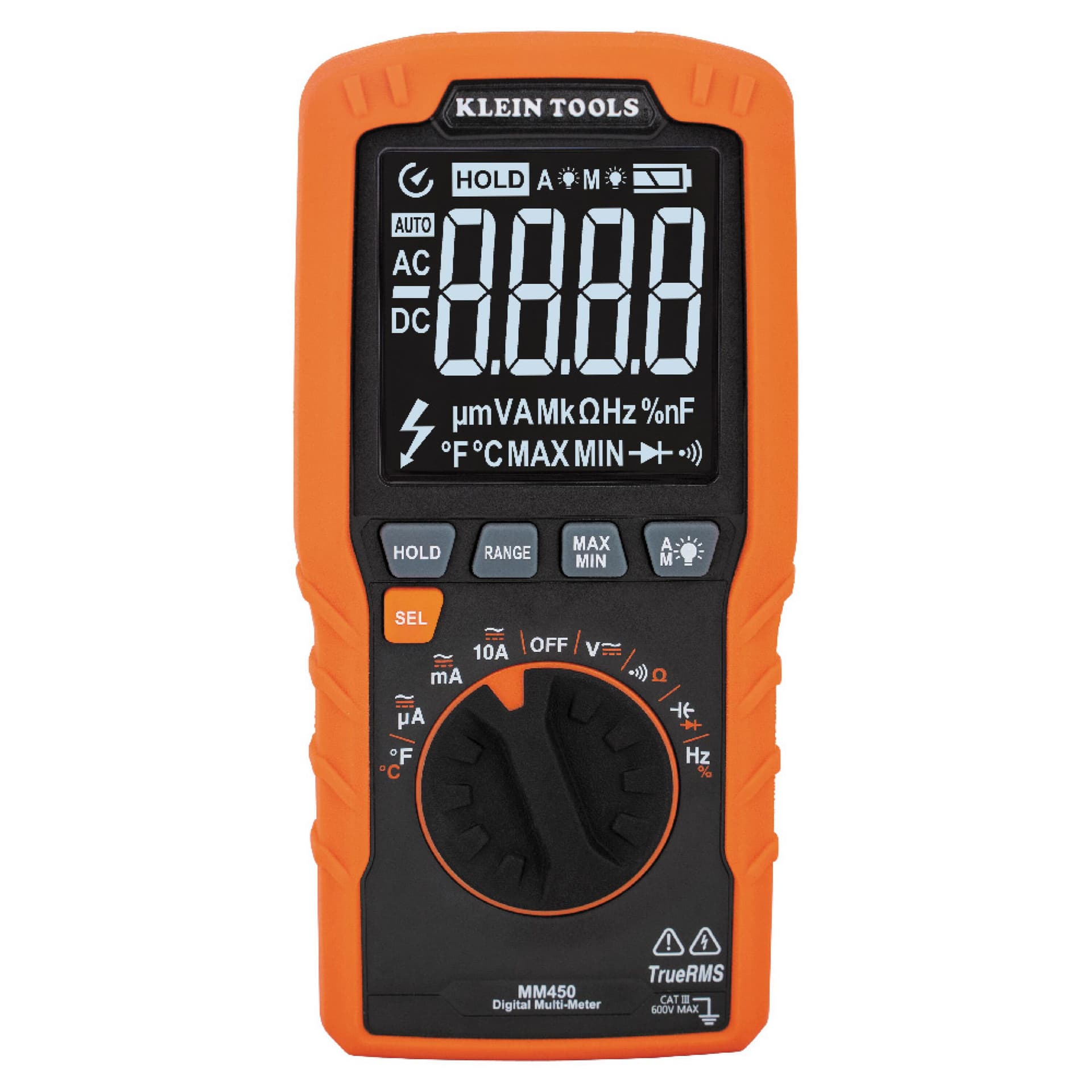
True RMS, CAT III 600V, with Lead-Alert lights that show where the leads belong. No LoZ or NCV.
Budget True RMS with auto-ranging, NCV and a backlit display. CAT II 600V, so not for panel work.
As an Amazon Associate I earn from qualifying purchases. Prices and availability are shown on Amazon.
Frequently asked questions
Why does my washing machine trip the electrics as soon as I plug it in?
A trip before any program starts points to the mains side of the machine: the power cord, the plug, the interference suppressor or filter near the cord entry, the door lock, or wiring that has got wet. Nothing else is powered yet, so the fault has to be there. Leave the machine unplugged and have the cord, filter and connections inspected before you try it again.
Can a washing machine trip the breaker because of a water leak?
Yes, and it is one of the most common causes. A leaking hose, pump seal or door boot can drip onto the pump, motor connections or wiring loom and create a path to the earthed chassis. Look for water marks, rust, detergent crust or limescale trails inside the base and on connectors. Dry and clean the parts, fix the leak, and replace anything corroded.
My heating element tested fine. Why does it still trip when heating?
A multimeter checks insulation with only a few volts, so an element can read OL cold and still leak at mains voltage once it is hot and the sheath expands. An insulation resistance test, done by an appliance technician at a much higher test voltage, is the definitive check. Also inspect the element's connectors and the wiring loom near it for scorching or damp.
Is it safe to keep resetting the breaker and running the wash?
No. A trip means the protection found a fault, and an earth leakage fault can put the metal cabinet at a dangerous voltage if the earth connection is ever poor. Repeated resets also stress the breaker and the fault itself. Leave the machine unplugged until the cause is found and fixed, and call an electrician if the trips continue with the washer disconnected.
Why does my washer trip the GFCI but not the regular breaker?
Because they measure different things. A GFCI compares the current going out on the hot wire with the current coming back on the neutral and trips at a difference of roughly 4 to 6 mA. The breaker only trips on total current, typically 15 or 20 A in a US laundry circuit. A small leak to ground is thousands of times too small to trip the breaker.
How many amps does a washing machine draw?
It depends on the model and on whether it heats its own water. The rating plate inside the door or on the back states the voltage and power, and current is power divided by voltage. A 2,000 W heater on 230 V draws about 8.7 A; the same power at 120 V would need about 16.7 A. Motors draw much less than heaters, except briefly at start-up.


