HOW-TO GUIDE
Why Does My AFCI Breaker Keep Tripping With No Obvious Cause?
By the OhmSavvy Research Team ·

Signs of a dangerous connection: stop and call
- A burning smell, crackling or sizzling from an outlet, switch or wall, scorch marks on a cover plate, or a plate that is warm to touch: switch off that breaker, or the main if the source is unclear, and call an electrician. For smoke or fire, leave and call 911.
- Don't keep resetting a breaker that trips again immediately.
- Never remove the panel cover or open outlet boxes to look for the fault. Every check below is done from the outside of the outlet, switch and breaker.
What an AFCI is looking for
An arc is current jumping a gap: across a loose terminal, a broken strand or damaged insulation. It produces erratic, high-frequency changes in the current that a normal load doesn't, and it can start a fire at currents far below a breaker's rating. A combination AFCI, the type required in many US living areas, looks for two patterns. A series arc happens in one conductor, typically at a loose connection, and carries no more than the load current. A parallel arc jumps between hot and neutral, or hot and ground, through damaged insulation. Many AFCI breakers also sense a modest ground fault, which matters later for shared neutrals.
Symptoms and likely causes
| Symptom | Likely cause | What to check | Who should fix it |
|---|---|---|---|
| Trips when one appliance runs | Brushed motor, worn cord or noisy power supply | Try the appliance on another AFCI circuit | Homeowner; appliance repair |
| Trips when furniture is moved or a door shuts | Damaged or pinched cord or power strip | Cords behind beds, sofas and desks | Homeowner (replace the cord) |
| Trips with nothing plugged in | Damaged cable in a wall, loose device terminal | Recent nails, screws or remodeling | Electrician |
| Trips randomly, worse with heavy loads | Loose or backstabbed receptacle connection | Warm plates, voltage drop under load | Electrician |
| Trips when a different circuit is used | Shared or crossed neutral | Which other circuit sets it off | Electrician |
| Trips at once on reset, every time | Hard fault in the wiring or the breaker | Trip indicator, if fitted | Electrician |
1Read the trip indicator first
Many recent AFCI and dual-function breakers record why they last tripped, shown as an LED pattern or a code when you follow the maker's procedure, often involving the TEST button. The method and the meaning differ by brand, so check the label inside the panel door or the manufacturer's instructions. Reading it only involves the breaker face, visible through the opening in the panel cover. Knowing whether the breaker saw a series arc, a parallel arc or a ground fault cuts the search considerably, and it is information worth passing to the electrician.
2Isolate cords and appliances
Turn off and unplug everything on the circuit, including lamps, chargers and power strips, then reset the breaker. If it holds overnight, add loads back one at a time, running each through its normal use. Vacuum cleaners, treadmills, hair dryers, older dimmer switches and some space heaters and laser printers are frequent suspects, because brushed motors and fast-switching electronics create current spikes that resemble arcing.
While everything is unplugged, inspect each cord along its full length. Look for flattened sections where a chair leg or bed frame has rested, kinks at the plug, cracked insulation and plugs that sit loosely in the outlet. A cord damaged on the inside can look fine and still arc when flexed, so retire any cord that is visibly crushed. Daisy-chained power strips and undersized extension cords are worth removing too; see why extension cords overheat.
3Meter checks for a poor connection
A multimeter can't detect an arc, which lasts microseconds and lives in high frequencies. What it can find is the resistance of a loose connection, because that shows up as extra voltage drop under load. Use a meter rated at least CAT III 600 V, with safety glasses and your fingers behind the probe guards. Measure hot to neutral at an outlet with the circuit lightly loaded, then again while a steady load such as a hair dryer on high runs from another outlet on the same circuit.
A few volts of drop on a long run is normal. A drop approaching 10% of the unloaded voltage, or a reading that flickers while the load runs, suggests a connection heating up somewhere between the panel and that outlet. Repeating the test at several outlets along the run can show which box it starts at, which saves the electrician time. A clamp meter used with a plug-in line splitter tells you how much current an appliance actually draws, as explained in how to measure AC current with a clamp meter, which is useful for ruling out a simple overload. For trips that come and go, the method in finding an intermittent electrical fault also applies.
Shared and crossed neutrals
Some homes use multiwire branch circuits, where two hots share one neutral. That is legitimate when wired with a two-pole breaker or a handle tie, but a single-pole AFCI on each hot sees current returning on a neutral it doesn't monitor and trips. The same thing happens when a neutral from one circuit was connected to another during a remodel or when outlets were added.
The giveaway is a trip that only happens when something on a different breaker switches on. Write down which circuit sets it off and tell the electrician; correcting it means work inside the panel and junction boxes. If you are also seeing lights dim or brighten across the house, read what a lost leg or neutral looks like and why lights flicker when large appliances start.
When to call an electrician
Meters for tracing a nuisance trip
Hands-on tested. True RMS, CAT III 600V, with NCV for a fast live check.
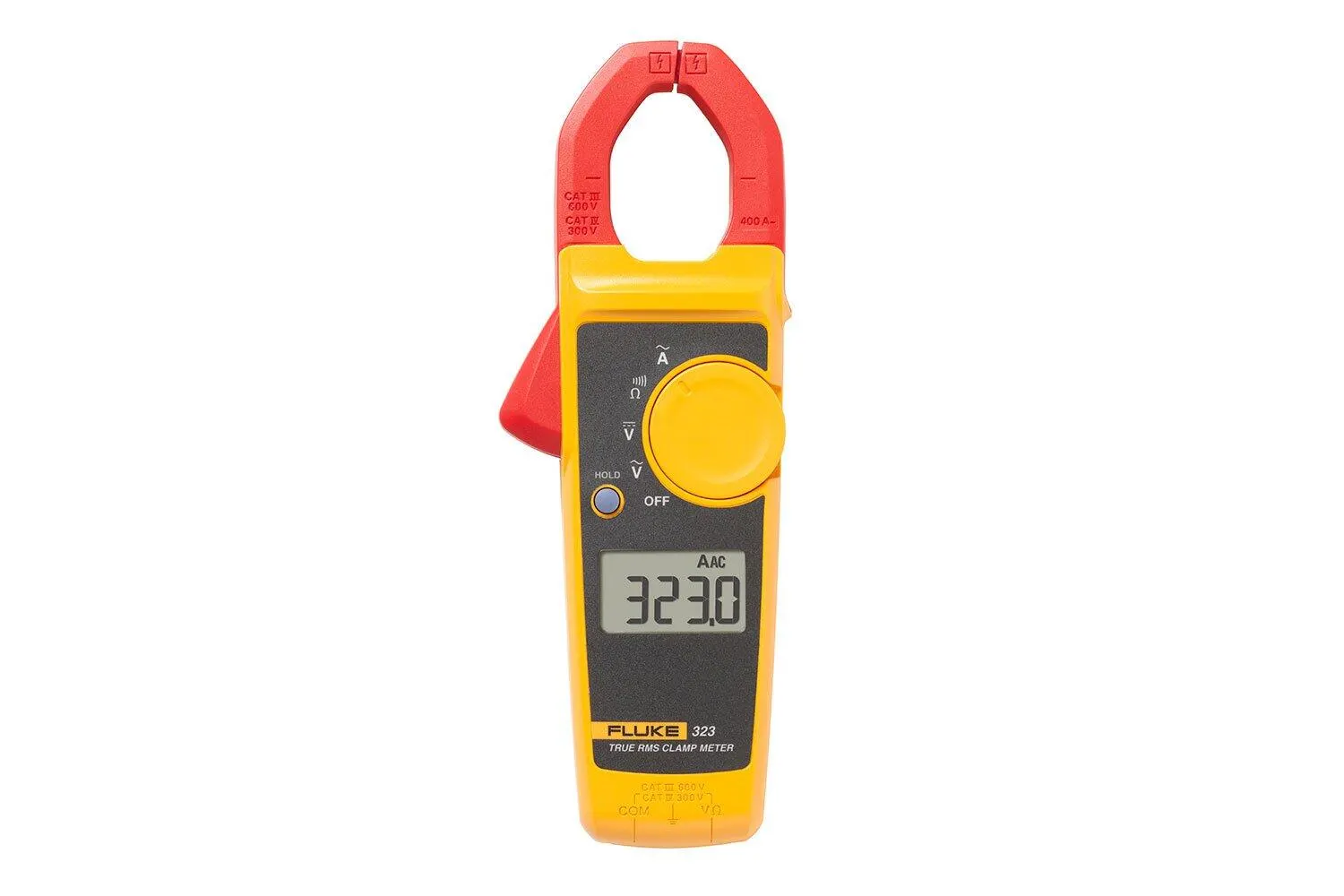
True RMS AC clamp to 400A for appliance current through a line splitter. AC current only.

True RMS, CAT III 600V with Min/Max, a budget option for loaded and unloaded voltage checks.
As an Amazon Associate I earn from qualifying purchases. Prices and availability are shown on Amazon.
Frequently asked questions
Can a vacuum cleaner trip an AFCI breaker?
Yes, it is one of the most common examples. Brushed motors spark at the commutator as a normal part of running, and a worn motor or a damaged vacuum cord adds more. If a trip follows the vacuum from room to room, the vacuum or its cord is the likely cause.
Why did my AFCI start tripping after I hung pictures?
A nail or screw can nick or pierce a cable inside the wall, creating a path between conductors that arcs intermittently. Note where you drilled or nailed and tell the electrician; that wall is the first place to look.
Can I replace an AFCI breaker with a standard breaker to stop the trips?
No. Where code requires arc-fault protection it is there to catch a fire risk, and swapping the breaker removes that protection and is usually not permitted. Breaker work inside the panel is also a job for a licensed electrician.
Do AFCI breakers wear out or get nuisance trips with age?
Breakers can fail like any device, and some manufacturers have released updated versions of earlier AFCI designs to reduce nuisance tripping. An electrician can check whether yours is affected, but rule out the wiring and loads first; a trip is more often right than wrong.
Does an AFCI breaker also trip on overloads like a normal breaker?
Yes. An AFCI breaker still contains standard overcurrent protection, so a space heater and a hair dryer on the same circuit can trip it exactly as they would a plain breaker. If the trips line up with heavy loads and the circuit draws more than its rating, that is an overload, not an arc. Some models show which kind of trip occurred.


