HOW-TO GUIDE
Why Does My GFCI Outlet Keep Tripping? Causes and Safe Troubleshooting
By the OhmSavvy Research Team ·
A GFCI trip is a protective device doing its job
- Never bypass, tape down or replace a GFCI with a standard outlet to stop the tripping.
- Turn the breaker off and confirm the outlet is dead with a tester before removing a cover plate.
- Opening boxes, rewiring or replacing a GFCI is electrical work. If you are not qualified, or local rules require a licensed electrician, hire one.
- If an outlet is scorched, smoking or hot, switch off its breaker and keep it off. If there is fire, get out and call 911.
Causes at a glance
| Symptom | Likely cause | How to check | Fix or who to call |
|---|---|---|---|
| Trips after rain, dew or hosing down | Moisture in an outdoor box or receptacle | Inspect covers and gaskets when dry | Wet-location in-use cover; electrician to repair boxes |
| Trips when one item is plugged in or switched on | Appliance with leaky insulation | Unplug-and-add-back routine | Repair or retire the appliance |
| Trips at start-up of a pump, fridge or tool | Motor or compressor leakage | Try the item on its own | Appliance repair; don't move it off GFCI without checking code |
| Trips with nothing in the GFCI itself | Fault on a downstream LOAD-side outlet | Find what goes dead when it trips | Electrician |
| Will not reset, or outlet stays dead after reset | Line and load swapped, or no power | Plug-in tester; check the breaker | Electrician; see the won't-reset guide |
| Trips when an unrelated circuit is used | Shared neutral with another circuit | Note which circuit triggers it | Electrician |
| Random trips, or fails its monthly TEST | Worn-out GFCI | Press TEST; check RESET | Replace the device |
How a GFCI decides to trip
Both the hot and neutral conductors pass through a small current transformer inside the GFCI. When all current returns on the neutral, the two magnetic fields cancel. If some current takes another route to ground, through damp insulation, an appliance case or a person, the imbalance induces a signal and the device opens the circuit. Class A GFCIs listed to UL 943 must trip at a ground-fault current of 6 mA and must not trip below 4 mA, so the threshold sits in the range of roughly 4 to 6 mA, far below what a standard breaker reacts to. The larger the leakage, the faster the device is required to open.
The numbers: milliamps and ohms
Ohm's law shows how small a fault has to be. On a 120 V circuit, a leakage path to ground of R ohms carries I = V ÷ R. To pass the 6 mA trip level, the path needs R = 120 ÷ 0.006 = 20,000 Ω or less; at the 4 mA lower bound it is 120 ÷ 0.004 = 30,000 Ω. A film of rainwater across a receptacle, or the damp insulation of an old heating element, can easily fall into that range, while healthy insulation measures in the megohms. A 15 A breaker, by contrast, ignores everything below its rating, which is 15,000 mA, thousands of times more than the GFCI threshold.
Bars use a logarithmic scale: each step is ten times the last.
Leakage also adds up. Every appliance on the protected circuit leaks a little through its insulation and filter capacitors. As an illustrative example, three items leaking 1.5 mA, 1.5 mA and 2 mA total 1.5 + 1.5 + 2 = 5 mA, right at the trip threshold, even though none of them is faulty on its own. That is why a GFCI may hold with any two items plugged in but trip with all three.
1Test the GFCI itself
Press TEST: the GFCI should click and cut power, which you can confirm with a lamp or a plug-in tester. Press RESET firmly and power should return. If it won't trip on TEST, won't reset, or the indicator light shows an end-of-life fault, the device is the problem and should be replaced. If it resets but trips again on its own, carry on with the isolation steps. If it won't reset at all, our guide to testing a GFCI outlet that won't reset covers that separate problem. GFCIs made since about 2015 also monitor themselves and, depending on the model, either refuse to reset or show a warning light when their protection has failed, so read the indicator legend printed on the face before assuming a nuisance trip.
2Unplug everything and add back one by one
Unplug everything from the GFCI and from every outlet it protects, then press RESET. If it now holds, plug items back in one at a time, waiting through a normal operating cycle for each: a fridge needs to start its compressor, a washer needs to heat and spin. The item that brings the trip back is leaking and should be repaired or retired. If the trip only returns with several items together, you are seeing cumulative leakage; spread those loads across circuits. If the GFCI trips with nothing connected, the fault is in the fixed wiring, a downstream outlet, a wet box or the GFCI itself.
01
Unplug all
GFCI and downstream outlets
02
Reset
Does it hold?
03
Add back one by one
Watch for the trip
04
Still trips empty
Wiring or GFCI fault
05
Electrician
Opens boxes, tests wiring
3Find the downstream outlets
One GFCI often protects several outlets further along the circuit, including some in other rooms, a garage or outdoors. Many are marked with a small "GFCI protected" sticker, but not all. Press TEST on the GFCI and walk the house with a lamp or plug-in tester: every outlet that goes dead is downstream, and any of them can be the source of the trip. Unplug items from those outlets too before you start adding loads back.
4Check for moisture
If trips cluster after rain, heavy dew, lawn watering or a steamy shower, moisture is the prime suspect. With the circuit switched off at the breaker, look at outdoor covers for cracked gaskets, missing plugs in unused openings, and boxes that collect water. Exterior light fixtures, pond pumps, holiday lighting and buried splices are frequent sources. Outdoor receptacles should have an in-use (bubble) cover that stays weatherproof with a plug inserted. Drying a wet box may stop the trips for a while, but corrosion left behind keeps leaking, so have a damaged box or receptacle replaced.
Why a multimeter can't measure the leak
The leakage that trips a GFCI is a few milliamps flowing between conductors that are live at mains voltage. Measuring it with a multimeter's current range would mean breaking into the live circuit and putting the meter in series, which is hazardous and still would not show the hot-minus-neutral difference the GFCI responds to. A standard clamp meter around one wire reads load current in amps and lacks the resolution for a few milliamps; clamping hot and neutral together cancels the load current but leaves too small a residual for most general-purpose clamps to show clearly.
The tools made for this are a leakage current clamp meter, which resolves milliamps with both conductors in the jaw, and an insulation resistance tester, which checks a de-energized cable or appliance at a raised test voltage. Our clamp meter buying guide explains how leakage clamps differ from general-purpose ones, and how to measure AC current with a clamp meter covers the normal use. A multimeter is still useful for confirming a circuit is dead before work and for continuity checks on disconnected cable, as in how to test electrical wires with a multimeter. If it is a breaker rather than a GFCI outlet that keeps tripping, see why a circuit breaker keeps tripping or why an AFCI breaker trips with no obvious cause.
When to call a licensed electrician
Testers for the job
None of these measures GFCI leakage directly; that takes a dedicated leakage clamp. They cover the safe-work side: proving a circuit dead, confirming voltage, and reading appliance load current. These picks come from our verified multimeter and clamp meter list.
Meters for proving dead and checking loads

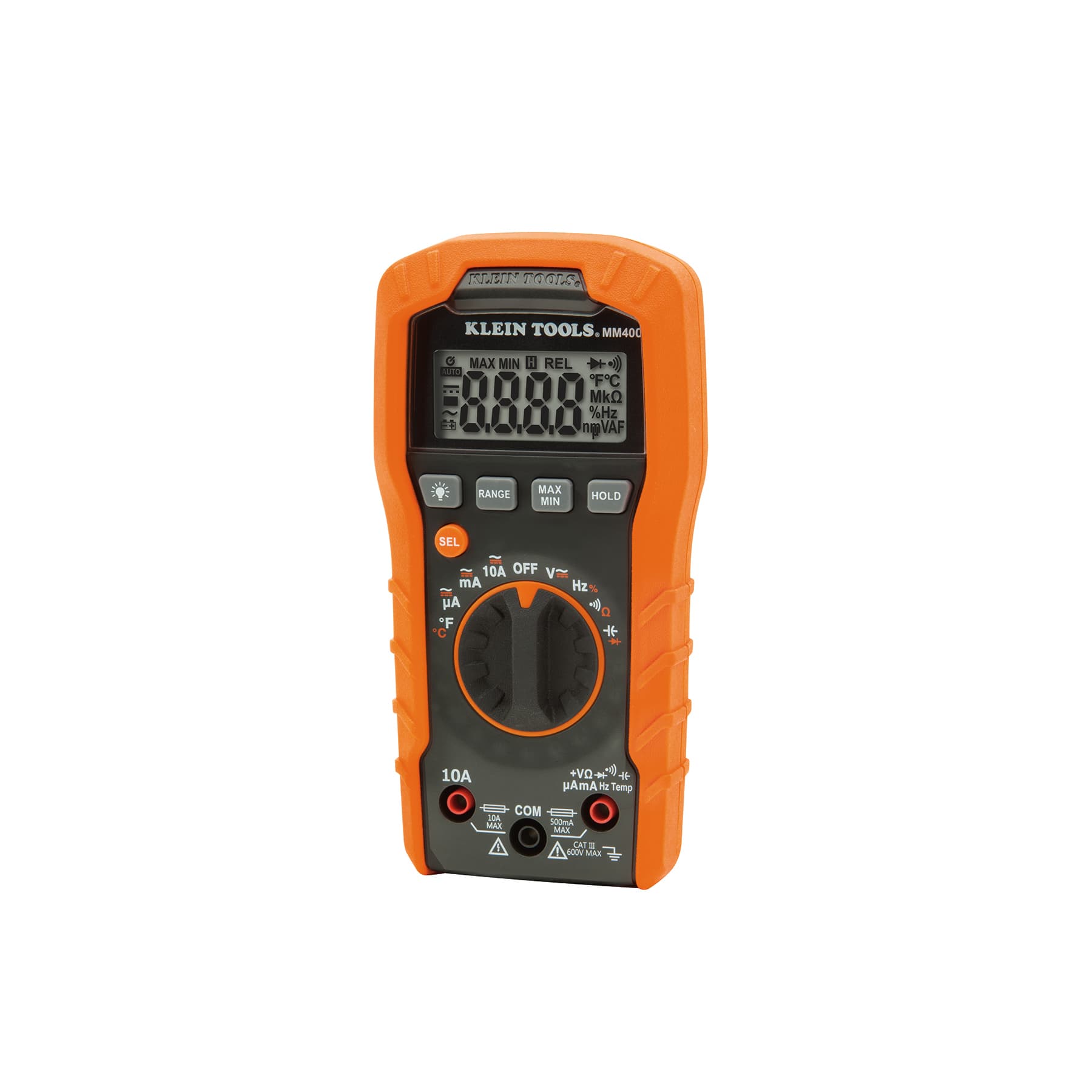
True RMS, CAT III 600V, with AutoVolt AC/DC selection, LoZ and NCV. Hands-on Tested.

AC clamp to 600 A with inrush mode and NCV in the jaw, CAT IV 600V. Klein lists no milliamp leakage range.
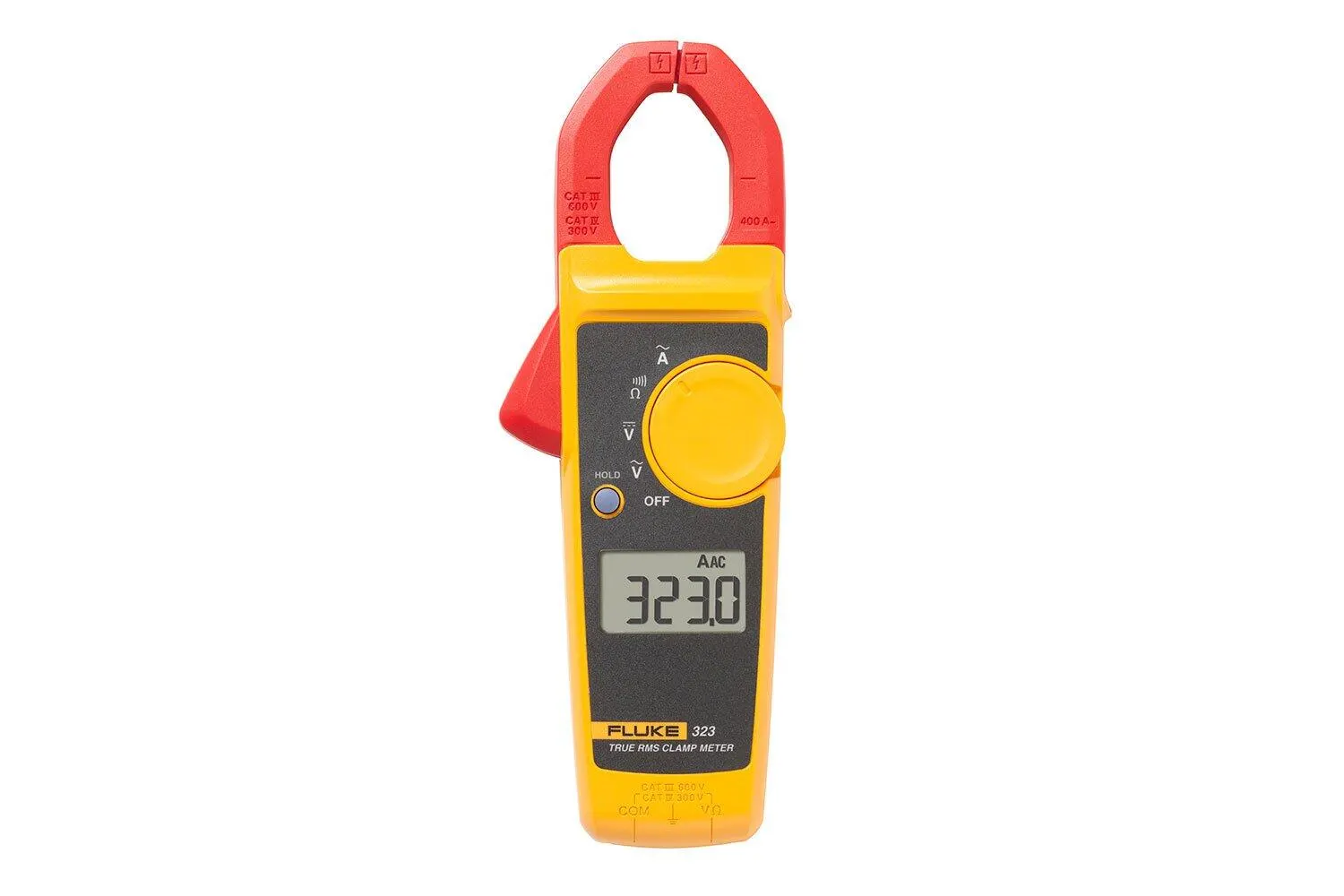
True RMS AC clamp to 400 A, CAT III 600V / CAT IV 300V, 265 g. AC current only, with no milliamp leakage range listed.
As an Amazon Associate I earn from qualifying purchases. Prices and availability are shown on Amazon.
Frequently asked questions
Why does my GFCI trip when it rains?
Water getting into an outdoor receptacle, a buried cable splice or an exterior light fixture creates a small path to ground. Once it dries the GFCI resets fine, which is why the problem comes and goes with the weather. Check covers, gaskets and boxes for gaps, and have a damaged outdoor box replaced with an in-use (bubble) cover rated for wet locations.
Why does a GFCI trip with nothing plugged into it?
Either an outlet or fixture wired to its LOAD terminals has a fault, the line and load connections are swapped, a neutral is shared with another circuit, moisture has reached a box, or the GFCI itself has failed. All of those need boxes opened and wiring tested, which is work for a licensed electrician if you are not qualified to do it safely.
Can a refrigerator or freezer trip a GFCI?
Yes. Motors and compressors can leak a little current through ageing insulation, and defrost heaters can leak more as they age. Check your local code and the appliance manual before moving a fridge off GFCI protection, since many locations now require it in kitchens, garages and basements. A refrigerator that trips a new GFCI repeatedly needs an appliance repair check.
How often should I test a GFCI outlet?
Manufacturers commonly recommend pressing the TEST button monthly. It should click, cut power to the outlet and anything downstream, and RESET should restore it. A plug-in tester confirms the power is actually off. If the GFCI doesn't trip on TEST, or won't reset afterward, replace it, because it may no longer protect anyone from a shock.
Is it safe to keep resetting a GFCI that trips?
Repeated resetting doesn't fix anything. The device is reporting current going somewhere it shouldn't, which could be through damp wiring, an appliance case or a person. Reset once to see whether it holds, then find the cause before relying on that outlet again. If it trips immediately with nothing plugged in, leave it off and call an electrician.
Can a bad GFCI trip for no reason?
Yes. GFCIs wear out, and internal electronics damaged by surges or age can cause nuisance tripping or the opposite, a device that no longer trips at all. If it trips randomly with nothing connected and no moisture anywhere downstream, or fails its monthly test, replacing the GFCI is the usual fix. Have an electrician do it if you're not qualified.


