HOW-TO GUIDE
Why Does My Car Starter Click but the Engine Won't Start?
By the OhmSavvy Research Team ·
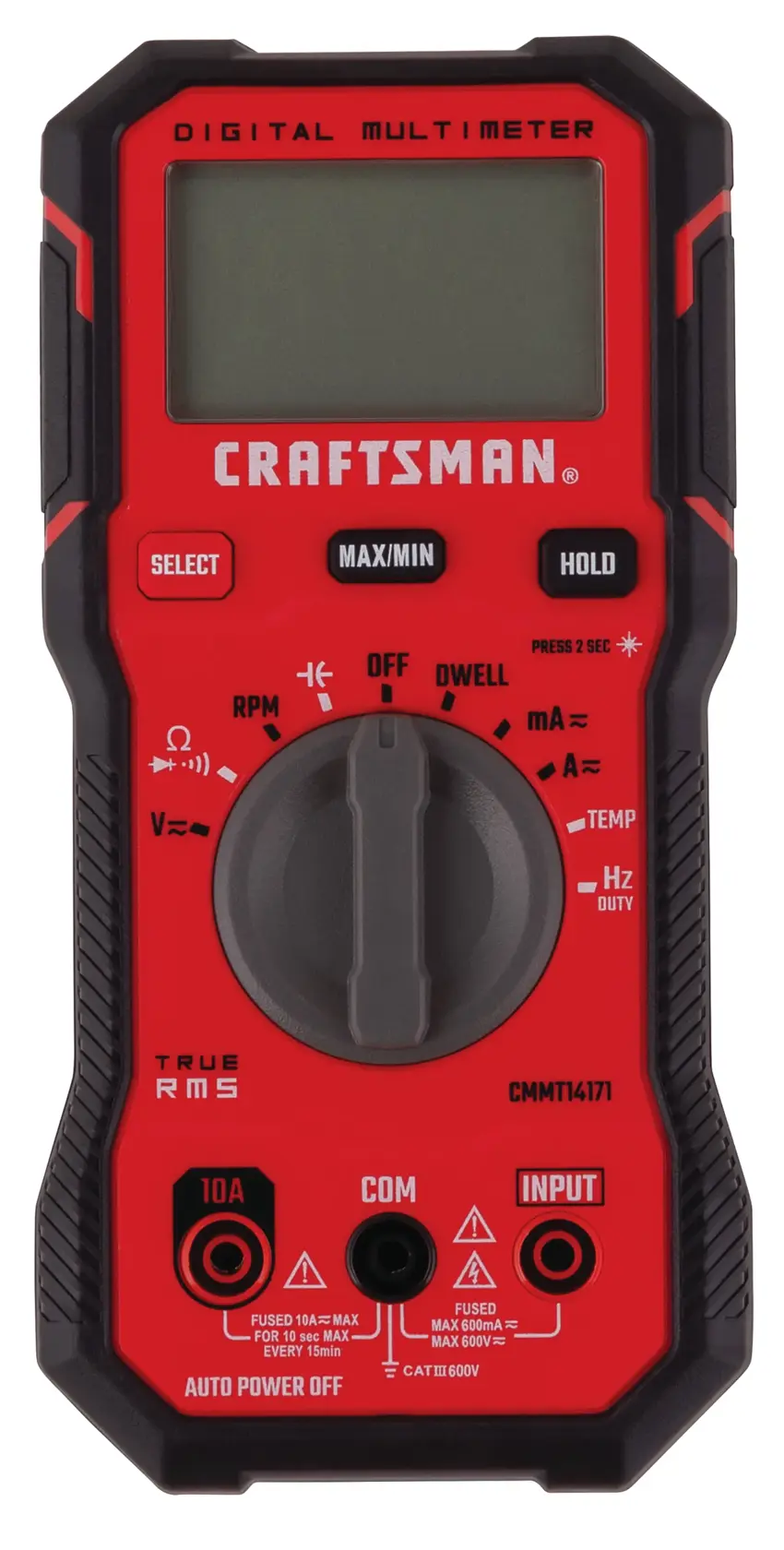
Keep clear of moving and hot engine parts while cranking
- Connect meter probes securely before cranking starts; don't reach into the engine bay while someone else is turning the key.
- Keep leads and hands clear of the fan, belts, and exhaust manifold.
- Repeated cranking attempts can overheat the starter — give it a rest between tries rather than cranking continuously.
01
Listen
Single click or rapid clicking
02
Battery under load
Voltage while cranking
03
At the starter
Voltage at the main terminal
04
Ground strap
Resistance, engine to chassis
05
Isolate
Battery, cable, or starter
1One click vs. rapid clicking
Note which sound you actually hear before testing: a single solid click, or a rapid repeated clicking as the key is held. Both point toward the same general area — insufficient current reaching or being supplied to the starter motor — but rapid clicking more often means the voltage is dropping so low once a load is applied that the solenoid can't hold itself engaged.
2Test battery voltage while cranking
Set the meter to DC volts and connect across the battery terminals. Have a second person turn the key to crank while you watch the reading; a meter with min/max or hold capture is useful here since the lowest point happens quickly.
| Voltage while cranking | Likely meaning |
|---|---|
| Above 9.6 V (12 V battery, 70°F / 21°C) | Battery is supplying adequate cranking current |
| Drops below about 9.6 V and recovers after | Weak or failing battery — needs a proper load test |
| Drops to near 0 V with each click | Severe internal battery fault or a very poor connection |
| Stays steady but starter still clicks | Problem is downstream of the battery — check the starter circuit |
Not sure the battery itself is good? How to test a car battery with a multimeter covers a proper load test.
3Test voltage at the starter's main terminal
If battery voltage holds up under cranking load but the starter still just clicks, move the red probe to the starter's main power terminal (the large cable, not the thin trigger wire) and repeat the cranking test. A voltage here noticeably lower than what you measured at the battery points to resistance in the cable or its connections between the two points, not the battery or the starter itself.
4Check the ground strap
With the circuit dead, measure resistance (or continuity) between the engine block and the chassis or battery negative terminal. Engine-to-body ground straps corrode and loosen just like positive cables, and a bad one adds resistance to the entire starting circuit even though the positive side tests fine.
A tiny voltage drop under load is still a real problem
What the numbers mean, put together
Good battery voltage under load plus good voltage at the starter but the engine still won't turn points to the starter motor itself. Good battery voltage but poor voltage at the starter points to the cable or a connection between them. Poor battery voltage under load from the start points back to the battery or its own cables and terminals.
Which meter to use
A meter with min/max or data hold makes cranking tests much easier, since the voltage sag happens in under a second. See the full best multimeter for automotive picks.
Meters in our reviews
Built for cranking and charging-system diagnosis.

True RMS with a fast enough response to catch cranking voltage sag.
As an Amazon Associate I earn from qualifying purchases. Prices and availability are shown on Amazon.
Frequently asked questions
Is one click different from rapid clicking?
Yes. A single, solid click with no further sound often means the solenoid engaged but the main starter motor circuit can't draw enough current — commonly a weak battery, corroded main cable, or worn starter. Rapid, repeated clicking usually points more specifically to a battery or connection too weak to hold voltage once the solenoid pulls in, so the circuit drops out and tries again.
Can a bad ground cause starter clicking even with a good battery?
Yes. The starter's circuit relies on the engine block and body ground straps as much as the positive cable. A corroded or loose ground strap adds resistance exactly like a bad positive cable would, and it's easy to overlook because it's a short, often hidden strap rather than the obvious battery cable.
My battery tests fine on a battery tester but the starter still clicks — why?
A tester that only reads resting voltage, or even a conductance tester, can pass a battery that still sags too far under the much higher current a starter actually demands. The cranking-voltage test in this guide measures the battery under its real load, which a simple voltage check at rest does not.
Can a bad starter relay cause this instead of the starter itself?
Yes, on vehicles that use a separate starter relay to trigger the solenoid. A relay with worn or carbon-coated contacts can let through enough current to make an audible click but not enough to reliably hold the solenoid engaged, producing symptoms very similar to a weak battery. Testing voltage at the solenoid's trigger wire during a crank attempt helps tell the two apart.
Is it safe to test voltage at the starter while someone cranks the engine?
Yes, as long as the probe connection is secure before cranking starts and your hands and the meter leads are clear of the exhaust manifold, fan, and belts. Have a second person crank the key while you watch the meter, or use a meter with a hold function so you can read it afterward.


