HOW-TO GUIDE
How to Check a 24V Transformer With a Multimeter
By the OhmSavvy Research Team ·
The primary side is line voltage
Primary, secondary and the R/C terminals
The primary leads are usually color-coded wires, with a separate lead per voltage tap on multi-tap units (for example 120, 208 and 240V plus a common). The secondary normally ends in two screw terminals or two thinner leads. In HVAC equipment those two secondary connections become the R (24V hot) and C (common) terminals that run to the control board and thermostat.
1Measure secondary voltage
With the power on and the equipment idle, set the meter to AC volts and place the probes on the two secondary terminals (R and C on a furnace board). Keep your hands and probes clear of the primary connections. A healthy transformer usually shows a little more than 24VAC at this point. Zero means no output: confirm the primary is getting line voltage before blaming the transformer.
2Recheck it under load
Now make the system work: call for heat or cooling at the thermostat, or start a sprinkler zone, and read the secondary again. The voltage should fall slightly and stay steady near 24VAC. A reading that collapses well below that, or a transformer that hums loudly and gets hot, means it is overloaded or something on the 24V side is shorted or drawing too much.
01
Idle reading
Secondary, AC volts
02
Call for load
Thermostat or zone on
03
Loaded reading
Should hold near 24V
04
Power off
Breaker off, verify dead
05
Winding ohms
Primary and secondary
3Test winding resistance
If there was no output, switch off the power, verify it is dead, and disconnect at least one lead of each winding so the rest of the system isn't measured in parallel. Set the meter to ohms and measure across the primary leads, then across the secondary terminals. Each should show a low, stable value; OL on either means that winding is open and the transformer needs replacing. Finally, check from each winding to the metal frame: anything other than OL indicates insulation breakdown.
The same winding checks apply to mains step-down transformers with other outputs; see how to check a 230V transformer with a multimeter.
Why a good transformer reads above 24V
A transformer's nameplate voltage is what it delivers at its rated load. Small control transformers have relatively high winding resistance, so with no current flowing there is no internal drop and the output reads high. As the load climbs toward the rated VA, the voltage settles toward the nameplate figure. The readings below are typical of a healthy unit on normal mains; your transformer's own label and the equipment's documentation are the reference.
Reading the results
| What you measure | Likely condition |
|---|---|
| 26–29VAC idle, near 24VAC under load | Healthy transformer |
| Line voltage on primary, 0VAC on secondary | Open winding or tripped internal protector; check winding resistance |
| No line voltage on primary | Upstream problem: breaker, service switch, furnace door switch |
| Normal idle, collapses under load | Overload or short on the 24V side, or a failing transformer |
| OL across the primary or secondary | Open winding; replace the transformer |
| Any reading from a winding to the frame | Insulation breakdown; replace the transformer |
Find the short before fitting a new transformer
Meters for furnace and control-board work
Checking the transformer means probing a board that also carries line voltage on the primary, so pick a meter rated at least CAT III 600V. Once the 24V side checks out, the same visit often moves on to capacitors, temperature rise or a flame sensor, which is where an HVAC-focused meter earns its place.
Meters for 24V controls and HVAC calls

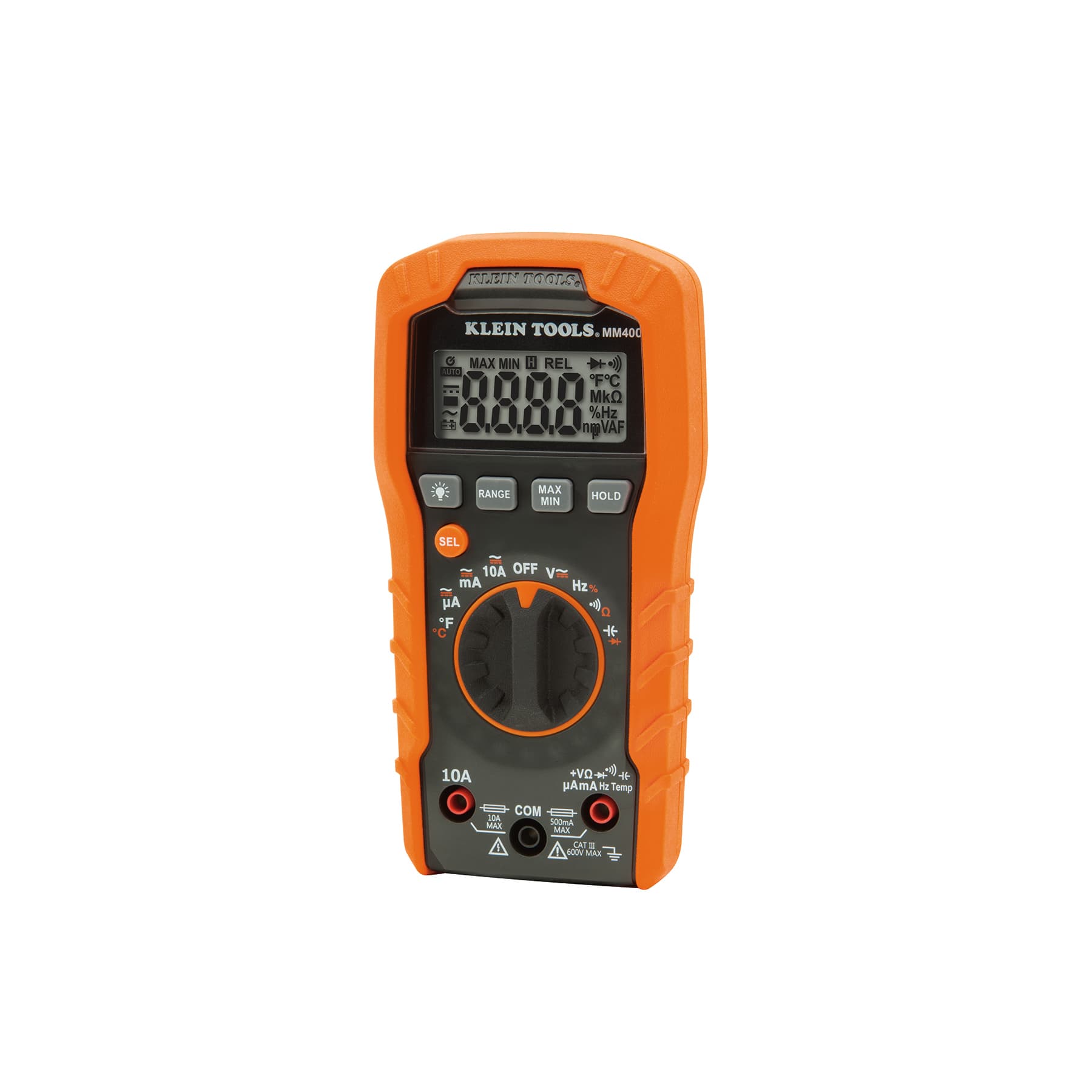
True RMS, CAT III 600V, with a 0.1 µA flame-sensor range, Type K temperature, capacitance and LoZ. No amp ranges.

True RMS, CAT III 600V, with NCV as a quick warning of live line wiring near the primary. Hands-on Tested.
Auto-ranging, CAT III 600V, with temperature and capacitance. Not True RMS, and discontinued by Klein (the MM420 replaces it).
As an Amazon Associate I earn from qualifying purchases. Prices and availability are shown on Amazon.
Frequently asked questions
Is 28 volts normal on a 24V transformer?
Often, yes, with little or nothing connected. Small control transformers are rated at full load, and with no load the secondary commonly reads a few volts high, so 26 to 29VAC unloaded is typical. Mains voltage on the high side of normal raises it further. The figure to judge is the voltage with the system calling, which should sit close to 24VAC.
What resistance should a 24V transformer's windings read?
There's no single figure because it depends on the VA rating and primary voltage, but the pattern is consistent: the primary, with many turns of fine wire, typically reads from a few ohms to a few tens of ohms, and the 24V secondary typically reads well under a few ohms. What clearly condemns a winding is OL, which means it is open.
My transformer reads 0V on the secondary. Is it dead?
Not necessarily. First confirm the primary has line voltage, check the door safety switch on furnaces, and look for a blown low-voltage fuse on the control board, which often protects the 24V circuit. Some transformers also have a built-in breaker or thermal protector. Only when the primary is powered and the secondary still reads zero is the transformer itself the likely failure.
Why does my HVAC transformer keep burning out?
Repeated failures usually mean a short or overload on the 24V side, such as a chafed thermostat wire touching the cabinet, a shorted contactor or valve coil, or extra accessories added beyond the transformer's VA rating. Replacing the transformer without finding that short simply destroys the new one. Check the low-voltage wiring and each coil before fitting a replacement.
Can I check a doorbell transformer the same way?
Yes, the method is identical, but many doorbell transformers are 10, 16 or 18VAC rather than 24VAC, so compare your reading with the voltage printed on that transformer's label. Most are mounted on a junction box with the primary wired directly to a household circuit, so switch that circuit off at the breaker before touching anything other than the low-voltage screws.


