HOW-TO GUIDE
How to Test a Car Battery That Reads 12 Volts but Won't Start
By the OhmSavvy Research Team ·
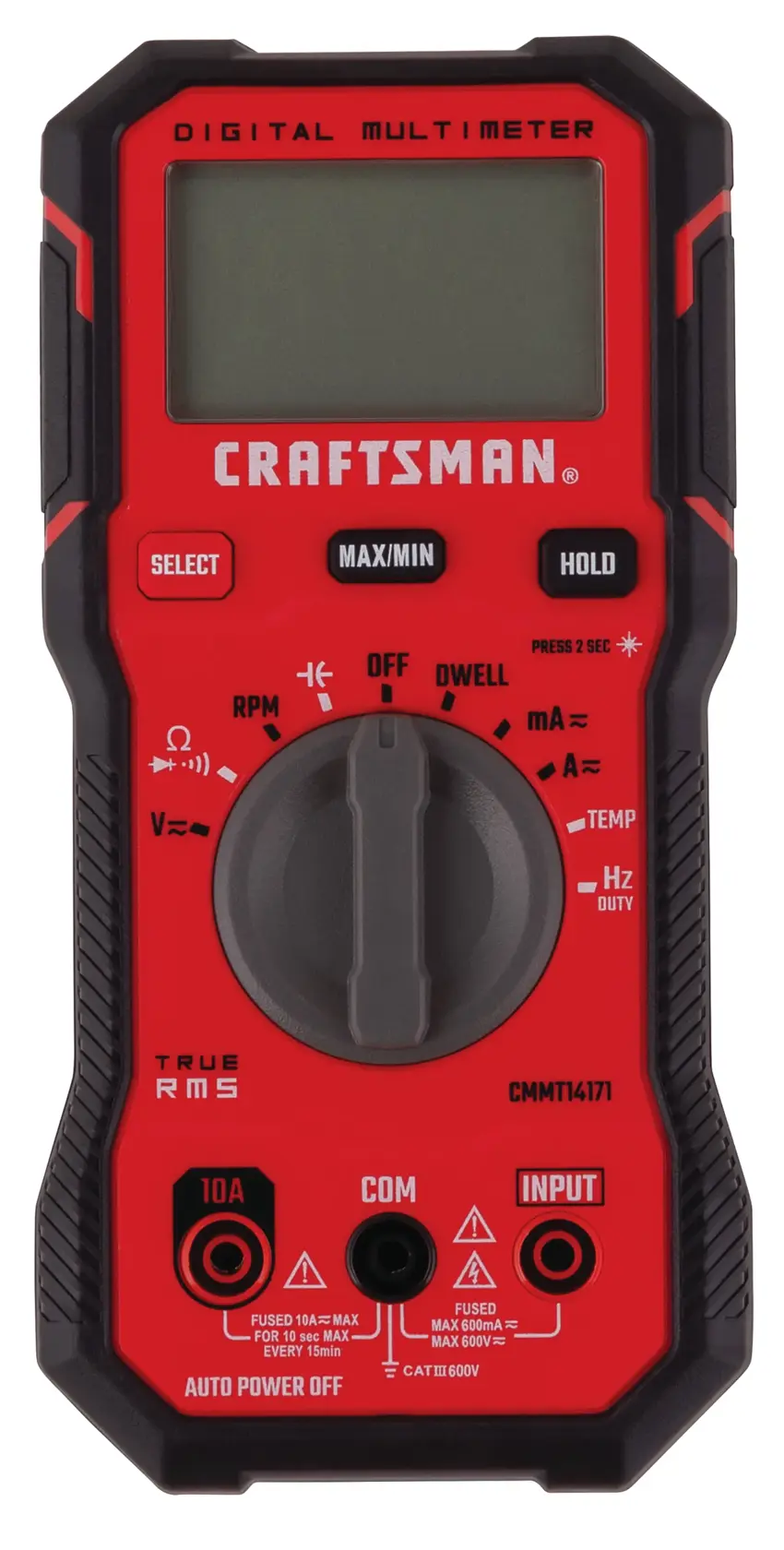
Keep clear of moving parts while cranking
- Connect meter leads securely before cranking; don't reach into the engine bay while it's being cranked.
- Keep hands and tools away from the battery terminals during testing.
- Don't load-test a battery that's visibly cracked, swollen, or leaking — replace it instead.
1Why resting voltage can mislead you
Resting voltage is measured with essentially no current flowing, so it mainly reflects state of charge. A battery with internal damage can still hold a surface charge that shows a reasonable resting voltage, then collapse the instant real current is demanded — which a no-load reading simply cannot reveal.
Here's a worked example with illustrative round numbers, not measurements. Assume the starter draws 200 A. A healthy battery with an internal resistance of about 0.01 Ω loses 200 × 0.01 = 2 V inside itself, so the terminals sit near 10.6 V while cranking. A sulfated or damaged battery that has climbed to 0.02 Ω loses 4 V and falls to about 8.6 V, below the common 9.6 V pass line, yet both batteries show the same 12.6 V on the meter when nothing is drawing current.
2Run the cranking-voltage test
Connect the meter across the battery terminals, set to DC volts, and have someone crank the engine (or use min/max capture if testing alone) while you watch the lowest voltage reached.
| Cranking voltage (12V battery, ~70°F / 21°C) | Interpretation |
|---|---|
| Stays above about 9.6 V | Battery is delivering adequate cranking current |
| Drops below 9.6 V, engine cranks slowly or not at all | Battery likely can't deliver enough current — further test with a dedicated tester |
| Drops to near 0 V instantly | Severe internal fault or an open connection somewhere in the circuit |
3Check the terminals and cables too
Before condemning the battery, inspect and clean the terminal connections — corrosion or looseness here can produce the exact same symptom as a weak battery. If cranking voltage improves noticeably after cleaning and tightening the terminals, the connection was the real problem.
A 'good' battery tester reading doesn't always settle it
Interpreting the results, put together
Good cranking voltage with clean, tight connections and the car still not starting points away from the battery — toward the starter, ignition, or fuel system. Poor cranking voltage that improves after cleaning the terminals was a connection issue. Poor cranking voltage even with clean connections and a recent full charge points to the battery itself needing replacement.
Which meter to use
A meter with min/max capture makes a solo cranking test much easier. See the full best multimeter for automotive picks.
Meters in our reviews

As an Amazon Associate I earn from qualifying purchases. Prices and availability are shown on Amazon.
Frequently asked questions
Can a battery with a dead cell still read close to 12 volts?
Yes. A 12V lead-acid battery has six 2V cells in series; one failed cell can drop total resting voltage to somewhere around 10 V in an obvious case, but a cell that's weak rather than fully dead can sometimes still produce a reading closer to 12 V at rest while being completely unable to deliver real current — which is exactly why a load test matters more than the static number.
I jump-started the car and it ran fine — doesn't that prove the battery works?
Not necessarily; a jump start brings in the other vehicle's battery and alternator to supply the actual cranking current, so the car can start even with a battery that couldn't have done it alone. Test the battery on its own, disconnected from any jump, for a true result.
Could corroded terminals cause this even with a genuinely good battery?
Yes — corrosion or looseness at the battery terminals adds resistance exactly like a weak battery would, dropping voltage right where the cable meets the post under heavy cranking current. Clean and tighten the terminals and retest before replacing a battery that might be fine.
Does cold weather make a borderline battery look worse than it is?
Cold doesn't make it look worse than it is — it genuinely reduces a battery's real capacity to deliver current while simultaneously increasing the current the engine needs to crank (thicker oil, more resistance). A battery that passes in summer can fail in winter for exactly this reason, so a cold-weather failure is a real failure, not a false alarm.
If the cranking test passes, what else could stop the car from starting?
A battery that holds up fine under cranking load rules out the battery as the cause — look at the starter circuit, ignition system, or fuel delivery next, depending on what the engine actually does (or doesn't do) when you turn the key.


