HOW-TO GUIDE
How to Test a Washing Machine Heating Element With a Multimeter
By the OhmSavvy Research Team ·
Unplug it, don't just switch it off
- Pull the plug out of the socket before removing any panel. Washing machines hold live parts behind the back cover even when the program dial is off.
- Wait for the drum to cool if it has just run a hot wash, and have a towel ready for drips.
- Resistance tests only work on a dead, disconnected part. Never run the machine with panels off to "see if it heats".
Symptoms of a failed heating element
- Clothes come out cold on a 40 °C or 60 °C wash, and the glass door never warms up.
- The RCD in the consumer unit trips part-way into a wash, usually soon after filling.
- A wash cycle that runs far longer than normal, or stalls, while the machine waits for heat.
- A heating or temperature fault code: the code list in the manual tells you which part it suspects.
What resistance should a washing machine element have?
Work it out from the wattage printed on the element or in the parts listing, using R = V² ÷ P. At the UK's 230V supply:
The same calculation works for kettles, immersion heaters and oven elements; see how to measure the resistance of a heating element.
| Element rating | Calculated resistance at 230V | Current drawn |
|---|---|---|
| 1,800 W | ≈ 29.4 Ω | ≈ 7.8 A |
| 2,000 W | ≈ 26.5 Ω | ≈ 8.7 A |
| 2,200 W | ≈ 24.0 Ω | ≈ 9.6 A |
| 2,400 W | ≈ 22.0 Ω | ≈ 10.4 A |
1Unplug the machine and reach the element
Unplug the washer and pull it out far enough to work behind it, minding the hoses. On most front loaders the element sits low under the drum, behind the back panel; a few brands put it behind the front panel instead. Undo the panel screws and look for a flange with two spade terminals, a central nut and, often, a small sensor plugged into it.
2Measure resistance across the two terminals
Pull both supply wires off the element so nothing else in the machine is measured alongside it. Set the meter to Ω (on a manual meter, the 200 Ω range) and touch one probe to each terminal. Touch the probes together first and note the reading: subtract that lead resistance, since it matters at these low values.
3Check each terminal to earth
Set the meter to its highest resistance range. Put one probe on the earth stud or a clean, bare part of the flange, and the other on terminal A, then terminal B. Both should read OL. A reading in the kΩ or MΩ range means the heating wire is leaking through its insulation to the earthed sheath.
A multimeter is not an insulation tester
4Check the temperature sensor
Many machines clip an NTC thermistor into the element flange to tell the board the water temperature. If it fails, the machine may refuse to heat or show a temperature fault even with a perfect element. Unplug it and measure its resistance; most read several kΩ to tens of kΩ at room temperature and fall as they warm. The step-by-step method is in how to test a thermistor with a multimeter, and the service manual gives the exact value for your model.
Reading the results
| Terminal to terminal | Terminal to earth | Verdict |
|---|---|---|
| Close to calculated value | OL both sides | Element good: look at sensor, wiring or board |
| OL | OL | Element burnt out (open circuit): replace |
| Close to calculated value | Any reading below OL | Earth leakage: replace, likely RCD cause |
| Near 0 Ω | Any | Shorted element: replace |
01
Unplug
Plug out, back panel off
02
Element Ω
≈ 20–35 Ω expected
03
Earth check
OL both terminals
04
NTC sensor
kΩ, falls with heat
05
Board / relay
Engineer territory
Which multimeter you need
Both tests are resistance measurements on a dead appliance, so any working digital meter is enough. Auto-ranging saves switching between the low range for the element and the high range for the earth check. For a wider comparison, see our best multimeter for home use guide.
Budget meters in our reviews
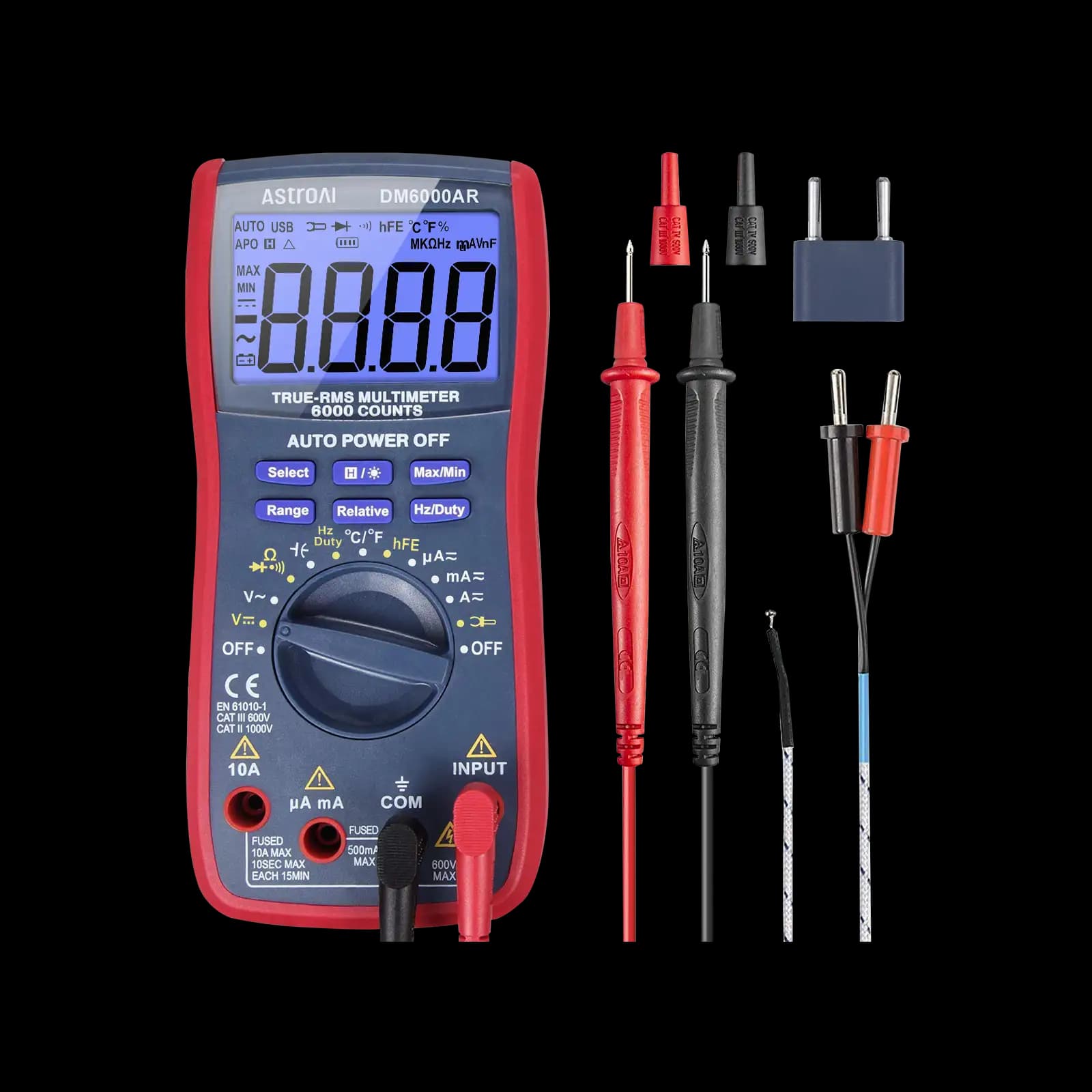
True RMS, 6,000-count, with both auto and manual ranging. AstroAI states no CAT rating, so test the element unplugged.
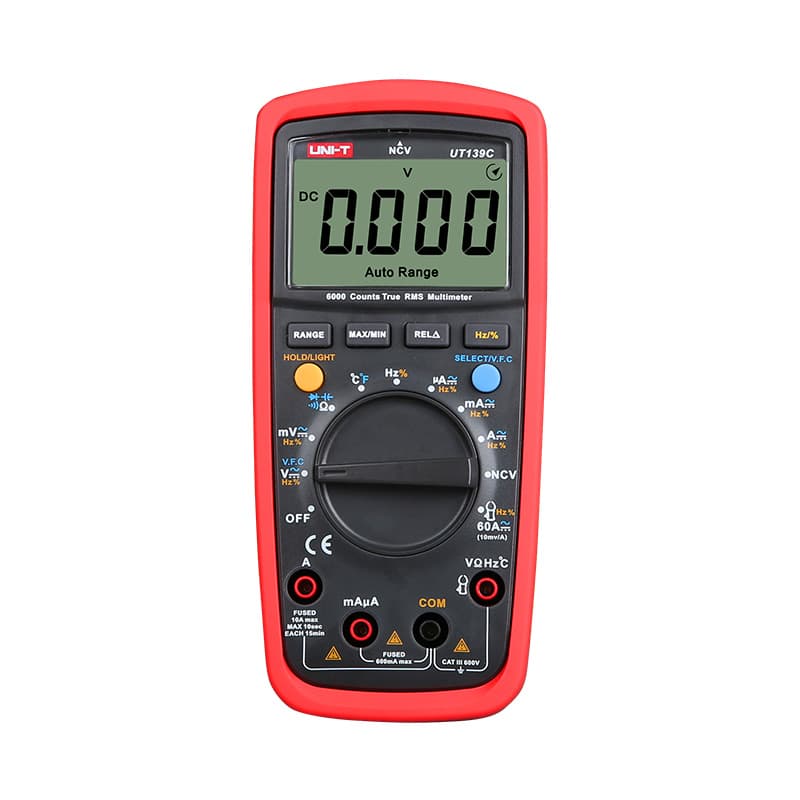
True RMS, CAT III 600V and auto-ranging, for buyers on a tight budget.

True RMS, CAT II 600V, auto-ranging, with a backlit display for dim spaces behind appliances.
As an Amazon Associate I earn from qualifying purchases. Prices and availability are shown on Amazon.
Frequently asked questions
Why does my washing machine trip the RCD when it starts heating?
The most common reason is an element whose sheath has cracked or corroded, letting current leak from the heating wire to the earthed drum. The machine runs normally on a cold rinse and trips only when the element is switched in. A multimeter reading of anything less than OL from either terminal to the earth stud confirms it, though a minor leak may only show on an insulation tester.
Can a washing machine heating element test fine and still be faulty?
Yes. A multimeter tests with a few volts, so an element can show normal resistance and OL to earth yet leak once it is hot or under 230V. If the RCD keeps tripping on heat and everything else checks out, have the element insulation-tested at 500V by an electrician or appliance engineer.
Where is the heating element on a front-loading washing machine?
On most front loaders it sits under the drum and is reached from the back panel, with its terminal block facing you. Some brands put it behind the front panel instead. The flange is held by a single nut that expands a rubber seal, which also has to be loosened to remove it.
Is it worth replacing a washing machine heating element myself?
On many machines it is a single-nut part and a reasonable DIY job once the machine is unplugged and the right replacement is matched by model number. Make sure the new seal seats properly and the earth connection is refitted, then run an empty hot wash and check for leaks before trusting it.
My element reads fine but the washer still won't heat. What next?
Check the NTC temperature sensor, which is often plugged into the element itself, and the wiring and connectors to the element. Beyond that the heater relay sits on the main control board, which is a job for an appliance engineer or a board-level repairer.



