HOW-TO GUIDE
How to Measure Parasitic Battery Drain
By the OhmSavvy Research Team ·

Safety first: never crank with the meter in series
- While the meter is connected in series, all the car's current flows through it. Do not crank the engine or switch on the headlights, blower or other heavy loads. A starter draws far more than any multimeter current jack can handle, and the meter fuse, or the meter, will fail.
- A 12 V battery can deliver hundreds of amps into a short. Keep tools away from the positive terminal, remove rings and watches, and avoid sparks near the battery because it can give off explosive hydrogen.
- Many meters allow the 10 A jack to carry high current only for a short time. Check your meter's manual, and do not leave it measuring several amps for long periods.
- Disconnecting the battery can affect airbag, security and other systems on some vehicles. Follow your service manual's battery disconnection procedure.
01
Prepare
Charged battery, everything off, doors latched
02
10 A range
Red lead in the 10 A jack, dial on DC A
03
In series
Between the negative post and cable
04
Wait
Let the modules go to sleep
05
Read
Step down to mA if safe, compare with spec
06
Pull fuses
One at a time until the reading drops
1Prepare the car
Start with a charged battery. A flat battery can make readings misleading, and if the battery itself is failing it may be the real problem. Then switch everything off, remove the key or move the smart key well away from the car, and close all doors, the trunk and the hood.
Not sure it is charged? How to test a car battery with a multimeter covers the resting, cranking and charging checks.
You will need to reach the fuse box later without waking the car. Open the door or panel you need first, then trick its latch closed with a screwdriver so the car thinks it is shut, and do the same for the hood switch if one is fitted. Check that interior, trunk and glovebox lights are off. Note any radio codes or settings that a battery disconnection might clear.
2Set the meter to the 10 A range
Put the black lead in COM and the red lead in the 10 A (or A) jack, and set the dial to DC amps. Starting on the highest range protects the meter: right after you connect, the car may draw several hundred milliamps or more as modules wake up, which can exceed the mA jack's rating. If you are new to current measurements, our guide to measuring milliamps with a multimeter explains the jacks and fuses in more detail.
3Connect the meter in series at the negative terminal
Loosen the negative cable clamp. Clip one meter lead to the negative battery post and the other to the cable clamp, then lift the clamp off the post so the car's current has to flow through the meter. Working on the negative side means a slipping tool cannot short the positive terminal to the body.
To keep the modules from waking, many technicians clip a jumper wire between the post and the clamp before lifting the clamp, connect the meter, then remove the jumper. The circuit is never broken, so the car does not restart its sleep timers.
4Wait for the modules to sleep
Modern cars keep control modules awake for a while after the car is locked, so the first reading is often high and then falls in steps as each module shuts down. How long this takes varies widely: from a few minutes on simpler cars to an hour or more on some newer vehicles. The service information for your car usually gives the time, or you can wait until the reading has settled for several minutes.
5Step down to the mA range
On many meters the 10 A range reads only to 0.01 A, which is too coarse to compare a 30 mA drain with a 50 mA one. Once the reading is settled and well below the maximum marked on the mA jack, you can switch for a finer reading. Reconnect the jumper between the post and the clamp first, move the red lead to the mA jack, set the dial to DC mA, then remove the jumper. Without the jumper, moving the lead breaks the circuit and wakes the modules again. Stay on the 10 A range if the reading is anywhere near the mA jack's limit.
What counts as an acceptable drain?
Every car draws some current while parked, for the clock, alarm, keyless entry and module memory. Many vehicles settle somewhere in the tens of milliamps once asleep. A commonly quoted rule of thumb is about 50 mA or less; older, simpler cars are often lower, and some newer vehicles specify a higher limit. Your vehicle's service information gives the real figure, and it beats any general rule.
To see why the number matters, multiply the drain by 24 hours to get the amp-hours taken from the battery each day:
| Drain | Ah per day | Days to use 30 Ah (half of a 60 Ah battery) |
|---|---|---|
| 30 mA | 0.03 × 24 = 0.72 Ah | 30 ÷ 0.72 ≈ 42 days |
| 50 mA | 0.05 × 24 = 1.2 Ah | 30 ÷ 1.2 = 25 days |
| 300 mA | 0.3 × 24 = 7.2 Ah | 30 ÷ 7.2 ≈ 4 days |
| 1 A | 1 × 24 = 24 Ah | 30 ÷ 24 = 1.25 days |
These are simple arithmetic, ignoring the battery's own self-discharge, temperature and age. A car may fail to start well before half the capacity is gone, especially in cold weather, so treat the days as an upper bound.
6Find the circuit by pulling fuses
If the settled reading is too high, watch the meter while you pull fuses one at a time. When the reading drops to a normal level, the fuse you just pulled feeds the circuit with the drain. Put each fuse back in its own slot before pulling the next, and use the fuse box diagram in the owner's manual to trace that circuit to the component. If the excess drain is large enough to see on the 10 A range, stay on it while pulling fuses; it is safer if something wakes up.
Pulling fuses can itself wake modules, so give the reading time to settle if it jumps. Some technicians avoid pulling fuses at all by measuring the tiny millivolt drop across each fuse with the meter on DC volts: a fuse carrying current shows a small reading, while one that is not shows close to zero.
| What you see | What it usually means |
|---|---|
| Starts high, falls in steps to tens of mA | Normal: modules going to sleep |
| Stays at hundreds of mA after a long wait | Something is staying on or awake: a lamp, module or accessory |
| Drops when one fuse is pulled | The drain is on that fused circuit |
| No fuse makes a difference | Check circuits wired straight to the battery, such as the alternator |
| Normal drain, but the battery still goes flat | Suspect the battery, charging system or cables instead |
Aftermarket accessories such as dash cameras, alarms and audio amplifiers are common culprits, as are lights that stay on in the trunk or glovebox. If the drain is normal but the car still cranks slowly, check the cables and grounds with a voltage drop test.
The clamp meter alternative
A clamp meter measures current through the magnetic field around a wire, so you can clamp it around the negative battery cable without disconnecting anything. That avoids waking modules and the risk of blowing a meter fuse. Two conditions apply: the clamp must measure DC current, and it must resolve milliamps. Many clamp meters measure AC only, and many DC clamps are designed for tens or hundreds of amps, where tens of milliamps barely register.
Our clamp-meter pick, the Milwaukee 2235-20, is listed for AC current (up to 400A AC), so it is not the tool for a DC drain test. If you go the clamp route, zero the clamp with nothing in the jaws before each reading and clamp only the negative cable. The clamp meter buying guide explains AC-only versus AC/DC clamps.
Series meter or clamp?
Which meter to use for a drain test
You need a meter with a fused 10 A jack and a fused mA range, which most digital multimeters have; check the manual for the ratings. Compare options in our best multimeter for automotive picks and the full best multimeters roundup, or read the multimeter buying guide.
Meters in our reviews

True RMS, auto-ranging, CAT III 600V. The one pick in our roundup built specifically for diagnosing cars.
True RMS, auto-ranging, CAT III 600V. Built for electricians and serious hobbyists.
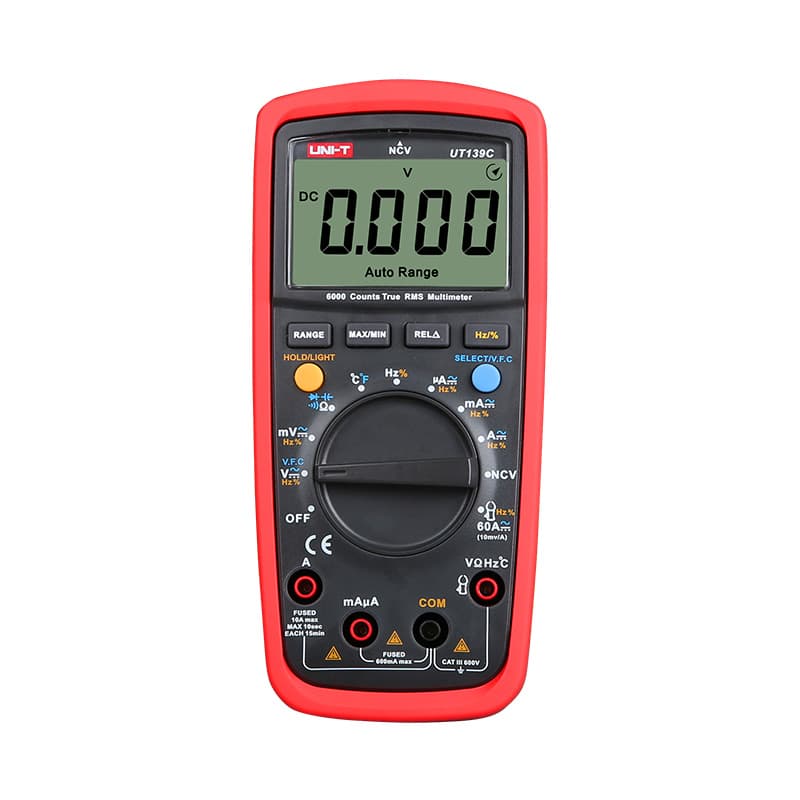
True RMS, 6,000-count, auto-ranging, CAT III 600V, at a price that undercuts most of our list.
As an Amazon Associate I earn from qualifying purchases. Prices and availability are shown on Amazon.
Frequently asked questions
Can a bad alternator cause parasitic drain?
Yes. The alternator contains diodes that stop battery current flowing back into it, and a leaking diode lets current drain through it while the car is parked. Because the alternator output is often wired to the battery without passing through the fuse box, pulling fuses will not reveal it. Check it separately, following your service manual.
Why did my multimeter fuse blow during a parasitic draw test?
Usually because something drew more current than the jack could take: the engine was cranked, a door was opened and lights came on, a module woke up while the lead was in the mA jack, or the lead was moved between jacks without a bypass jumper. Replace the fuse with the exact type and rating in the manual and restart the test on the 10 A range.
Can I do a parasitic draw test with a test light?
A test light between the negative post and cable will glow on a large drain, but it cannot tell you how many milliamps are flowing, and a normal sleeping car may light it faintly or not at all. It is a rough first check at best. A multimeter gives an actual number to compare with the vehicle specification.
Does disconnecting the battery reset the parasitic draw test?
Yes. Breaking the connection wakes many modules, and the clock for going back to sleep starts again. That is why a jumper is used to keep the circuit connected while the meter goes in. Disconnecting can also clear radio presets, trip data or learned settings, so note anything you will need to restore first.
Can a car still start if it fails a parasitic draw test?
Yes, for a while. A higher-than-normal drain flattens the battery over days or weeks, so a car used daily can hide it while one parked for a week will not start. That is why a drain that seems small is still worth fixing if the car sits unused for long periods.


