HOW-TO GUIDE
How to Check a 9V Battery With a Multimeter Under Load
By the OhmSavvy Research Team ·
Open-circuit vs loaded voltage
A multimeter on DC volts has an input resistance of around 10 MΩ, so it draws almost nothing from the battery. That open-circuit reading shows the chemistry's resting voltage, but it hides the battery's internal resistance, which rises as the cells wear. Under load, current through that internal resistance drops voltage inside the battery, and the terminal reading falls.
This is a different job from testing a car battery, where the engine's starter provides a huge load, or checking a 12V leisure battery, where resting voltage maps to state of charge for lead-acid cells. A 9V battery is six small alkaline cells (or three lithium, or six to eight NiMH) in one case, and you supply the load yourself, much as you would when checking a 12V power supply under load.
1Choose a load resistor with Ohm's law
Aim for roughly 10 to 25 mA, which is similar to what many small devices draw while active. Ohm's law gives the resistance: R = V ÷ I, so 9 V ÷ 0.02 A = 450 Ω, and the nearest common value is 470 Ω. Then size the wattage: P = V² ÷ R, so 81 ÷ 470 ≈ 0.17 W. A 0.25 W resistor would run close to its limit and warm up, so a 0.5 W part gives comfortable margin.
| Resistor | Current at 9 V | Power at 9 V | Suggested rating |
|---|---|---|---|
| 1 kΩ | ≈ 9 mA | ≈ 0.08 W | 0.25 W |
| 680 Ω | ≈ 13 mA | ≈ 0.12 W | 0.25 W or 0.5 W |
| 470 Ω | ≈ 19 mA | ≈ 0.17 W | 0.5 W |
| 390 Ω | ≈ 23 mA | ≈ 0.21 W | 0.5 W |
2Run the 9V battery load test
- Set the meter to DC volts, with the black lead in COM and the red lead in V.
- Read the open-circuit voltage: red on the small round positive stud, black on the hexagonal negative.
- Clip the resistor across the two terminals with crocodile leads, or use a 9V battery snap.
- Keep the probes on the terminals and read after about five seconds, the same time for every battery.
- Remove the load. Write down both numbers and the drop between them.
Typical 9V battery readings: alkaline vs lithium vs NiMH
The figures below are typical values at room temperature with a load of about 20 mA. Brands differ, and a device's own cut-off voltage is what finally matters, so treat them as a guide.
| Chemistry | Fresh, open circuit | Usable, loaded | Replace or recharge, loaded |
|---|---|---|---|
| Alkaline (6LR61) | ≈ 9.3 to 9.6 V | Above ≈ 8 V | Below ≈ 7.2 V |
| Lithium (Li-MnO2) | ≈ 9.5 to 9.9 V | Above ≈ 8.5 V | Below ≈ 8 V |
| NiMH, 7-cell (8.4 V nominal) | ≈ 9.5 to 10 V off the charger | Above ≈ 8 V | Below ≈ 7.5 V |
| Carbon-zinc (6F22) | ≈ 9 to 9.5 V | Above ≈ 8 V | Below ≈ 7.2 V |
Alkaline, lithium and NiMH: what changes
- Alkaline voltage slides steadily over its life, so the loaded reading is a fair guide to how much is left.
- Lithium 9V cells have a flat discharge curve: they read close to 9 V for most of their life, then drop sharply. A healthy reading says little about remaining capacity, so replace on the schedule the device maker suggests.
- NiMH 9V packs are sold as 7.2 V, 8.4 V or 9.6 V nominal (six, seven or eight cells). Scale the thresholds to the label: about 1.0 to 1.1 V per cell under load means recharge.
- USB-rechargeable lithium-ion 9V batteries often contain a regulator that holds the output near 9 V and then cuts off, so voltage cannot show their charge.
Why smoke alarms chirp with a battery that reads fine
A smoke alarm draws only a tiny standby current, but its sensor checks and horn pull short bursts of much higher current. Its low-battery circuit judges the voltage during those bursts. A worn battery can read close to 9 V on your meter and still dip below the alarm's threshold under that pulse, which triggers the chirp.
Battery voltage also falls as temperature drops, which is one reason alarms often start chirping in the early hours when the heating has been off. A loaded reading gives a far better verdict than an open-circuit one. If a fresh, loaded-tested battery does not stop the chirp, the alarm itself may be signaling end of life: check its manual.
Never measure current across a 9V battery's terminals
Don't put the meter on amps across the battery
One number to remember
Meters for battery checks
Any digital meter reads DC volts well enough for a loaded battery test. These picks add useful resolution or portability for a drawer of spare batteries.
Meters for 9V battery testing
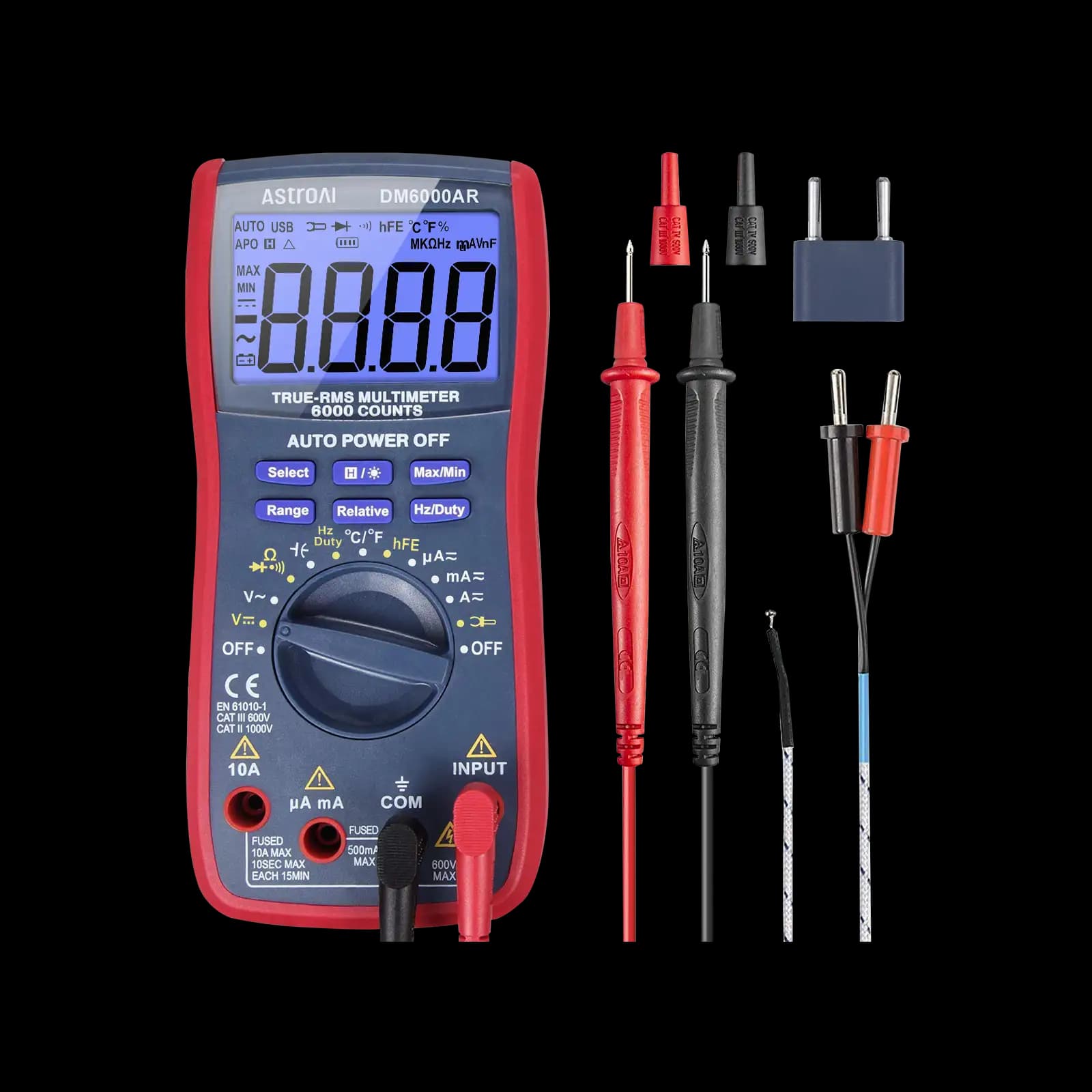
Its 6,000-count resolution shows the tenths-of-a-volt drop under load that separates a healthy battery from a tired one.
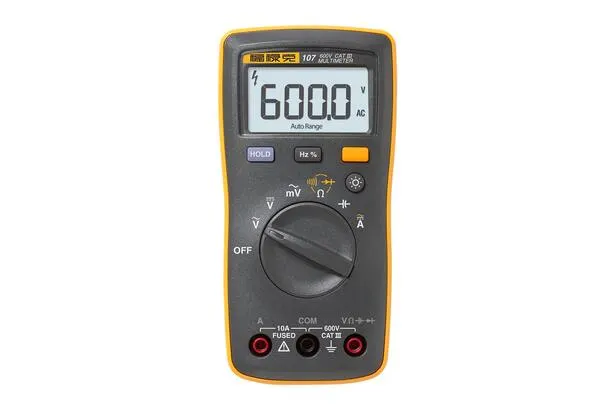
A 200 g palm-sized Fluke rated CAT III 600V, small enough to live next to the smoke alarm spares.

An inexpensive auto-ranging meter that picks the right DC volts range for you, a sensible first meter for household checks.
As an Amazon Associate I earn from qualifying purchases. Prices and availability are shown on Amazon.
Frequently asked questions
What voltage is a dead 9V battery?
It depends on the chemistry and on whether it is loaded. As a typical rule, an alkaline 9V that reads under about 7.2 V with a light load of around 20 mA is spent for most devices. Many devices give up sooner, near 7.5 to 8 V. Lithium 9V batteries usually hold close to 9 V until almost empty, then fall quickly.
Why does my 9V battery read 9 volts but not work?
An open-circuit reading draws almost no current, so even a worn battery with high internal resistance can show near 9 V. Once a device draws current, the voltage collapses. Put a resistor of a few hundred ohms across it and read again: a large drop shows the battery cannot deliver current any more, whatever the unloaded figure says.
What resistor should I use to load test a 9V battery?
A 470 Ω resistor rated at 0.5 W is a good general choice. It draws roughly 19 mA at 9 V and dissipates about 0.17 W, which is within its rating with margin. For a lighter test, 1 kΩ draws about 9 mA. Only apply the load for a few seconds while you take the reading.
Can I test a 9V battery with the battery test function on my meter?
Yes, if your meter has one. A battery test range places a small built-in load across the probes and reads the voltage, which is the same idea as the resistor method. The load value varies by meter, so the manual's figures for 9V cells are the ones to compare against rather than general charts.
How long does a 9V battery last in a smoke alarm?
It varies with the alarm, the chemistry and how often it is tested. Many manufacturers suggest replacing a replaceable 9V cell at least once a year, and many fire services suggest testing alarms weekly or monthly. Sealed ten-year alarms have a built-in lithium battery and are replaced as a whole unit when they signal end of life.



