HOW-TO GUIDE
Why Won't Solder Stick to the Soldering Iron Tip?
By the OhmSavvy Research Team ·

What is happening at the tip
Solder doesn't glue itself to a surface; it wets it, forming a metallic bond with clean metal. Oxide is not clean metal. Once a layer of it covers the tip, molten solder has nothing to bond to, so surface tension pulls it into a ball. The tip may look dull gray, brown or black, and heat also stops transferring well, because the thin film of solder that normally carries heat from tip to joint is missing.
The usual causes
| Cause | Why it matters |
|---|---|
| Left hot without solder on it | A bare hot tip oxidises within minutes; idle time in the stand is the biggest culprit |
| Temperature set too high | Oxidation speeds up sharply with heat; many irons are run far hotter than the job needs |
| Stored without a coat of solder | A tip switched off bare comes out oxidised next time |
| Too little flux | Flux strips light oxide as you work; solder without flux core, or a dry joint, lets oxide win |
| Wiping on a very wet sponge | Repeated thermal shock and water can encourage oxide; damp is enough |
| Filed or sanded tip | Removes the plating, so the copper underneath erodes and stops holding solder |
If solder doesn't even melt properly when it touches the tip, the cause is more likely heat than oxide; work through why a soldering iron isn't melting solder first. If it melts but sits on the joint in beads, see why solder beads up instead of flowing.
How to make solder stick again
01
Heat
Normal working temperature
02
Brass wool
Scrub off loose oxide
03
Tinner or flux
Dissolve the rest
04
Fresh solder
Coat the whole working end
1Clean at working temperature
Heat the iron to its usual working temperature, not the maximum. Push the tip into brass wool a few times, turning it so every face is scrubbed. Brass wool removes loose oxide and old solder without the thermal shock of a sponge and without scratching through the plating. Light oxidation sometimes clears at this stage, so try feeding a little flux-core solder onto the tip before going further.
2Re-tin with flux or tip tinner
For a tip that is still dark, use a tip tinner (sometimes sold as a tip activator or refresher): a small tin of solder powder mixed with an aggressive flux. Roll the hot tip in it until the working end turns bright and silver, then wipe once on the brass wool and immediately add fresh solder. A generous dab of rosin flux followed by solder works on milder cases — the oxide-stripping power in a mildly-activated rosin flux like Kester 182 comes from an amine salt (per Kester's own datasheet, diethylamine hydrochloride at a small fraction of the formula) dissolved in the rosin, not the rosin itself, which is why a plain, non-activated rosin does much less work on an already- oxidised tip. You may need two or three rounds. Tip tinner is more aggressive than ordinary flux, so use it for recovery rather than as a routine cleaner.
3Keep it tinned from now on
The habit that prevents this problem is simple: never let the tip sit hot and bare. Add a little solder before the iron goes back in its stand, and leave a blob on the tip when you switch off, so the coating, not the tip, takes the oxidation. Use the lowest temperature that makes good joints; our soldering temperature guide gives starting points. Stations with a sleep or auto-off function also help, because they drop the tip temperature during idle stretches.
Tip tinner fumes and burns
When the tip is beyond saving
Re-tinning only works while the plating survives. If you see a pit or crater at the working end, copper showing through, or the tip has visibly shrunk or changed shape, solder will either refuse to wet it or keep eating into it, and no cleaning will fix that. Replacement tips are cheap compared with the frustration of fighting a dead one, so swap it, and choose a tip shape suited to your work.
In short
Irons with temperature control and easy tip swaps
Digital station with adjustable temperature and replaceable tips.
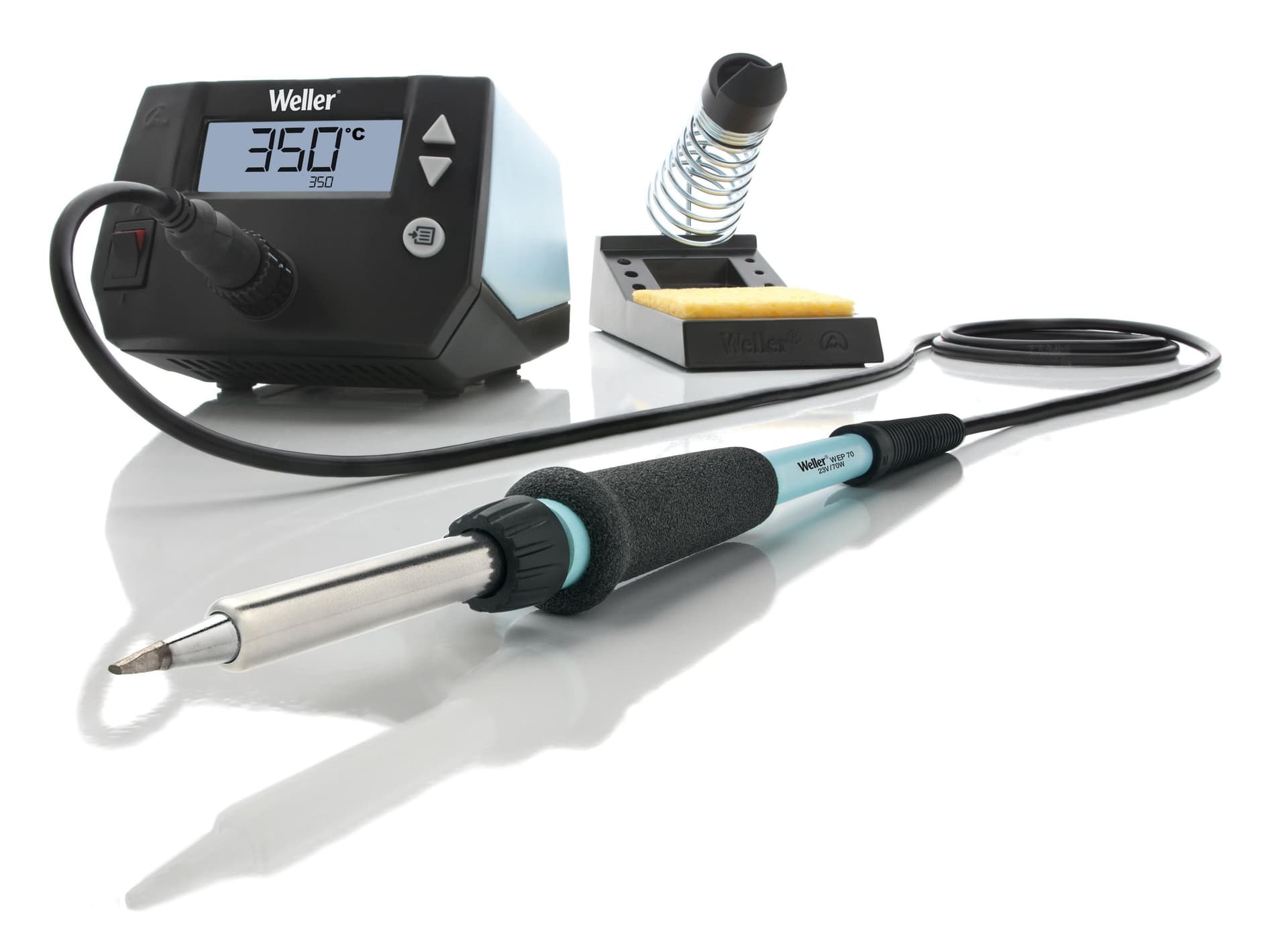
85W digital station (70W iron) with tight temperature stability.
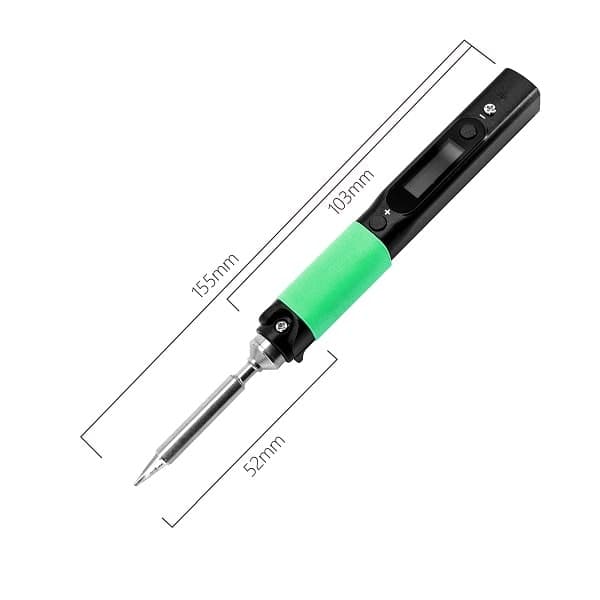
As an Amazon Associate I earn from qualifying purchases. Prices and availability are shown on Amazon.
Frequently asked questions
Can I sand or file a soldering iron tip to make solder stick?
Not on a standard plated tip. Per Hakko's own tip-care guide, a modern tip is a copper core (for heat transfer) electroplated with iron — the iron is the actual working surface, and a chromium flash protects the non-wetting areas from corrosion. Filing or sanding cuts through that plating to bare copper. Copper dissolves into molten solder fast: one materials study measured a copper sample losing roughly a third of its mass in 10 minutes at 280°C, with the dissolution rate climbing further at higher temperatures and running faster in lead-free alloys than in leaded ones. A filed tip pits and fails in a similar timeframe. Use brass wool and tip tinner instead.
Is a black soldering iron tip ruined?
Not necessarily. A black tip is oxidised, and if the plating underneath is intact, cleaning on brass wool and re-tinning brings it back. It is only finished when the plating is worn through, which shows as a pit, a hole or a reddish copper color at the working end.
Why does lead-free solder stick to the tip less well than leaded?
Mostly the melting point. Leaded Sn63Pb37 is a true eutectic alloy that melts at a single point, 183°C (361°F), per Kester's solder wire datasheet. The common lead-free alloy SAC305 doesn't melt until roughly 217–221°C depending on the manufacturer's figures (Kester and MG Chemicals both publish numbers in that range) — about 35°C hotter. Irons running lead-free are set correspondingly higher, and that extra heat both wets more slowly and oxidises the tip faster. Keep the tip freshly tinned, use enough flux, and avoid running hotter than the joint needs.
Is this the same problem as solder sticking to the tip and not flowing onto the joint?
No, that is the opposite situation: the tip wets fine but solder clings to it instead of transferring. It is usually caused by dross build-up or a joint that is not being heated, and it is covered in our separate guide on why solder sticks to the tip.
Why does a brand-new soldering iron tip need tinning before first use?
A new tip ships with a thin protective oxide or factory coating on its plating, specifically so it does not get damaged in transit, and that coating is not something solder will wet either. Heat the new tip to working temperature and apply solder to the whole working end before first use, the same re-tinning process used to recover an oxidised tip. It is a normal, one-time step, not a sign the tip is faulty.