HOW-TO GUIDE
Why Does Solder Wick Away From the Tip?
By the OhmSavvy Research Team ·
Three different tip/solder problems, not one
It's worth being precise about which direction solder is actually moving, since the fix is different for each:
| Symptom | What's actually happening | See instead |
|---|---|---|
| Solder clings to the tip, won't release onto the joint | Dross or excess solder on the tip itself | Why Does Solder Stick to the Tip? |
| Solder balls up on the workpiece instead of spreading | The workpiece surface isn't wetting (oxidised, no flux, too cold) | Why Does Solder Bead Up Instead of Flowing? |
| Solder leaves the tip and travels further/faster than wanted | Strong capillary action at the destination — this page | Keep reading below |
Why some destinations pull solder so strongly
Capillary action draws molten solder toward whichever clean, fluxed, sufficiently hot metal surface offers it the most surface area to wet. Stranded wire is an especially strong destination because of the many small gaps between individual strands; a large, clean copper pad is strong because of its sheer surface area. The tip, by comparison, is a small reservoir — once a stronger pull exists nearby, solder naturally favors leaving it.
1The tip keeps running dry mid-joint
On strongly-wicking destinations, the small amount of solder carried on a freshly tinned tip can disappear into the joint almost immediately, leaving the tip looking bare and requiring another touch of the solder wire to finish. This is normal on large or multi-strand joints — it simply means that joint needs more total solder than a small isolated pad does.
2Solder travels further up a wire than intended
On stranded wire specifically, solder can wick up past the point you meant to tin, stiffening a longer section of the wire than intended. Since flexibility matters most right at the boundary between the stiff, soldered section and the still-flexible wire, excess wicking here shifts that stress point further up the wire than planned — reducing the strain relief you were counting on.
3Tin a wire to an exact length
When a wire goes into a screw terminal or a crimp barrel, you usually want only the part inside the terminal tinned. Work out that length first: if the terminal is 6 mm deep, strip about 6–7 mm, not 15 mm. Then hold the tip and solder at the very end of the strands, not halfway along, and feed only as much solder as the strands absorb in a second or two. Solder stops wicking where the strands are cooler and unfluxed, so heat applied at the end, briefly, leaves a sharp boundary close to where you want it.
Wire gauge changes the numbers. Fine 24–26 AWG hookup wire saturates almost instantly and wicks fast, so a quick touch is plenty; heavy 12–14 AWG wire needs more heat before it wicks at all, so a bigger chisel tip and a slightly longer contact are normal there. Many technicians avoid tinning wires that go into screw terminals entirely, because solder can creep under clamping pressure and loosen the connection over time. Tinning suits pins, splices and solder cups better.
Fixes for both situations
- Feed solder more generously and expect to re-touch large or multi-strand joints — running dry mid-joint on these is normal, not a fault.
- Limit flux to just the section you want wetted, since flux is what lets wicking continue along the wire.
- Use a small heatsink clip at the point you want wicking to stop, containing both heat and capillary pull.
- Pre-tin the destination separately first (covered in our wire-splicing guide) so the final joining step needs less wicking overall.
Quick reference
| Situation | What to do |
|---|---|
| Tip runs dry on a large pad or ground plane | Feed more solder; this is expected on high-thermal-mass joints |
| Tip runs dry on stranded wire | Normal — multi-strand joints pull solder quickly by design |
| Solder wicks further up a wire than wanted | Limit flux to the intended section; use a heatsink clip to contain it |
| Want wicking to stop at an exact point | Pre-tin only up to that point, keeping flux away from the rest |
Wicking is the joint working, not the iron failing
Hot solder and hot wire
Irons that keep up with hungry joints
A joint that pulls solder quickly also pulls heat quickly. An iron that holds its temperature lets you finish the joint in one or two short touches, which keeps wicking on a wire contained. Tip choice matters as well; see our tip types guide and temperature-by-metal guide. These picks from our reviews have temperature control and a range of replaceable tips.
Temperature-controlled irons for wire and pad work

65W iron on a 100W station with ±1°C idle stability and a wide T18 tip range, from fine conicals to broad chisels.

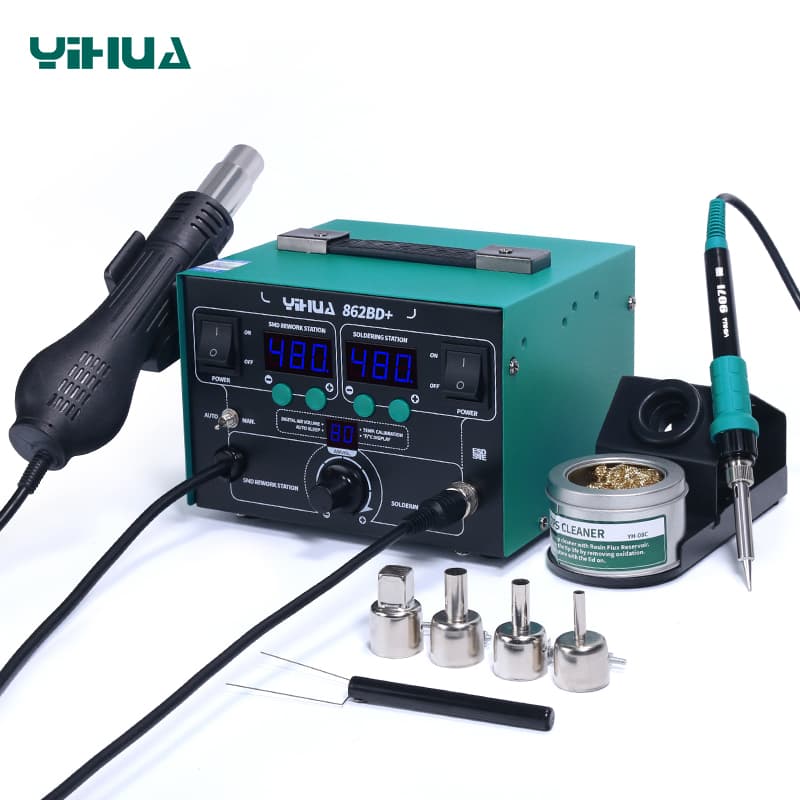
Compact PID station, 90–480°C, taking common 900M-series tips; the kit ships with six of them.
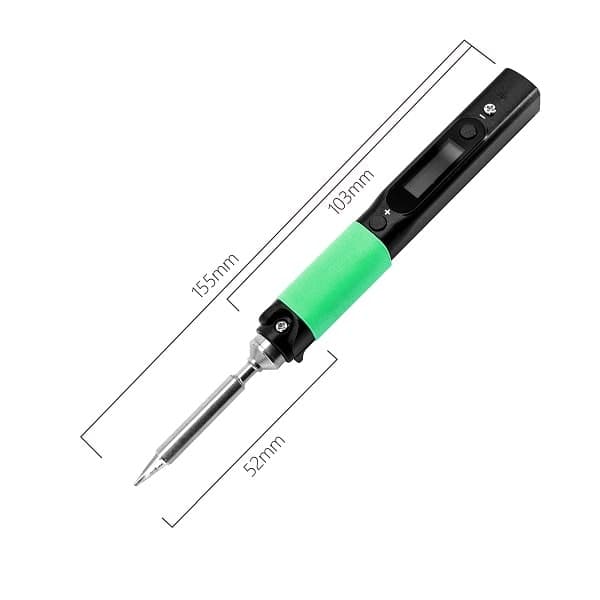
Portable USB-C iron, up to 88W from 24V, for splicing and tinning wires away from the bench.
As an Amazon Associate I earn from qualifying purchases. Prices and availability are shown on Amazon.
Frequently asked questions
Is solder wicking up a wire actually a bad thing?
Not inherently — wicking into twisted wire strands is exactly what makes a good wire splice, covered in our wire-soldering guide. It only becomes a problem when it travels further than intended, stiffening more of the wire than needed and reducing flexibility right where the wire should stay flexible.
Why does my tip run dry so fast on ground-plane joints specifically?
A ground plane is both a strong capillary destination (clean, well-fluxed copper) and a high thermal-mass joint that needs more total solder and more dwell time anyway, covered in our temperature-by-metal guide. Both effects compound: the joint wants more solder, and it pulls what's on the tip away quickly, so you end up re-feeding more often than on a small isolated pad.
Can I stop solder from wicking too far up a wire on purpose?
A small heatsink clip placed at the point you want wicking to stop (the same tool used to protect insulation from heat) can help contain both heat and solder flow to the intended section, since capillary wicking needs both flux/clean metal and enough heat to keep pulling solder along.
Does flux make wicking stronger or weaker?
Stronger, generally — flux is exactly what lets solder wet and flow onto clean metal in the first place, so more flux on a longer stretch of wire or a larger pad tends to pull solder further, not less. Limiting flux to just the section you want wetted helps keep wicking contained to that area.
Why does solder disappear into a through-hole joint and leave the top dry?
A plated through-hole is a narrow copper tube, so capillary action pulls solder down the barrel and out the far side, which is exactly what a good through-hole joint needs. If the pad on your side looks starved, the hole has simply taken the solder. Feed a little more until a small concave fillet forms around the lead on both sides of the board.