HOW-TO GUIDE
60/40 vs 63/37 Solder: What's the Difference?
By the OhmSavvy Research Team ·
What the numbers actually mean
Both figures describe the alloy by weight: 60/40 solder is 60% tin and 40% lead; 63/37 is 63% tin and 37% lead. That small, 3-percentage-point shift in the tin-to-lead ratio happens to land almost exactly on the eutectic point for this alloy system — the one specific ratio where the metal behaves fundamentally differently while cooling, covered next.
Eutectic vs. non-eutectic, explained simply
A pure metal, or an alloy at its eutectic ratio, melts and freezes at one single, sharp temperature — liquid above that point, solid below it, with no in-between state. Most alloy mixtures, including 60/40 tin-lead, don't share this property: they have a melting range with a lower temperature (solidus, fully solid below this) and a higher one (liquidus, fully liquid above this), and between those two points the alloy exists as a soft, semi-solid "plastic" or "pasty" mush — not fully liquid, not fully solid. 63/37 sits at tin-lead's eutectic ratio, so it skips that pasty phase entirely.
Melting ranges compared
Note that both alloys share the same 183°C lower bound — that figure is actually the tin-lead eutectic temperature itself. 63/37's entire transition happens right at that point; 60/40 needs another 8°C of cooling past it before it's genuinely solid all the way through.
Wire splicing
63/37 is easier to keep still through — no plastic window to protect.
General PCB repair
Either works well; 60/40 is fine if the joint can stay undisturbed while cooling.
Fine-pitch / SMD rework
63/37's sharp set point is the safer default when movement is hard to avoid.
Why the plastic range actually matters for joint quality
Side-by-side comparison
| 60/40 | 63/37 | |
|---|---|---|
| Composition | 60% tin, 40% lead | 63% tin, 37% lead |
| Melting behavior | Non-eutectic — 183–191°C plastic range | Eutectic — melts/freezes at 183°C sharply |
| Sensitivity to movement while cooling | Higher — must stay still through the plastic range | Lower — solidifies almost instantly |
| Typical cost | Usually slightly cheaper | Usually a small premium over 60/40 |
| Common use | General hand soldering, less critical joints | Preferred for fine work and hand-soldering precision |
Both are leaded alloys — the same safety handling applies
There's a third common alloy worth knowing about: 62/36/2
Which one should you buy?
For general hobby and repair work, either alloy solders a sound joint when the technique in our how-to guide is followed — holding the joint still while it cools matters for 60/40, and is simply less critical for 63/37. Many hobbyists choose 63/37 specifically to remove that one variable, especially for fine-pitch or SMD work where even small movement is harder to avoid. Whichever you choose, set your iron's temperature with the correct melting point in mind — see our troubleshooting guide if solder isn't melting the way you expect.
A worked example shows why the 8°C gap rarely changes your iron setting. Many hobbyists run tin-lead work somewhere around 300–330°C at the tip; the exact figure depends on tip size and how much copper the joint sinks heat into. Against a 183°C eutectic point that is roughly 115–145°C of margin, and against 60/40's 191°C liquidus it is still about 110–140°C. The temperature setting is effectively the same for both alloys. What differs is the few seconds after you lift the tip: with 60/40 the joint stays soft for slightly longer, so hold the wire or part still until the surface turns from mirror-wet to a set, bright finish. Wire diameter and flux core matter as much as the alloy: a thin 0.5–0.8 mm wire with a rosin core feeds cleanly onto small pads, while thicker wire suits terminals and heavy splices.
Irons that handle both alloys well
Either alloy rewards an iron that holds its set temperature when the tip touches cold metal, because a tip that sags lengthens the time the joint spends near its melting range. These picks from our reviews all offer adjustable, displayed temperatures, so you can set one value for tin-lead and another if you later switch to a lead-free spool.
Temperature-controlled irons for tin-lead work

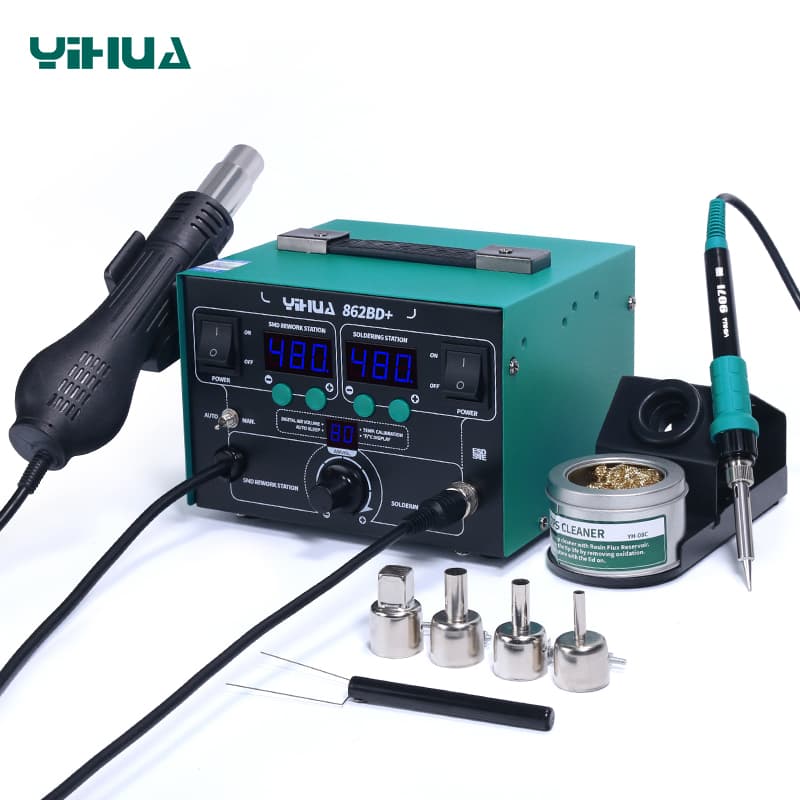
Hakko rates it 50–480°C with ±1°C idle stability and five presets, handy for keeping a leaded and a lead-free setting.
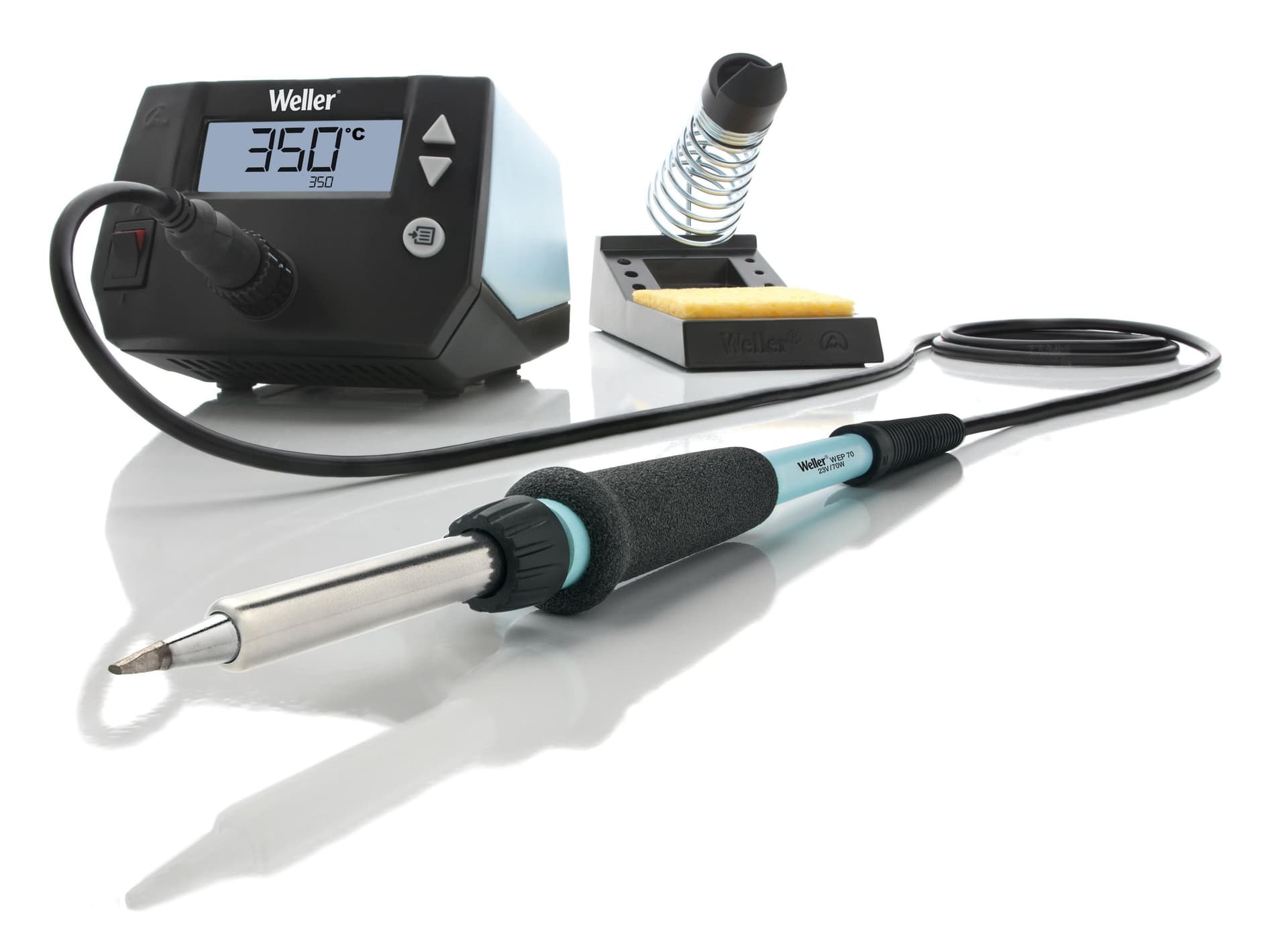
An 85W ESD-safe bench station with a 70W iron; Weller quotes about 28 seconds to go from 50 to 350°C.
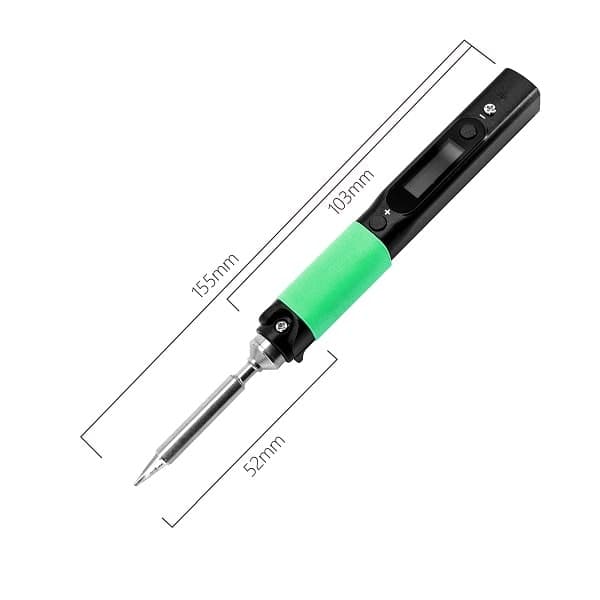
USB-C powered portable iron, up to 88W from a 24V supply, for leaded touch-ups away from the bench.
As an Amazon Associate I earn from qualifying purchases. Prices and availability are shown on Amazon.
Frequently asked questions
Is 63/37 solder objectively better than 60/40?
For hand soldering electronics, most people find 63/37 noticeably more forgiving because there's no plastic range to hold still through — the joint simply goes from liquid to solid at one point. 60/40 isn't defective or low quality; it just demands slightly more care (staying still a moment longer while it passes through its plastic range) to avoid a fractured joint.
Can I mix 60/40 and 63/37 solder on the same joint?
You can, and it won't damage anything, but the resulting mixture is neither ratio anymore — its melting behavior shifts toward whichever alloy dominates the mix, and you lose the predictability of either pure ratio. For consistent, repeatable results, it's better to stick with one alloy per spool and avoid topping up a leftover joint with a different ratio.
Does the tin percentage affect how long solder lasts on the shelf?
Not meaningfully — both 60/40 and 63/37 solder wire store well for years if kept reasonably dry and away from extreme heat; shelf life issues with solder wire usually come from the flux core degrading or drying out over a very long time, not the metal alloy itself changing.
Why do some irons list a minimum temperature around 300°C if solder melts near 183°C?
The iron's tip needs to run meaningfully hotter than the solder's melting point so it can transfer enough heat into the joint fast enough, since the joint itself is constantly losing heat to the surrounding metal and air. Setting the iron only a few degrees above the solder's melting point means very slow, unreliable melting in practice.
Is 63/37 solder the same as Sn63Pb37 on the label?
Yes. Sn63Pb37 and Sn63/Pb37 are the chemical-symbol way of writing 63% tin and 37% lead, and Sn60Pb40 is the 60/40 alloy. Spools often print both styles. If the label reads Sn62Pb36Ag2, that's the silver-bearing 62/36/2 variant, which melts a few degrees lower (around 179°C) than plain 63/37 and behaves almost the same at the iron.
Is lead-free solder a better choice than either tin-lead alloy?
Lead-free alloys such as SAC305 avoid lead exposure and are required for many commercial products, but they melt higher, typically around 217–220°C, wet more slowly and leave duller joints. For hobby repairs on older leaded boards, 63/37 is easier to work. For anything you sell, check whether lead-free assembly is legally required where it will be sold.