HOW-TO GUIDE
How to Remove Solder from a Circuit Board
By the OhmSavvy Research Team ·
Heat damage is the real risk, not the solder
Three methods, compared
Solder wick
Copper braid wicks molten solder away by capillary action. Good for single joints and cleanup.
Solder sucker
Spring-loaded vacuum pump pulls molten solder out of a hole. Fast for clearing through-holes.
Hot air
Heats a whole component evenly so it lifts free without picking at individual pins.
Learning curve and typical pace
None of the three methods takes long to learn, but they differ in how forgiving they are while you're still building confidence versus how quickly they clear solder once you're comfortable with the timing.
| Method | Best job | Pace | Main risk |
|---|---|---|---|
| Solder wick | Single joints, bridges, flattening pads | Slower, easy to control | Holding the iron too long on a saturated braid |
| Solder sucker | Clearing through-hole leads | Fast once the timing clicks | Recoil knocking the tip into nearby parts |
| Hot air | ICs, connectors, SMD parts | Fast on multi-pin parts | Heating neighbors or melting plastic housings |
The temperatures involved
Desoldering only needs the joint above the alloy's melting point for a moment; what pulls pads is staying there. The chart puts the standard melting points next to a common iron setting and the top of a rework station's range, using the YIHUA 862BD+'s published figures as the example station.
The iron setting is a typical starting point rather than a rule: it sits well above the melting point so the braid, which is itself a heat sink, can still melt the joint in two or three seconds. Turning up toward the top of the range rarely helps. If a joint won't release in a few seconds, more flux or a broader tip is usually the answer. Most consumer boards made since the mid-2000s use lead-free factory solder, which is why it can feel stubborn compared with leaded hobby solder; flowing a little leaded solder into the joint first lowers its melting point.
1Using solder wick (desoldering braid)
Lay a length of solder wick over the joint and press the iron tip onto the braid, not directly on the joint. Heat conducts through the braid into the solder below, which the braid then draws up by capillary action as it melts. Once the braid stops absorbing (it'll look dull and saturated rather than silver), move to a fresh section and repeat.
2Using a solder sucker (vacuum pump)
Cock the sucker's plunger, heat the joint with the iron until the solder is fully molten, then quickly swap the iron for the sucker's tip right against the melted solder and trigger it. Timing matters: trigger too late and the solder has already started to cool and solidify, pulling only partially. This method works well for clearing through-hole component leads quickly, especially on boards with several similar joints to clear.
3Using hot air for whole components
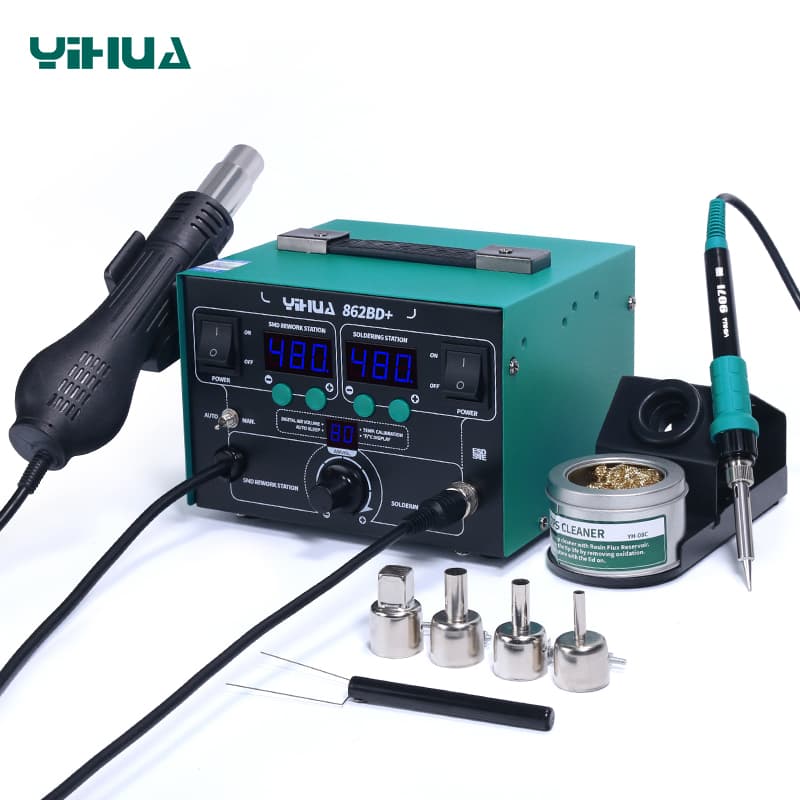
For a component with many pins (an IC, a connector) or SMD parts, hot air heats every joint on the part simultaneously and evenly, so the whole component lifts free once all its joints are molten together — rather than you working pin by pin with an iron and risking the part twisting or the board heating unevenly. A combined iron-and-hot-air station like the YIHUA 862BD+ is built specifically for this kind of multi-pin rework alongside normal iron work.
Protecting pads and traces while you work
| Practice | Why it helps |
|---|---|
| Add fresh flux before removal attempts | Old, oxidized solder releases far more easily with fresh flux than without |
| Work in short bursts, let the board cool between tries | Prolonged heat on one spot is what softens pad adhesive and lifts copper |
| Support the component gently, don't pry before solder is fully molten | Forcing a joint before it's liquid risks tearing the pad rather than releasing the lead |
| Match tip size to the joint | A too-small tip concentrates heat and takes longer, increasing total heat exposure |
Plated through-holes need extra care
Which method should you use?
For the trickier cases, see our dedicated guides to clearing a plated through-hole, desoldering a multi-pin connector, and repairing a pad that lifted anyway.
Stations that make desoldering easier
Wick and suckers are cheap accessories; the iron behind them is what decides how quickly a joint melts. A temperature-controlled station recovers heat as the braid soaks it up, and a station with hot air adds the whole-component option.
Stations from our soldering reviews
75W iron plus 500W hot air in one station; 200–480°C iron and 100–480°C air.

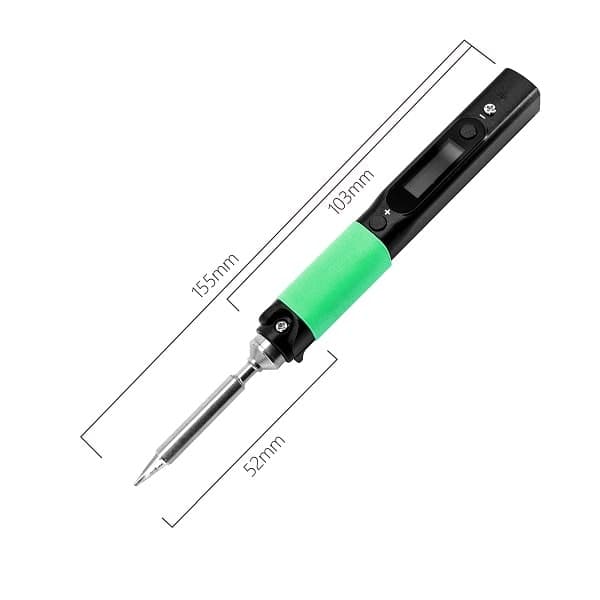
100W station with a 65W iron, 50–480°C digital control and T18 tips.
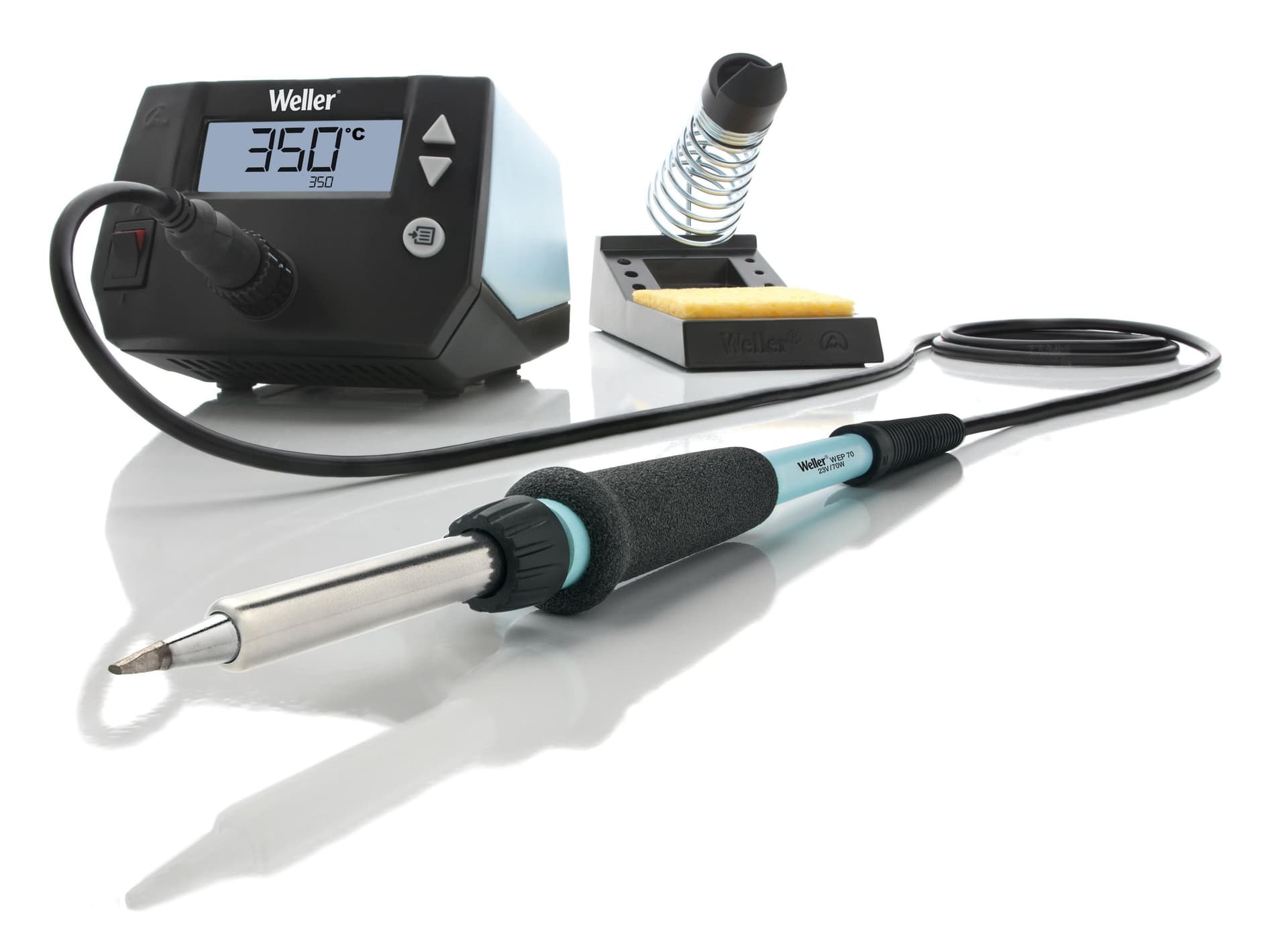
85W ESD-safe digital station (70W iron) for a dedicated bench.
As an Amazon Associate I earn from qualifying purchases. Prices and availability are shown on Amazon.
Frequently asked questions
Why did the pad lift off the board when I removed a component?
Pads lift almost always from excess heat applied for too long to one spot, which softens the adhesive bonding the thin copper layer to the board underneath. This is especially easy to do on older or lower-quality boards. Working quickly, using fresh flux to help solder release faster, and preferring hot air over prolonged direct iron contact for stubborn joints all reduce this risk.
Do I need flux to remove solder, or just to add it?
Flux helps considerably with removal too. Adding a small amount of fresh flux to an old, oxidized joint before trying to wick or suck the solder away makes it flow and release far more easily, since old solder on a board oxidizes over time just like solder sitting on a tip does.
Can I reuse desoldered solder for a new joint?
It's better not to. Solder removed from an old joint has usually been heated multiple times already and may carry contamination from flux residue or the board itself, so it behaves less predictably than fresh solder. Desoldering braid and solder suckers are for removal, not for recycling the solder itself.
Is a solder sucker or solder wick better for beginners?
Solder wick is generally more forgiving to learn on — it doesn't have moving parts that can disturb the board, and it's easier to see exactly how much solder has been absorbed. A solder sucker removes larger amounts faster once you're comfortable with the timing of triggering it right as the solder melts.
Why does a through-hole lead still feel stuck after I've cleared the visible solder?
On a multi-layer board, the hole itself is usually plated with a thin copper lining connecting inner layers to the outer pads, and solder can remain inside that barrel even once the top of the pad looks clear. A second wicking or suction pass, sized to the pad rather than oversized, usually clears it.