HOW-TO GUIDE
Soldering Iron Tip Types Explained
By the OhmSavvy Research Team ·

Common tip shapes at a glance
Manufacturers offer many specific tip shapes, but nearly all of them are variations on four basic families:
Conical
A fine point, narrowing to the tip. Good precision, smaller contact area.
Chisel
A flat, angled working face. Larger contact area, faster heat transfer.
Bevel
A rounded, angled face between conical and chisel. A balance of both.
Knife
A thin, blade-like edge. Good for drag soldering fine-pitch rows.
Relative heat transfer by shape
As a rough guide to how much contact area (and so heat-transfer capacity) each shape offers at a comparable tip size:
A relative, qualitative comparison — actual heat transfer also depends on tip size, the iron's wattage, and how cleanly the tip is tinned.
Conical tips: precision over throughput
A conical tip's small, pointed contact area makes it the easiest shape to aim precisely at a single pad or pin without touching its neighbors, which is why it's a common default for fine SMD and tightly-spaced through-hole work. The trade-off is less surface area touching the joint, so heat transfers somewhat more slowly than a broader shape on larger, higher thermal-mass joints.
Chisel tips: heat transfer over precision
A chisel tip's flat face puts much more metal in contact with the joint, transferring heat faster — useful for larger through-hole joints, wire splices, and anything with meaningful thermal mass. The wider contact area makes it easier to accidentally bridge adjacent, closely-spaced pads, so it's less suited to dense SMD work.
Bevel tips: a middle ground
A bevel tip's rounded, angled face sits between conical and chisel in both precision and heat transfer, which is why many general-purpose irons ship with one as the default tip. It handles a wide range of joint sizes reasonably well without excelling specifically at the finest SMD work or the largest thermal-mass joints.
Knife tips: drag soldering
A knife tip's thin edge is built specifically for drag soldering — running the tip along a row of closely-spaced pins (common on ICs) while solder flows along the edge from pin to pin, rather than touching down on each pin individually. It's a specialized shape, not a general-purpose one.
Specialty shapes beyond the core four
A few less common shapes show up for specific jobs. A "hoof" tip has a rounded, slightly concave face, often used for soldering connector pins and light rework where a chisel feels too flat-edged and a conical feels too pointed. A micro-conical tip — a much finer version of the standard conical shape — is aimed specifically at extremely small SMD packages (0201, 01005), where even a standard fine conical tip is too large to approach a single pad without risking its neighbors. Most hobbyists never need either, but they exist for a reason once work gets small or specialized enough.
Side-by-side comparison
| Tip shape | Contact area | Best suited to |
|---|---|---|
| Conical | Small, pointed | Fine SMD, closely-spaced through-hole joints |
| Chisel | Large, flat | Larger joints, wire splices, ground connections |
| Bevel | Medium, rounded | General-purpose, mixed joint sizes |
| Knife | Thin edge | Drag soldering rows of fine-pitch pins |
Matching tip to job beats owning every shape
Choosing a tip for the job in front of you
If you're only buying one replacement tip, a mid-size chisel or bevel tip gives the most general-purpose coverage. Add a fine conical tip once SMD or tightly-spaced work becomes a regular part of what you solder, rather than before you actually need the precision it offers.
Sizing the tip to the joint
A practical rule many technicians use is to pick the largest tip that touches only the joint you are working on. A tip roughly as wide as the pad delivers heat quickly without spilling onto neighbors; a tip much smaller than the pad has to sit on it longer, which is harder on the board than a brief touch from a bigger tip. The widths below are common starting points, not fixed rules, and the right choice also depends on how much copper sits under the pad.
| Job | Typical tip | Common working-end width |
|---|---|---|
| 0402/0603 passives, fine-pitch IC pins | Fine conical or small bevel | About 0.2–0.5 mm |
| Standard through-hole leads, 0805/1206 parts | Small chisel or bevel | About 1.2–2.4 mm |
| Drag soldering rows of IC pins | Knife or hoof | Edge length matched to the row |
| Wire splices, connectors, ground planes | Broad chisel | About 3–5 mm |
A useful sign that a tip is too small is a joint that takes more than a few seconds to wet even though the tip is clean and the temperature is sensible. Rather than turning the temperature up, which shortens tip life and stresses pads, try the next size up first. Our temperature-by-metal guide covers the settings side of the same trade-off.
Irons with a good tip range
Because tips rarely cross brands, the tip system you buy into matters as much as the iron. These picks from our reviews either use a long-running tip series or ship with several shapes in the box, so adding a knife or a fine conical later is easy.
Irons with a wide choice of tips
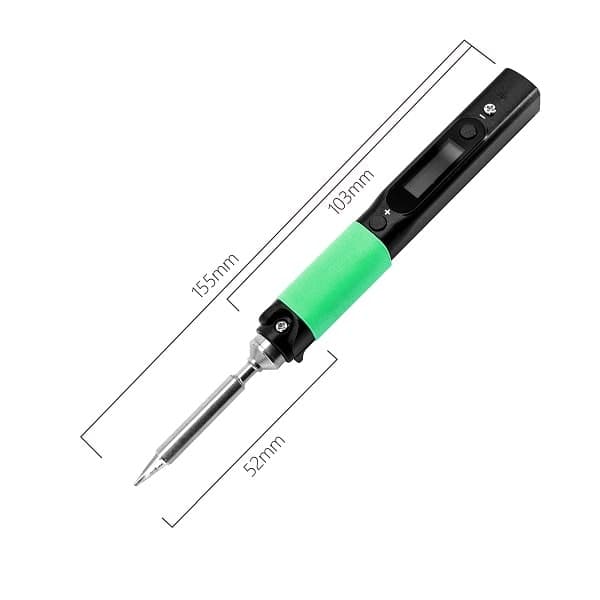
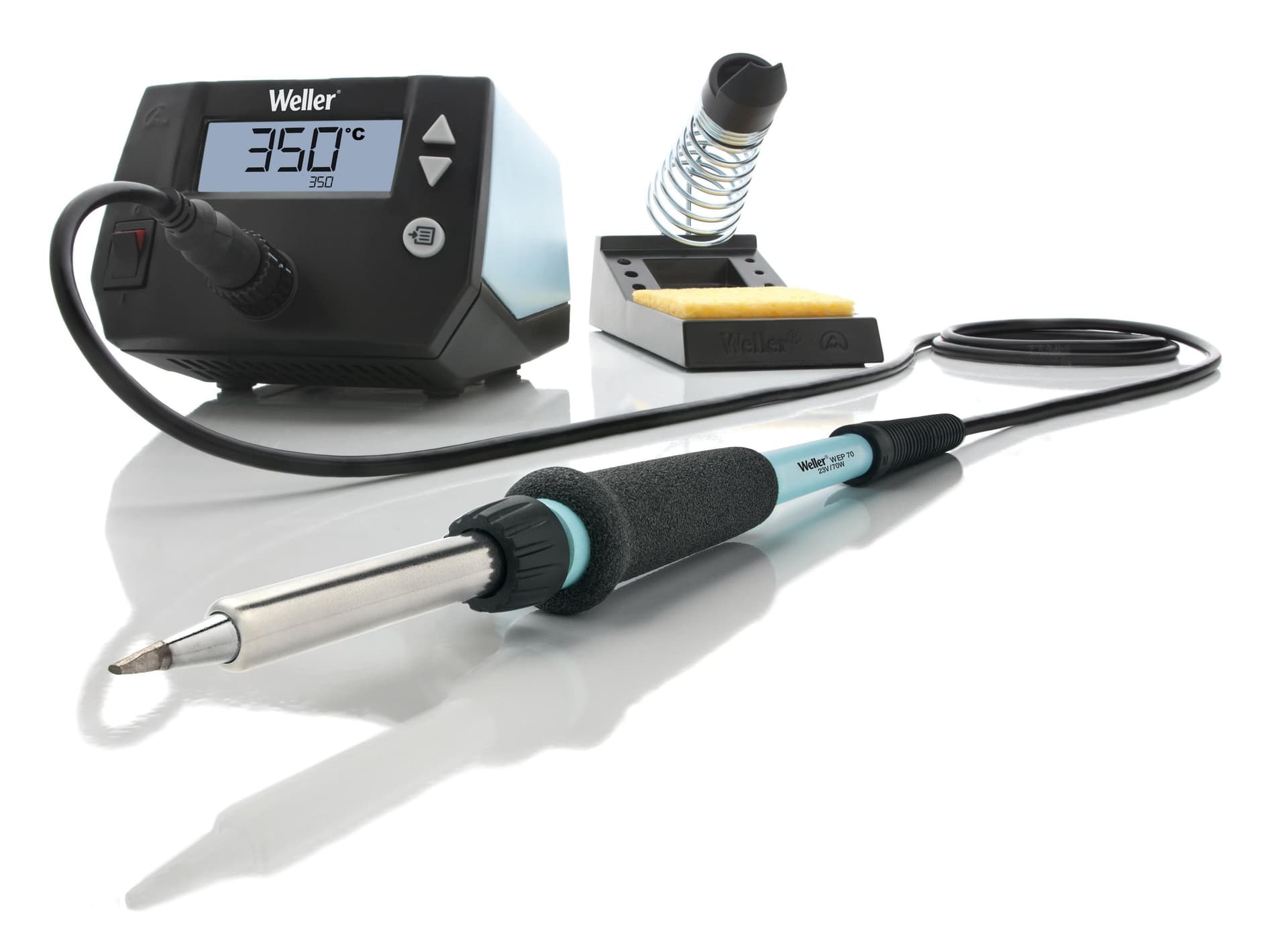
Takes Hakko's T18 tips, the same series the FX888D used, so conical, chisel, bevel and knife shapes are all available.

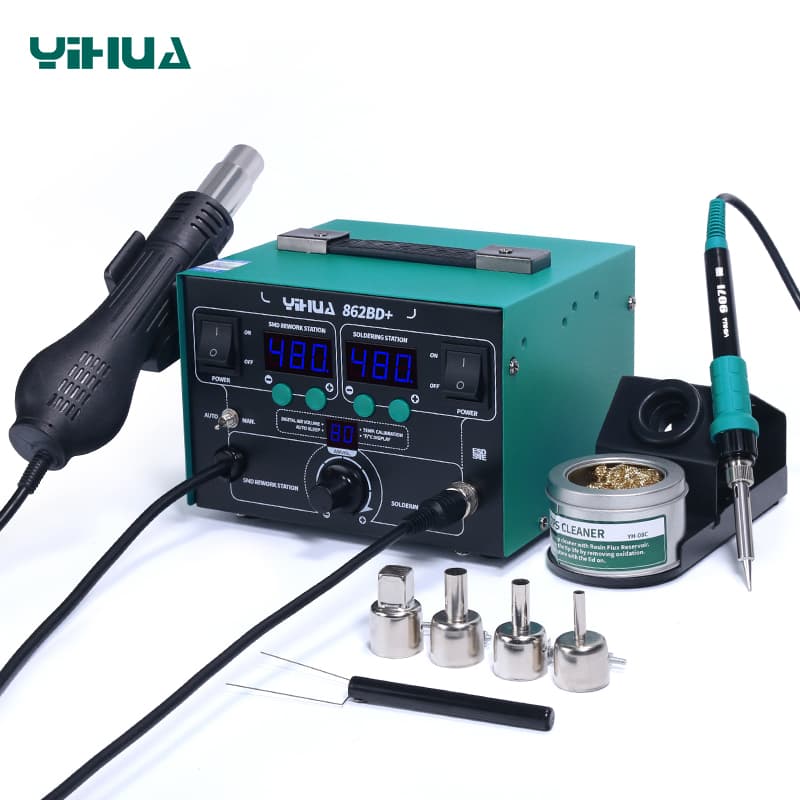
Uses common 900M-series tips, and the Amazon kit includes six of them to start with.
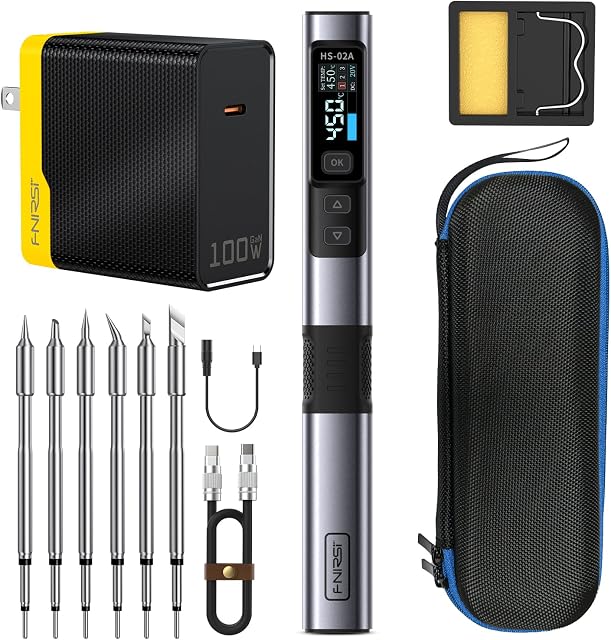
Kit ships with six tips (K, KU, JS, I, C2, B); buy HS-02A tips specifically, as the HS-02B uses a different set.
As an Amazon Associate I earn from qualifying purchases. Prices and availability are shown on Amazon.
Frequently asked questions
Do I need a different tip for every job, or can one tip do most work?
A single mid-size chisel or conical tip handles most general through-hole electronics work fine. It's worth owning two or three shapes/sizes once you're doing a mix of fine SMD work and larger joints, rather than forcing one tip to do everything — the wrong shape for the job costs you either precision or heat transfer.
Does tip size matter as much as tip shape?
Both matter, in different ways. Shape determines contact area and precision character; size (the diameter or width of the working end) determines how much thermal mass and surface area that shape actually has. A fine conical tip and a broad chisel tip of the same nominal shape family can behave quite differently in practice depending on their size.
Can I use a chisel tip for fine SMD work if that's all I own?
It's workable but not ideal — a chisel tip's wider edge makes it easy to accidentally bridge adjacent fine-pitch pads. A fine conical or bevel tip gives much better control for that kind of dense, closely-spaced work, and is worth the small investment if you do SMD work regularly.
Are soldering iron tips interchangeable between brands?
Rarely directly — tip mounting (the shape and size of the barrel that inserts into the iron) varies by manufacturer and often by product line, so tips are generally brand- and sometimes model-specific. Always check compatibility with your exact iron before buying replacement tips.
What do the letter and number codes on soldering tips mean?
They are each maker's shorthand for tip shape and size, usually a series prefix, a shape letter and a width or variant number. The letters are not standardized: the same letter can mean a different profile from one brand to the next. Rely on the maker's tip chart, which shows the drawn profile and the width in millimeters, instead of the code alone, and check the series matches your iron before you order.