HOW-TO GUIDE
How to Store a Soldering Iron Safely
By the OhmSavvy Research Team ·

A hot iron is a real risk even for a minute
Between joints, during a session
Always return the iron to its stand when not actively soldering, even for a few seconds between joints. A stand holds the tip safely clear of the bench, cables, and anything flammable, and it's the single habit that prevents the most common soldering accidents — a hot tip set down on something it shouldn't touch.
Shutting down at the end of a session
A short routine before switching off protects the tip for next time:
01
Clean the tip
Wipe on sponge/brass wool
02
Re-tin it
Fresh solder layer as a barrier
03
Power off
Switch off at the station/plug
04
Let it cool fully
In open air, on its stand
1Storing an iron for weeks or months
Beyond the end-of-session routine, longer storage benefits from a few extra precautions: coil the cord loosely rather than tightly (tight coils stress the cord's internal conductors at the bend points over time), store it somewhere dry to limit corrosion, and avoid stacking heavy items on top of a case containing the iron and its stand. If the iron uses replaceable tips, leaving the currently-installed tip tinned, as covered above, protects it through the storage period too.
Traveling or transporting an iron
A portable, USB-C powered iron like the Pinecil V2 raises a slightly different storage question: there's no base station to hold the tip safely, so a dedicated silicone or metal tip cover (sold separately or sometimes included) matters more than it does for a bench iron. A cover protects the tip from knocks in a bag, and — just as importantly — keeps anything else in the bag away from a tip that may still be warm immediately after use. Let a portable iron cool fully before capping and packing it away, exactly as you would with a bench iron's stand.
What to avoid
- Setting a hot iron down anywhere other than its stand, even for a moment.
- Closing a warm iron into a case or bag before it's genuinely cool.
- Storing it with a dirty, dross-covered tip rather than a freshly tinned one.
- Coiling the cord very tightly around the iron body for storage, which stresses it at the bend points.
- Leaving it powered on and unattended for extended periods between uses.
Quick reference
| Situation | What to do |
|---|---|
| Between joints, same session | Return to stand; leave powered if the break is short |
| End of session | Clean tip, re-tin, power off, let cool fully before moving it |
| Storing for weeks or months | Tinned tip, cord coiled loosely, dry location |
| Stepping away for an extended period mid-session | Switch off rather than leaving it unattended and hot |
See our tip care guide for the full cleaning and tinning process referenced above.
Bench, kit and portable irons
How you store an iron depends on its type: a station lives on the bench, a kit iron goes back in its box, and a portable iron travels in a bag. These verified picks cover all three.
Irons and how they store

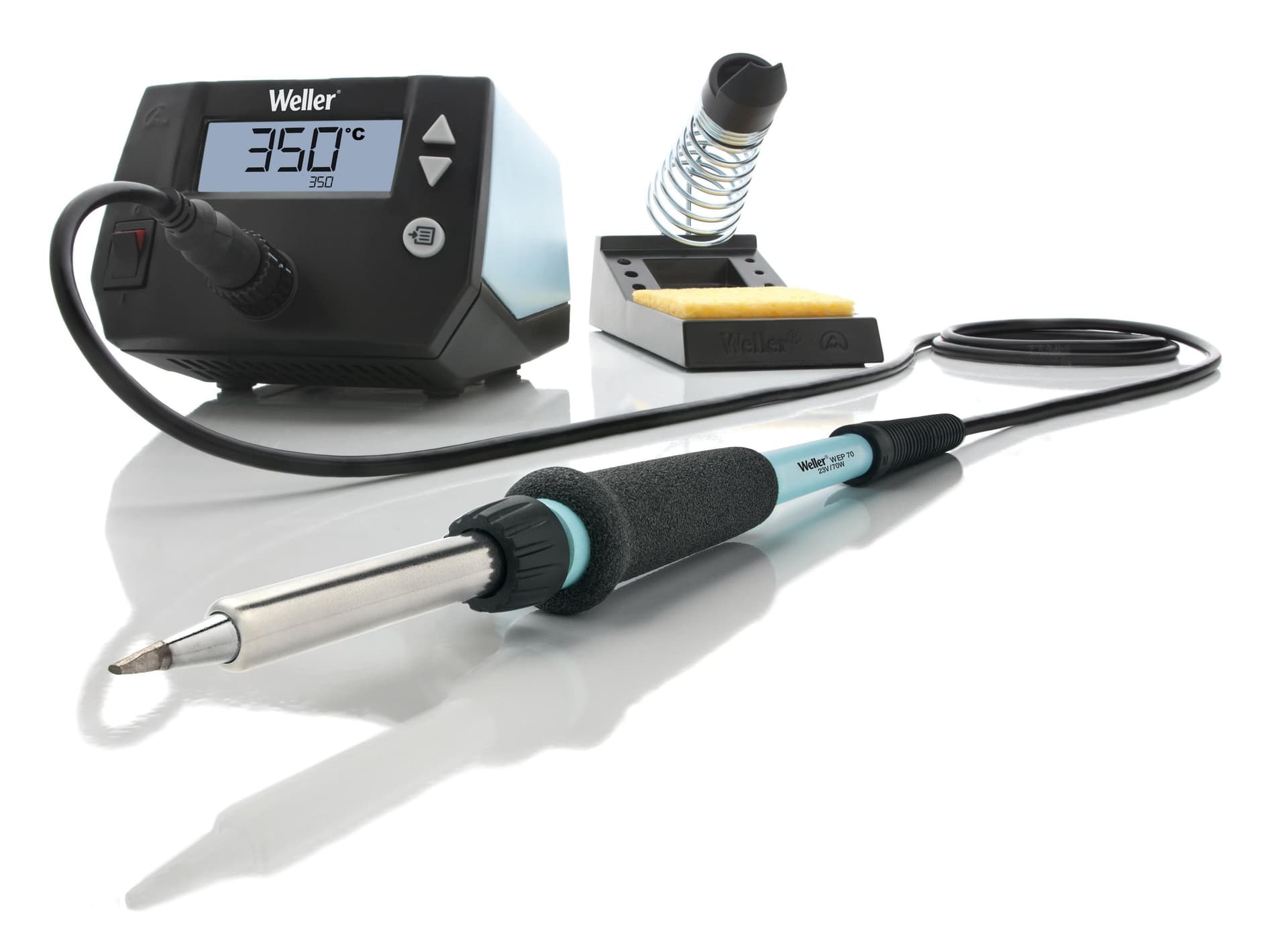
Bench station: a 100W base with a 65W handpiece that stays set up on the bench between sessions.
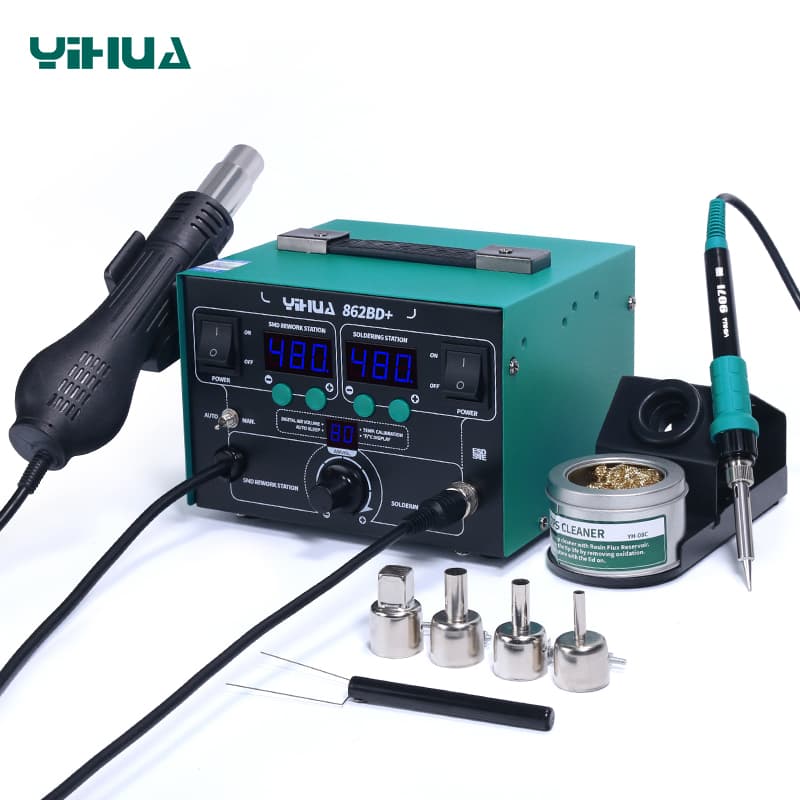
60W starter kit with a 200–450°C dial, easy to pack away once the iron is fully cool.
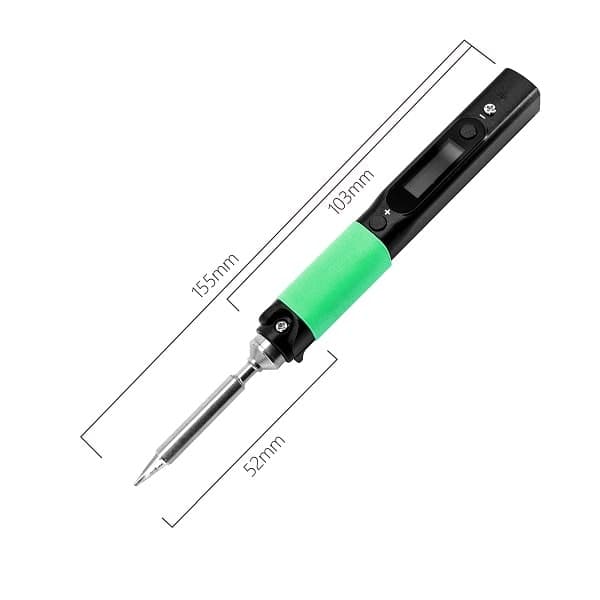
Pocket-sized and USB-C powered, with no base station, so a tip cover matters when you carry it.
As an Amazon Associate I earn from qualifying purchases. Prices and availability are shown on Amazon.
Frequently asked questions
Is it okay to leave a soldering iron on and unused for a while?
Short breaks (a few minutes) are generally fine with the iron back in its stand. For longer gaps — stepping away for an extended period — switching it off is better practice: it saves the tip from continuous oxidation at temperature and is simply safer, since an unattended hot iron is a real fire and burn risk regardless of how briefly you expect to be away.
Should I store a soldering iron with solder still on the tip?
Yes — a thin, fresh layer of solder left on the tip before storage (tinning it right before shutdown) acts as a barrier against oxidation while it sits unused, and means less cleanup is needed before the next session. This is different from leaving old, dross-covered solder on the tip, which should be cleaned off first.
Can I store a soldering iron in its carrying case right after use?
Only once it's genuinely cool to the touch. Closing a hot iron into a case, bag, or drawer traps heat against the case material and anything else inside, which is both a fire risk and can damage the case itself. Let it cool fully in open air on its stand first.
Does humidity affect a stored soldering iron?
It can, over time — a damp storage environment accelerates corrosion on an iron's metal parts, including the tip and any exposed connector contacts on a station handpiece. A dry location is one of the simplest ways to protect an iron you're not using daily.
How long should a soldering iron cool before I put it away?
Plan on at least 10 to 15 minutes in open air on the stand, and longer for a station handpiece with a large tip, which holds more heat than a slim pencil iron. Don't test by touching the tip. Hold the back of your hand a few centimeters away: if you still feel warmth radiating, it isn't ready for a case or drawer.