HOW-TO GUIDE
How to Choose Solder Wire Diameter for Electronics Repair
By the OhmSavvy Research Team ·
Why diameter matters beyond "more solder, faster"
Thinner wire gives you finer control over exactly how much solder reaches a joint per touch, which matters most on small, closely-spaced pads where even a slight excess risks bridging two connections together. Thicker wire delivers more solder per length fed, which matters on larger joints and wire splices where you'd otherwise need to feed a long length of thin wire just to build up enough solder.
Common solder wire diameters
Which diameter for which job
| Job | Suggested diameter | Why |
|---|---|---|
| Fine-pitch SMD, dense boards | 0.5mm or thinner | Precise, small feed amounts reduce bridging risk |
| General through-hole electronics repair | 0.6–0.8mm | Balances control and feed speed for most common joints |
| Wire splicing, larger connectors | 0.8–1.0mm | Faster to build up enough solder for bigger thermal mass joints |
| Heavy-gauge wire, bulk/production soldering | 1.0mm or thicker | Minimizes feed time across many larger joints |
Seeing the bridging risk directly
On a small, closely-spaced SMD pad, a thin wire lets you place just enough solder to wet that one pad; a thick wire feeds more than the pad can hold per touch, and the excess has nowhere to go but sideways — onto the neighboring pad.
Why a small diameter change matters more than it looks
Diameter is separate from flux type and core percentage
Do you need more than one spool?
For general hobby and repair work, one 0.6-0.8mm spool handles the large majority of jobs reasonably well. Add a thinner 0.5mm or smaller spool once SMD or fine-pitch work becomes a regular part of what you solder, and consider a thicker spool only if you're regularly doing wire splicing or larger-joint work where feed speed genuinely matters.
When in doubt, start with 0.6mm
Irons that suit fine and heavy wire
Thin wire rewards a small tip and stable temperature; thick wire on heavy joints needs an iron with enough power to keep up. These verified picks cover both ends.
Irons for every solder diameter
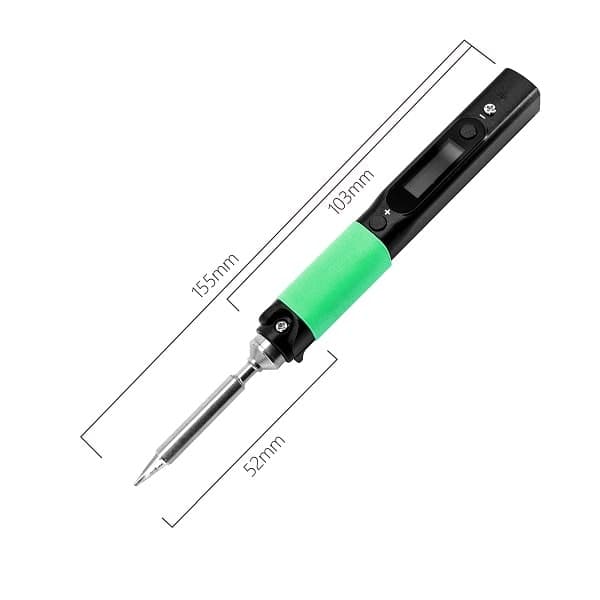
Up to 88W at 24V with an OLED temperature display, in a pen-sized body that suits fine-wire SMD work.

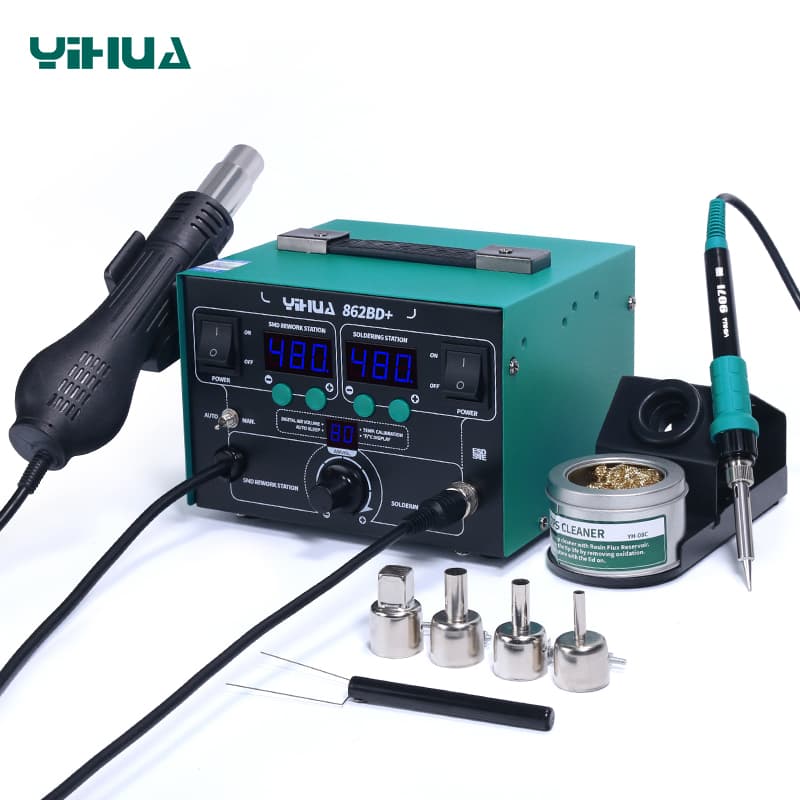
100W station with a 65W iron, closed-loop control from 50 to 480°C and Hakko T18 tips.
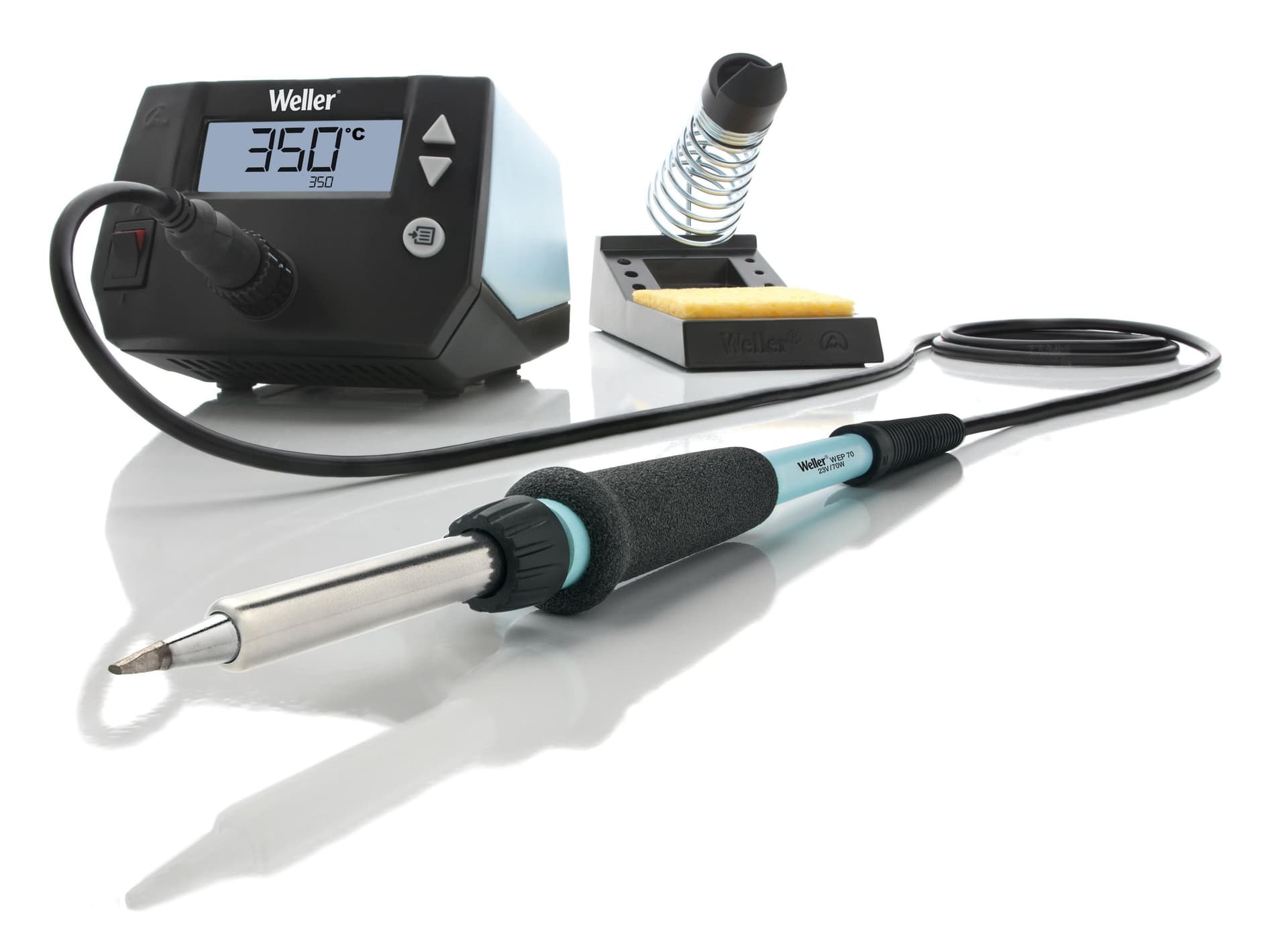
85W ESD-safe digital station (70W iron) that reaches 350°C in about 28 seconds from 50°C, per Weller.
As an Amazon Associate I earn from qualifying purchases. Prices and availability are shown on Amazon.
Frequently asked questions
What's a good general-purpose solder diameter if I only want to buy one spool?
0.6mm to 0.8mm (roughly 0.025" to 0.031") covers most general through-hole electronics and hobby repair work reasonably well. It's thin enough for a reasonable degree of control, and thick enough not to feel painfully slow on everyday joints.
Is thinner solder wire always better for precision?
Not in every case — very thin wire is excellent for feeding tiny, exact amounts onto fine SMD pads, but it can feel slow and fussy on larger through-hole joints or wire splices, where you'd need to feed a lot of wire to build up enough solder. Match diameter to the joint size, not just "always thinner for precision."
Does solder diameter affect how hot I need to run my iron?
Not directly — it's the joint's thermal mass and the solder alloy's melting point that set the required temperature, covered in our temperature guide. Diameter mainly affects feed rate and control, not the melting behavior of the solder itself.
Can I use thick solder wire on fine SMD work if that's all I have?
It's workable but awkward — a thick wire makes it harder to feed a small, controlled amount, increasing the risk of bridging adjacent fine-pitch pads with excess solder. If you do SMD work regularly, a thinner spool (0.5mm or less) is a worthwhile small investment.
What solder diameter should I use for 0603 or 0402 SMD parts?
For 0805 and 0603 passives and SOIC chips, 0.5mm wire is usually comfortable. For 0402 parts or 0.5mm-pitch ICs, many technicians drop to 0.3–0.4mm wire, or tin one pad with a touch of wire and add extra flux, because even 0.5mm wire carries more solder per millimeter than a pad that small needs.