HOW-TO GUIDE
How to Remove Solder from a Small PCB Via
By the OhmSavvy Research Team ·

Heat, fumes and sharp points
- Work on an unpowered board, with batteries removed and capacitors discharged.
- Needles and wire ends puncture skin easily; hold them in pliers or tweezers, not fingers.
- Ventilate flux fumes, park the iron between attempts and wash your hands after handling leaded solder.
PCB vias vs component holes
A via is a small plated hole that carries a signal or power connection from one copper layer to another. It is not meant to take a lead, so it is drilled much smaller than a component hole and has only a narrow copper ring around it. Many vias are tented, covered with solder mask, so solder never reaches them in normal assembly; others are left open and fill up during soldering or rework.
For holes that held a component lead, the methods in how to remove solder from a plated through hole apply. A blob on a connector pin is another job again, covered in removing excess solder from a small connector pin.
Why you might want to clear a via
Jumper wire
A fine wire passed through a via makes a neat, strong link between layers or to a repair.
Modifications
Vias are handy access points to a signal for a mod, a test lead or a bodge.
Rework spill
Solder flowed into nearby vias during rework and you want the board back as it was.
1Open a tented via
If the via is covered with mask, expose the ring first. Scratch the mask gently with a fiberglass pen or the tip of a scalpel held almost flat until copper shows around the hole. The ring is often only about 0.1 mm to 0.15 mm wide, so stop as soon as it shines; cutting through it breaks the connection.
2Flux and fine wick
Add liquid or paste flux, lay the narrowest wick you have, ideally 1.5 mm or less, across the via and press it with the tip for two to three seconds. Lift wick and iron together. This takes the surface solder and sometimes empties a larger via. Often a plug stays in the barrel, held by surface tension.
3Heat from the far side
Mount the board on its edge in a holder so both faces are reachable. Add a touch of fresh solder to the far-side ring if it is dry, as fresh solder carries heat into the barrel. Hold the tip there for a couple of seconds so the whole plug melts. A typical setpoint is 330 °C to 360 °C for leaded solder; vias in a ground plane may need more, as the temperature guide explains.
4Push a fine stainless needle through
With the plug molten, push a stainless needle or fine stainless wire into the via from the near side, then lift the iron and hold the needle still until the solder sets. Twist it out; solder does not wet stainless, so it slides free and leaves a clean hole. A wooden toothpick works on larger vias.
If the needle stops partway, the plug has not melted through. Do not push harder. Lift off, add a little fresh solder and flux to the far side, let the board cool for a moment and try again with the tip held slightly longer. Forcing a needle into half-frozen solder is how barrels crack.
The limits of a solder sucker on small holes
| Method | On a via | Notes |
|---|---|---|
| Fine wick + flux | Good for surface solder | Often leaves the barrel plugged |
| Heat far side + needle | Most reliable | Needle must be thinner than the hole |
| Spring solder sucker | Unreliable | Nozzle wider than the via; recoil can jar the tip |
| Hot air + needle | Useful on plane vias | Shield nearby parts; keep it brief |
Don't overheat the via barrel
The barrel is a thin copper lining, and the ring around it is tiny. Long dwell times, repeated attempts and forcing a needle can crack the plating or separate the ring from the board. Give each attempt a few seconds, let the board cool between tries, and stop after two or three. Afterwards, check continuity from ring to ring. If a ring has lifted, see repairing lifted PCB pads.
When to leave a via filled
A filled via still conducts perfectly well. If you only need a connection, tin a fine wire and lap it onto the ring or the solder surface instead. Leave alone vias that are factory-plugged with epoxy or copper, vias inside a pad, and vias in thermal arrays under chips: clearing them gains nothing and risks the board.
Fine wire, short heat
Irons from our soldering reviews
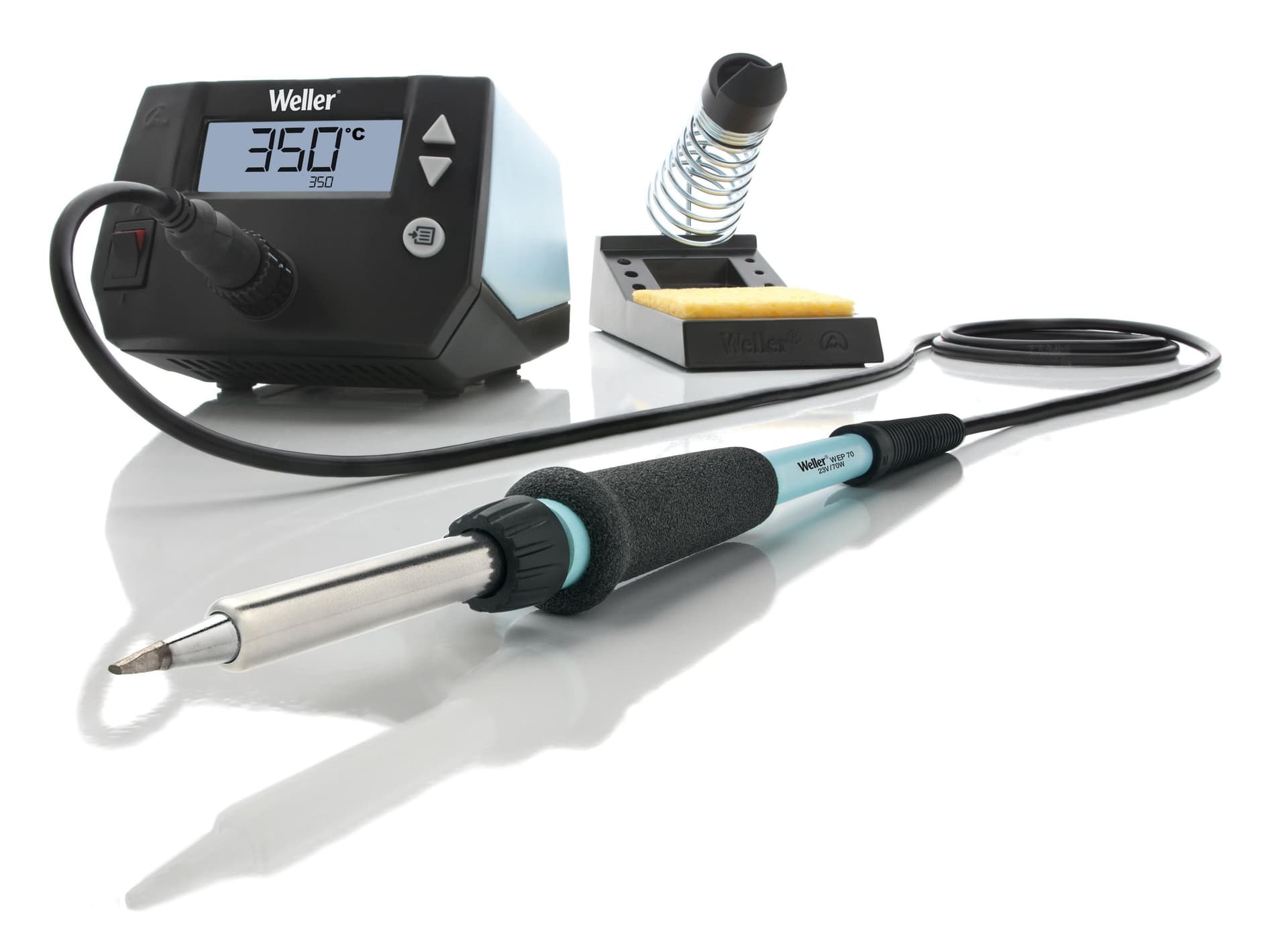
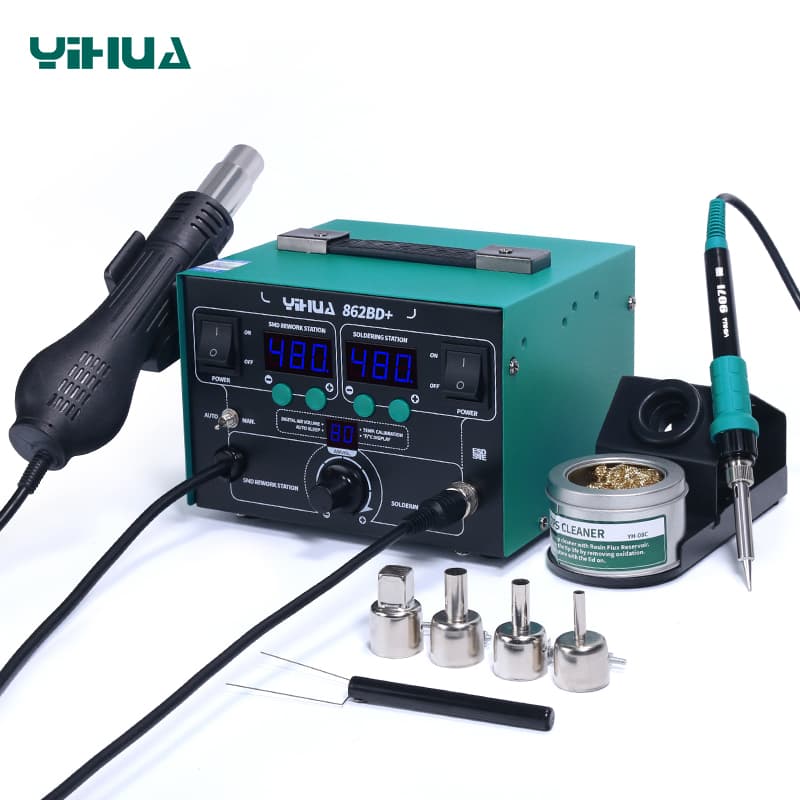
Five presets let you jump between a via setting and a cooler one for nearby parts; 100W station, T18 tips.
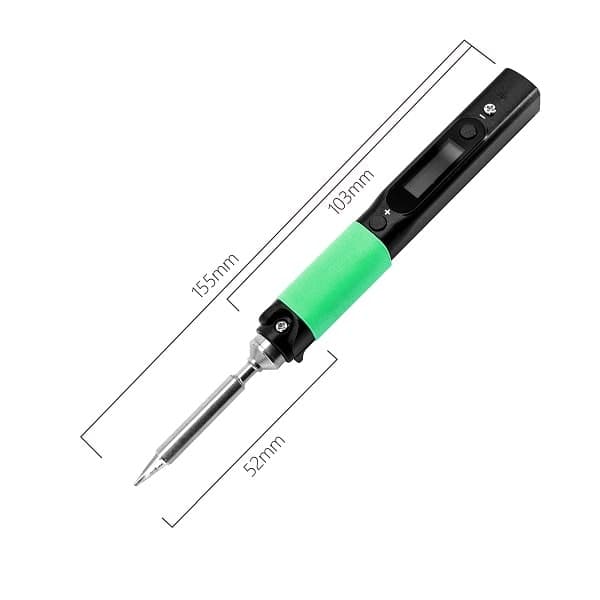
USB-C PD powered with an OLED display; compact for small-board rework.
As an Amazon Associate I earn from qualifying purchases. Prices and availability are shown on Amazon.
Frequently asked questions
Can I use a solder sucker on a via?
Sometimes, but it is the least reliable method. A typical via holds very little solder and its hole is smaller than the pump nozzle, so the suction mostly pulls air from around the tip. Adding fresh solder and pumping from the opposite side to the iron occasionally works on larger vias. Wick and a needle are usually more effective.
Is it safe to drill out a blocked via?
Generally no. The hole is lined with a thin layer of plated copper that connects the layers, and a drill bit removes it, breaking the connection. On a multilayer board it can also cut an inner trace. If the via is filled with factory epoxy or copper rather than solder, leave it and solder to the surface ring instead.
What needle size clears a PCB via?
Choose stainless steel thinner than the finished hole, which for many vias means well under 0.3 mm. Fine stainless wire or a very thin sewing or acupuncture-type needle can work; hollow desoldering needles are mostly sized for component holes. Stainless matters because solder does not wet it, so it slides out once the solder cools.
How do I know if I damaged a via?
Measure continuity from the top ring to the bottom ring, or between the traces it joins. A healthy via reads near zero ohms. An open reading means the barrel has cracked or separated, which can happen after repeated heating or forcing a needle. The usual fix is a fine wire passed through the via and soldered at both ends.
Why is solder in a via so hard to remove?
Surface tension holds molten solder firmly in a narrow hole, and the via's connection to copper pours or planes pulls heat away, so the plug may not melt all the way through. Fresh solder and flux help heat travel down the barrel, and heating from the far side while working from the near side gives the best chance.