HOW-TO GUIDE
How to Test a 13 Amp Plug Fuse With a Multimeter
By the OhmSavvy Research Team ·

Unplug first, always
- Switch off at the socket and pull the plug out before you open it. Never open a plug or touch its fuse while it is plugged in, even if the socket switch is off.
- Continuity and ohms modes put their own small voltage through the part. Using them on anything live gives meaningless readings and can damage the meter.
- If the plug is cracked, scorched or the cable is damaged where it enters, replace the plug or the lead rather than reusing it.
How a UK plug fuse works
Every standard UK plug (BS 1363) carries a cartridge fuse made to BS 1362, connected in the live conductor. Inside the ceramic body is a thin wire sized to melt if the current runs too high for too long. When it melts, the circuit opens and the appliance goes dead. That is why a multimeter test is so simple: an intact fuse is a near-perfect conductor, and a blown one is an open circuit.
1Unplug and open the plug
Switch off and remove the plug from the socket. On a rewireable plug, undo the large central screw on the pin face and lift the cover off. While it is open, check that the cable grip is clamped on the outer sheath, the cores are firmly held under their terminals and nothing is discolored. A loose live terminal can overheat and mimic a fuse problem.
2Remove the fuse
Lever the fuse out of its clips with a small flat screwdriver. On a molded plug, prise open the fuse carrier on the pin face instead. Look at the printed rating on the body (3A, 5A or 13A are the common ones) and note it before testing.
3Set the meter
Plug the black lead into COM and the red lead into the V/Ω socket. Turn the dial to continuity (the speaker or sound-wave symbol) if your meter has it; otherwise use the lowest resistance range, such as 200 Ω on a manual meter. Touch the probe tips together first: you should get a beep, or a reading of a few tenths of an ohm. That figure is your lead resistance.
4Probe the end caps
Lay the fuse on a non-conductive surface and press one probe tip on each metal end cap. Hold the probes by their insulated grips, not the fuse, so that your fingers do not form a parallel path. Polarity does not matter.
01
Unplug
Switch off, pull plug
02
Open
Remove cover or carrier
03
Pull fuse
Note the rating
04
Probe caps
Continuity or low Ω
05
Decide
Beep = good, OL = blown
Reading the result
| Meter shows | Meaning | Next step |
|---|---|---|
| Beep, or under about 1 Ω | Fuse intact | The fault is elsewhere: cable, switch or appliance |
| OL or 1 on every range | Fuse blown (open circuit) | Fit a new fuse of the correct rating and retest |
| Reading that flickers or jumps | Poor contact or a damaged cap | Clean the probe tips and caps; if it persists, discard the fuse |
| Several ohms or more | Probably a probe or range problem | Recheck the range and lead sockets; a healthy fuse never reads this high |
If the fuse is good and the appliance is still dead, test the flex core by core for continuity. Our guide to testing electrical wires with a multimeter walks through it.
Choosing the right replacement rating
Always replace like for like unless the appliance instructions say otherwise. Color coding helps, but it is a convention rather than a guarantee: many 3 A fuses are red and many 13 A fuses are brown, yet some makers use plain white bodies. Go by the rating printed on the fuse.
Rule of thumb
Why did the fuse blow?
- A fault inside the appliance, such as a failed heating element, motor or power supply.
- Damaged flex: crushed under furniture, chewed, or broken at the plug or appliance end.
- The wrong fuse fitted: a 3 A fuse in a kettle will blow at switch-on.
- A surge at switch-on from motors or transformers, which can eventually tire a fuse.
- A loose terminal inside the plug that overheated and weakened the fuse.
A fuse that has blown once may just be old. One that blows again soon after replacement points to a real fault, and an appliance with a heating element can be checked with our multimeter basics guide before you decide whether to repair it.
Which multimeter you need
Any digital meter with continuity or a low ohms range will test a plug fuse. An audible continuity beep is the quickest way to work through a drawer of spares. For general home use, see our best multimeter for home use guide.
Home-use meters in our reviews
Auto-ranging, True RMS, backlit display. A sensible first meter for home and hobby use.
Pocket-sized and auto-ranging with a built-in non-contact voltage detector.
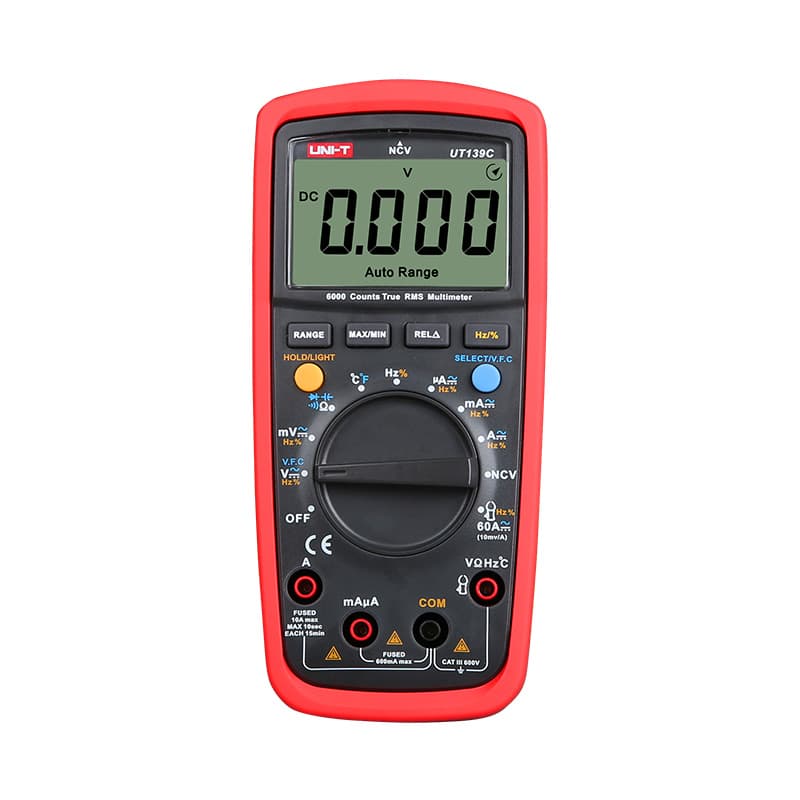
True RMS, 6,000-count, auto and manual ranging at a budget price.
As an Amazon Associate I earn from qualifying purchases. Prices and availability are shown on Amazon.
Frequently asked questions
Can you tell if a plug fuse is blown just by looking at it?
Usually not. BS 1362 fuses have an opaque ceramic body, so you cannot see the wire inside the way you can with a glass fuse. A blackened or cracked fuse is clearly suspect, but most blown plug fuses look perfectly normal. A two-second continuity test is the only reliable check.
Is it safe to put a 13 A fuse in every plug?
Not always. The plug fuse protects the flexible cable between the plug and the appliance. A thin lamp flex can overheat well before a 13 A fuse blows, so low-power appliances with thin cables often use a 3 A fuse. Follow the appliance manufacturer's instructions; if in doubt, appliances up to about 700 W commonly use 3 A and heaters, kettles and similar loads use 13 A.
Do molded plugs have a fuse you can test?
Yes. Most molded UK plugs have a small fuse carrier on the pin face that you can prise open with a flat screwdriver to remove the fuse. Test it exactly as you would one from a rewireable plug. If the carrier is missing or broken, the plug is not safe to use.
My new fuse blew straight away. What now?
Stop replacing fuses. A fuse that blows immediately is telling you there is a fault, such as a damaged cable, a failed appliance component or water ingress. Do not fit a higher-rated fuse to get round it. Have the appliance checked or repaired, or replace it.
What resistance should a good 13 A plug fuse read?
A tiny fraction of an ohm, so most meters will show a reading close to their own lead resistance, typically somewhere around 0.1 to 0.5 Ω including the leads. Lower-rated fuses use thinner wire and can read slightly higher. Any value under about 1 Ω means the fuse is intact; the exact figure does not matter for this check.



