COMPARISON · OSCILLOSCOPES
Siglent SDS814X HD vs Rigol DHO814 for Electronics Labs
These two are remarkably close on paper: both 100 MHz, 4-channel, 12-bit touchscreen scopes on a 7-inch 1024 × 600 display. The real separation is sample rate and memory depth, where the SDS814X HD leads on both, plus an optional logic-analyzer upgrade path the DHO814 doesn't offer.
By the OhmSavvy Research Team ·
Disclosure: OhmSavvy earns a commission from qualifying Amazon purchases made through these links, at no extra cost to you. How we're funded.

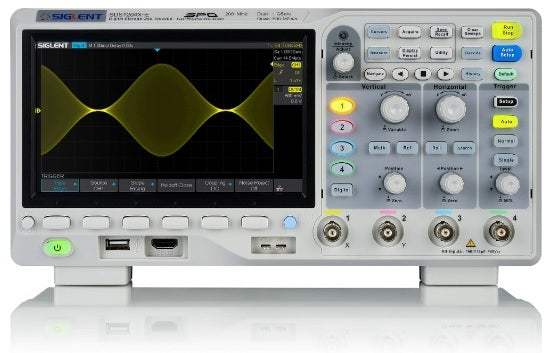
Siglent SDS814X HD
4.6★★★★★A 12-bit, 100MHz scope with 2 GSa/s sampling and a 1024x600 touchscreen.

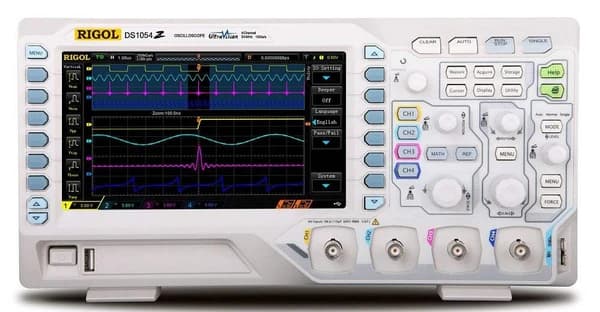
Rigol DHO814
4.6★★★★★Four channels, 12-bit resolution and a touchscreen, one step up from the DHO804 in bandwidth.
Specs side by side
| Siglent SDS814X HD | Rigol DHO814 | |
|---|---|---|
| Rating | 4.6★★★★★ | 4.6★★★★★ |
| Bandwidth | 100MHz | 100MHz |
| Channels | 4 | 4 |
| Sample rate | 2 GSa/s | 1.25 GSa/s |
| Best for | Extra vertical detail (12-bit) on a touchscreen at a mid-range price | Four-channel work that wants more bandwidth than the DHO804 |
| Bandwidth | 100MHz | 100MHz |
| Channels | 4 | 4 |
| Vertical resolution | 12-bit | 12-bit |
| Sample rate | 2 GSa/s | 1.25 GSa/s |
| Memory depth | 50 Mpts per channel | 25 Mpts |
| Waveform capture rate | Not stated in this Pick's sourcing | Up to 1 Mwfms/s (UltraAcquire) |
| Display | 7-inch, 1024 × 600, capacitive touchscreen | 7-inch, 1024 × 600, touchscreen |
| Digital channels | 16, with optional SLA1016 probe | Not applicable |
| Serial decode | Listed at series level (I2C/SPI/UART/CAN/LIN) | Not called out in this Pick's sourcing |
Specs checked against manufacturer documentation and official Amazon listings. Desk research, not bench testing. How we research.
Key differences
- →Sample rate: 2 GSa/s on the SDS814X HD against 1.25 GSa/s on the DHO814 — 60% faster.
- →Memory depth: 50 Mpts per channel on the SDS814X HD against 25 Mpts on the DHO814 — double.
- →Logic analysis: only the SDS814X HD supports an optional 16-channel logic probe (SLA1016, sold separately).
- →Both share identical 100 MHz bandwidth, 4 channels, 12-bit resolution, and the same 7-inch 1024 × 600 touchscreen size.
- →Documentation emphasis differs: the SDS814X HD's sourcing details decode protocols at the series level; the DHO814's sourcing details its UltraAcquire capture-rate mode instead.
Spec by spec
With bandwidth, channels, resolution and screen size all tied, the comparison comes down to two numbers: sample rate and memory depth. The Siglent leads on both.
A higher sample rate and deeper memory together mean the SDS814X HD can hold a longer capture window at full resolution before it has to slow down — useful when you don't know in advance how long an event will take to appear.
The diagram turns the two headline numbers into something you can picture. At 2 GSa/s the Siglent places a point every half nanosecond, so a fast edge gets more dots drawn along its slope; at 1.25 GSa/s the Rigol leaves 0.8 ns between points. Divide each memory figure by its sample rate and you get the time span either scope can fill before it must drop to a slower rate: about 25 ms for the SDS814X HD and about 20 ms for the DHO814. The gap in record length is smaller than the 2:1 memory ratio suggests, because the Siglent also fills its memory faster. Treat both results as best cases: with more channels switched on, makers commonly share sample rate and memory between channels, so check each datasheet for the multi-channel figures.
Siglent SDS814X HD vs Rigol DHO814 for electronics labs
With these two so closely matched on the headline specs, the deciding factors are the ones underneath.
If you want maximum sample rate and memory: the SDS814X HD
The combination of 2 GSa/s and 50 Mpts per channel gives the SDS814X HD a real edge for capturing fast, unpredictable events in detail, and the optional logic-analyzer upgrade path adds flexibility if your needs grow.
If you're set on Rigol's ecosystem: the DHO814
For labs already standardized on Rigol's UltraVision interface and menu conventions, the DHO814 delivers the same core bandwidth, channel count and resolution, with a documented fast UltraAcquire mode for its own kind of rapid-capture work.
Matched headline specs, different depth underneath
Which should you buy?
| Buyer or job | Better fit | Why |
|---|---|---|
| Want the fastest sample rate available here | Siglent SDS814X HD | 2 GSa/s vs. 1.25 GSa/s |
| Want the deepest memory per channel | Siglent SDS814X HD | 50 Mpts vs. 25 Mpts |
| Already standardized on Rigol's interface | Rigol DHO814 | Same UltraVision ecosystem as other Rigol scopes |
| Want room to add logic analysis later | Siglent SDS814X HD | Optional SLA1016 16-channel probe |
| Want a documented fast capture mode | Rigol DHO814 | UltraAcquire mode up to 1 Mwfms/s |
Want to see the DHO814 against its own smaller sibling? See Rigol DHO814 vs DHO804. The beginner oscilloscope roundup ranks both, and the oscilloscope buying guide explains every spec from scratch.
This listing's SDS814X HD unit shows no printed model number
Choose the Siglent SDS814X HD if…
- ✓You want the fastest sample rate in this pair (2 GSa/s vs 1.25 GSa/s)
- ✓You want the deepest memory (50 Mpts per channel)
- ✓You might want to add 16-channel logic analysis later (optional SLA1016 probe)
- ✓You want Siglent's control layout and software ecosystem
Choose the Rigol DHO814 if…
- ✓You're already invested in Rigol's ecosystem and UltraVision interface
- ✓A documented fast UltraAcquire capture rate matters for your work
- ✓You want Rigol's touchscreen UI and menu conventions
- ✓25 Mpts of memory is enough for your typical captures
The bottom line
The Siglent SDS814X HD and Rigol DHO814 match almost exactly on bandwidth, channels, resolution and screen size, so the decision comes down to sample rate and memory depth, where the SDS814X HD leads (2 GSa/s and 50 Mpts vs. 1.25 GSa/s and 25 Mpts), plus an optional logic-analyzer upgrade path. Choose the DHO814 mainly if you're already standardized on Rigol's ecosystem.
Frequently asked questions
Are the Siglent SDS814X HD and Rigol DHO814 basically the same scope?+
They're very close on headline specs — both 100 MHz, 4 channels, 12-bit, with a 7-inch 1024 × 600 touchscreen. The SDS814X HD samples faster (2 GSa/s vs 1.25 GSa/s) and holds more memory per channel (50 Mpts vs 25 Mpts), and supports an optional logic-analyzer probe the DHO814 doesn't.
Can either of these add logic analysis channels?+
Only the Siglent SDS814X HD, with its optional SLA1016 probe adding 16 digital channels. This site's sourcing for the Rigol DHO814 doesn't list an equivalent logic-analyzer option.
Which has deeper memory?+
The Siglent SDS814X HD, at 50 Mpts per channel against the Rigol DHO814's 25 Mpts — exactly double.
Does the SDS814X HD's photo show the model number printed on the unit?+
No — the exact-ASIN listing photo used for this Pick doesn't show a printed model number on the case. It's used anyway because it also doesn't show a conflicting model number, consistent with this site's photo rule for buyable-but-unlabeled units.
How long can each scope record before it has to lower its sample rate?+
Dividing memory by sample rate gives roughly 25 ms for the SDS814X HD (50 Mpts at 2 GSa/s) and about 20 ms for the DHO814 (25 Mpts at 1.25 GSa/s). Those are best-case figures from the headline maxima; longer time-base settings make either scope reduce its sample rate, and multi-channel operation can lower both numbers.
Related