HOW-TO GUIDE
How to Clean Flux Residue After Soldering Electronics
By the OhmSavvy Research Team ·
Rosin, no-clean and water-soluble flux
Check the label on your solder reel or flux pen; the flux type is usually printed there. The three families behave very differently once soldering is finished.
| Flux type | Residue | Cleaning | Solvent |
|---|---|---|---|
| Rosin, mild (R, RMA) | Amber, hard when cool | Recommended, often optional | IPA or flux remover |
| Rosin, activated (RA) | Amber, more active | Should be cleaned | IPA or flux remover |
| No-clean | Light, thin film | Optional; all or nothing | Matched flux remover |
| Water-soluble (OA) | Often clear, corrosive | Required, promptly | Warm deionised water |
When leaving no-clean residue is better
1Gather solvent, brush and wipes
For rosin and most no-clean residue you need 99% isopropyl alcohol in a pump dispenser or a dedicated flux remover spray, an ESD-safe brush with fairly stiff bristles, and lint-free wipes. Cotton swabs work in a pinch but shed fibers that catch on pins. Disconnect power and remove any battery first; you should never clean a board that is energised.
Why 99% IPA beats 70%
Isopropyl alcohol is sold at several strengths. The remainder is water, and water does nothing to dissolve rosin while slowing drying and lingering under parts.
2Scrub, then wipe while the solvent is wet
Hold the board tilted so liquid runs off one edge. Wet a small area, scrub it with short strokes to break up the residue, and then immediately draw a lint-free wipe across it in one direction, toward the low edge. The point is to lift the dissolved flux away while it is still in solution; if the alcohol evaporates first, the residue just settles back down elsewhere.
3Flush and repeat until clear
Use a fresh area of wipe each pass and work across the board in small sections rather than flooding the whole thing at once. Finish with a final rinse of clean solvent over the area, wiped off while wet. Under magnification, a properly cleaned joint is bright with no amber edge or tacky feel. Our guide to preventing solder bridges explains why that final inspection is easier on a clean board.
4Deal with white residue
A chalky white haze after cleaning is common. Most often the alcohol dissolved the flux and then evaporated before being wiped off, leaving the dissolved material spread thinly; re-wet the area, scrub briefly, and wipe while still wet. If the haze returns, the residue probably needs a solvent matched to that flux, so switch to a flux remover formulated for it. Water-soluble flux that was never rinsed with water can also leave white deposits.
Ultrasonic cleaning caveats
An ultrasonic tank cleans under parts that a brush cannot reach, but the vibration and immersion do not suit every component. Remove or avoid boards that carry any of these:
| Component | Risk |
|---|---|
| Quartz crystals and oscillators | Ultrasonic energy can damage the resonator |
| MEMS microphones and sensors | Tiny moving structures can be damaged |
| Buzzers and speakers | Liquid enters the open acoustic chamber |
| Unsealed switches, pots, relays | Solvent washes out lubricant or gets trapped |
| Displays and batteries | Liquid ingress; never immerse a battery |
5Dry fully before power
Shake or blow off excess liquid, then leave the board in a warm, ventilated place until every trace of solvent has gone, paying attention to connectors, switches and parts with almost no gap underneath. Gentle low-heat air speeds this up. A board rinsed with water needs considerably longer than one cleaned with alcohol. Only then reconnect the battery or supply.
Troubleshooting
| Symptom | Likely cause | Fix |
|---|---|---|
| White haze after IPA | Solvent evaporated before wiping | Re-wet and wipe wet; or use flux remover |
| Board feels tacky | No-clean residue partly dissolved | Clean fully with matched remover |
| Residue reappears under parts | Flux trapped beneath and seeping out | Flush from the edges, more solvent |
| Green or white crust on joints | Corrosive flux left uncleaned | Clean thoroughly; reflow damaged joints |
| Lint stuck to pins | Cotton swabs or paper towel | Brush off; switch to lint-free wipes |
| Circuit misbehaves after cleaning | Liquid still trapped under parts | Dry longer before power |
Safety: alcohol is flammable
Irons that leave less to clean
Flux that is held at too high a temperature for too long tends to darken and bake onto the board, and that charred film is the hardest kind to shift with alcohol. A temperature-controlled iron set only as hot as the joint needs keeps residue lighter and easier to dissolve. On a bench where boards are cleaned and handled constantly, ESD-safe construction matters too.
Temperature-controlled irons for electronics benches
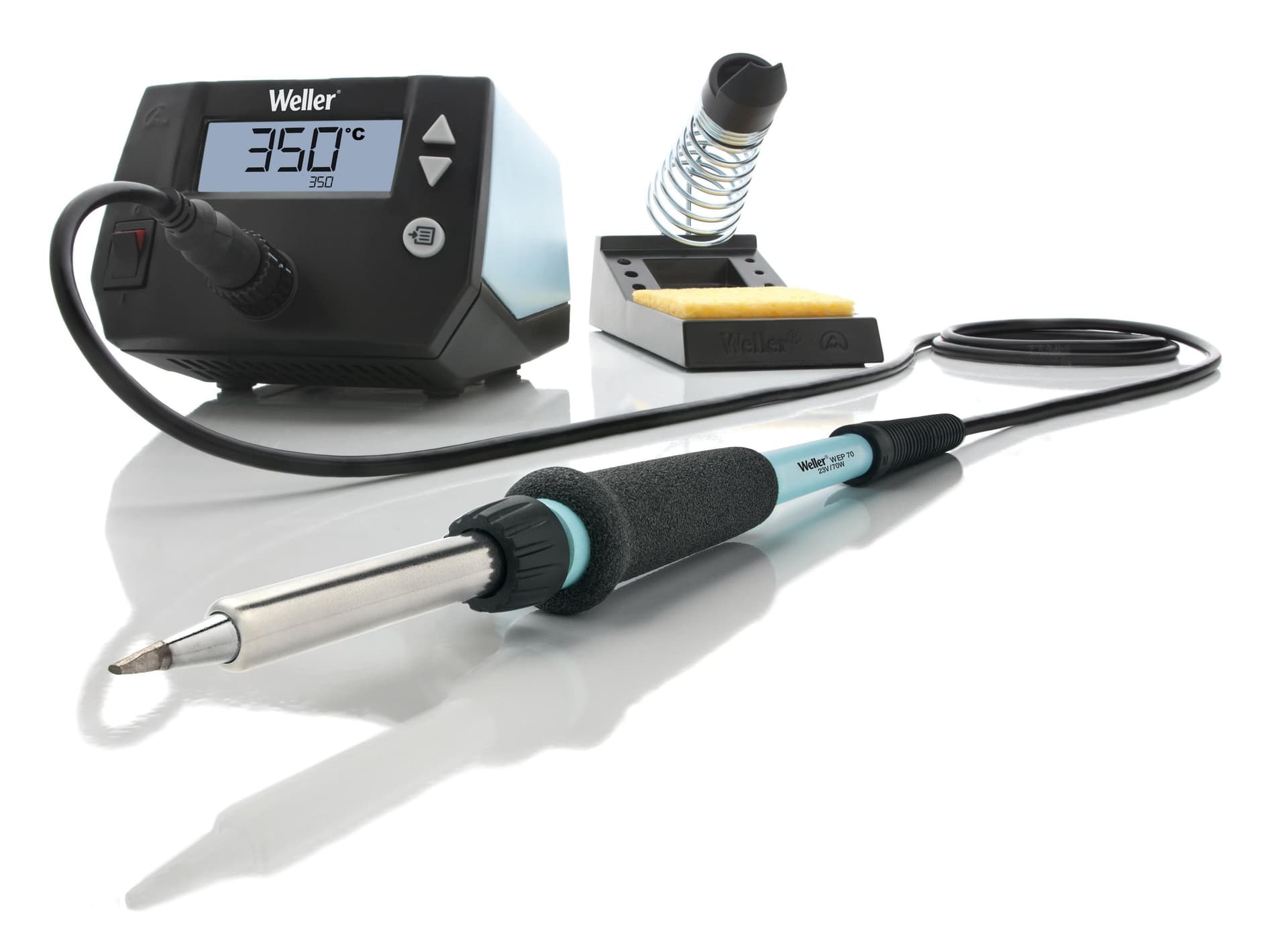
85W ESD-safe digital station (70W iron) with stable temperature for long bench sessions.

ESD safe, 50–480°C, with five presets so you can drop to a lower setting for small joints.
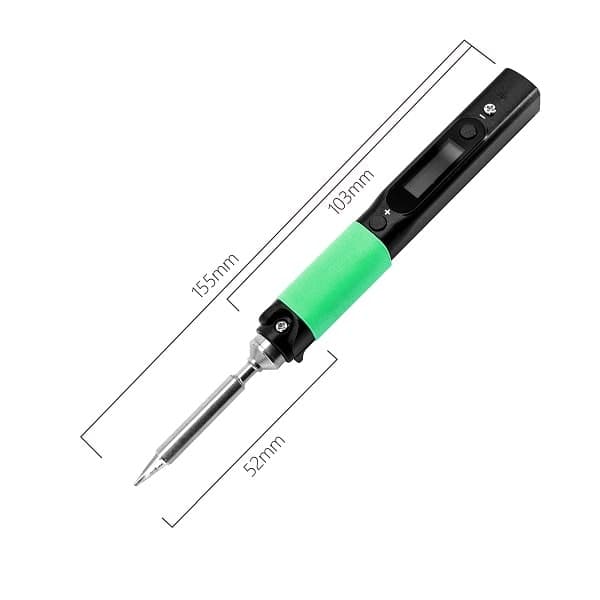
USB-C powered portable iron with an OLED temperature readout, for repairs away from the bench.
As an Amazon Associate I earn from qualifying purchases. Prices and availability are shown on Amazon.
Frequently asked questions
How do you clean flux off a PCB?
Dip a stiff-bristle brush or cotton swab in isopropyl alcohol (90%+ for rosin flux, deionized water for water-soluble flux), scrub the residue around each joint, then wipe with a lint-free cloth or let it air-dry. Repeat for stubborn rosin residue — it often takes two or three passes. Let the board dry fully before powering it on.
Do I have to clean no-clean flux?
Usually not. No-clean flux is formulated so that its residue is benign once fully heated, and many manufacturers ship boards with it left on. Clean it when the residue is cosmetically unacceptable, when a conformal coating has to stick, or around high-impedance circuits where any surface film might matter, and clean it completely if you start.
Can I use 70% rubbing alcohol to clean flux?
It is a poor choice. Rubbing alcohol at 70% is roughly a third water, which dissolves rosin badly, dries slowly and can leave water under components. Use 99% isopropyl alcohol or a purpose-made flux remover instead.
Why is there white residue after cleaning with isopropyl alcohol?
Usually the alcohol dissolved the flux and then evaporated before the dissolved material was carried away, leaving it behind as a whitish film, or it reacted with flux residues that need a different solvent. Re-wet the area with fresh alcohol and wipe it off while still wet, or use a flux remover designed for that flux chemistry.
Is water-soluble flux cleaned with alcohol or water?
With water, as its name suggests. Its residues are aggressive and need removing soon after soldering, typically with warm deionised water and a brush, followed by thorough drying. Alcohol alone does not reliably remove it.
How long should a board dry after cleaning?
Isopropyl alcohol evaporates quickly from open surfaces, but liquid trapped under low-standoff parts, connectors and switches takes longer. Give it time in a warm, well-ventilated spot, or a gentle stream of low-heat air, and treat anything that was flooded or rinsed with water as needing considerably longer before power is applied.